

136
M. Bavinck and J. Kooiman
being convinced of the danger of the fi shery, did nothing at all. A series of fi sher
village councils prohibited the use of the net in their waters, while other councils
refused to take measures. This resulted in con fl icts between fi shing villages, which
could only be solved through police action (Bavinck 1998 ) .
Case 2: Higher diversity . The Palk Bay in southern Tamil Nadu is recognized internationally as a biodiversity hotspot (Bavinck and Vivekanandan 2011 ) . However,
the area also harbors a large and socially diverse fi shing population. Not only are
there many castes and religions involved, but fi shers also engage in a large variety
of different métiers, varying from beach seining to trawling, gillnetting and diving,
as well as the manual collection of, for instance, sea grass. These fi sheries cater to
local, national and international markets. The government of India, recognizing the
ecological importance of the region, decided to implement a National Park (1985)
and a Biosphere Reserve (1989) in the Gulf of Mannar. Fishers, however, have been
protesting the various restrictions that are being implemented, creating new governance challenges.
Jentoft ( 2007 ) argues that a system-to-be-governed that is characterized by high
diversity requires a governance approach that is ‘sensitive’ to difference. One possibility would be to opt for maximum decentralization and self-governance.
Case 3: Lower complexity . Indian mackerel ( Rastrelliger kanagurta spp .) is one of
the mainstays of the small-scale fi shing sector (Bavinck 2001 , 94ff). Most fi shing
households in the Coromandel Coast region possess several mackerel nets and operate them throughout the year. Although pelagic species such as mackerel have a
large geographical range, the human dimensions of the fi sh chain in this case are
short and straightforward: fi sher women or small traders generally sell mackerel to
consumers on the local market at relatively low prices. The mackerel fi shery therefore plays a key role in the food security of the local agricultural population, and
presents a societal issue for governance.
The fi sh chain is compact and of low complexity. No urgent resource problems
manifest themselves at present, and the coordination issues that do arise are generally solved by individual market actors. Nevertheless, fi sher councils keep watch
over the fairness of the auctions in which fi shers sell their catches. With limited
economic interests and well-established procedures, governance activity is typically
low key.
Case 4: Higher complexity . The tuna fi shery , which has arisen in southern India
since 1995, is linked into a complex international fi sh chain with a large number of
agents and institutions playing a role. The Indian government has been promoting
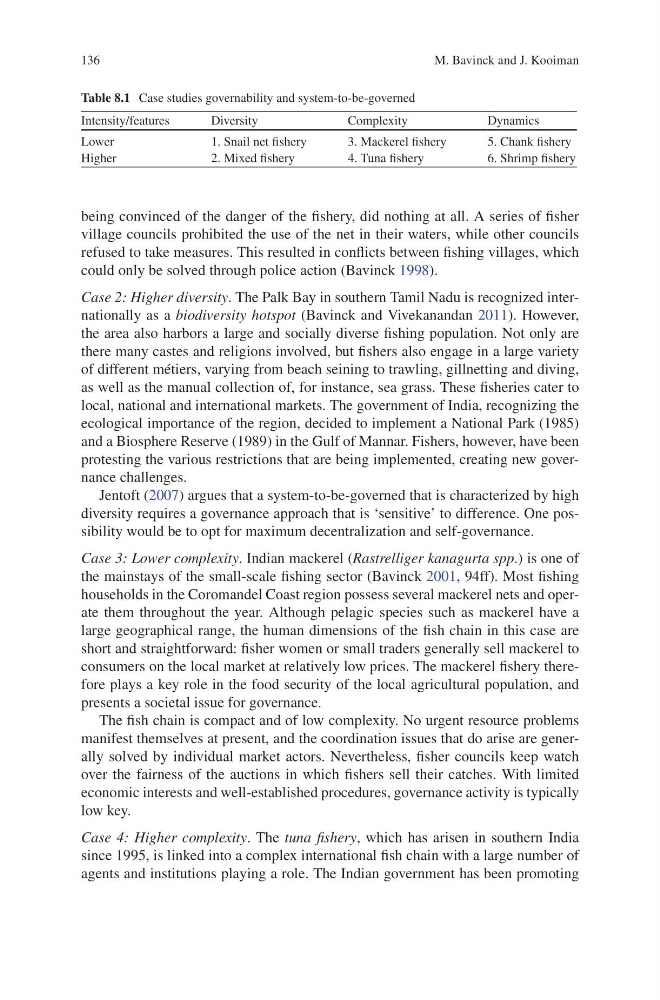
Table 8.1 Case studies governability and system-to-be-governed
Intensity/features
Diversity
Complexity
Dynamics
Lower
1. Snail net fi shery
3. Mackerel fi shery
5. Chank fi shery
Higher
2. Mixed fi shery
4. Tuna fi shery
6. Shrimp fi shery
M. Bavinck and J. Kooiman
being convinced of the danger of the fi shery, did nothing at all. A series of fi sher
village councils prohibited the use of the net in their waters, while other councils
refused to take measures. This resulted in con fl icts between fi shing villages, which
could only be solved through police action (Bavinck 1998 ) .
Case 2: Higher diversity . The Palk Bay in southern Tamil Nadu is recognized internationally as a biodiversity hotspot (Bavinck and Vivekanandan 2011 ) . However,
the area also harbors a large and socially diverse fi shing population. Not only are
there many castes and religions involved, but fi shers also engage in a large variety
of different métiers, varying from beach seining to trawling, gillnetting and diving,
as well as the manual collection of, for instance, sea grass. These fi sheries cater to
local, national and international markets. The government of India, recognizing the
ecological importance of the region, decided to implement a National Park (1985)
and a Biosphere Reserve (1989) in the Gulf of Mannar. Fishers, however, have been
protesting the various restrictions that are being implemented, creating new governance challenges.
Jentoft ( 2007 ) argues that a system-to-be-governed that is characterized by high
diversity requires a governance approach that is ‘sensitive’ to difference. One possibility would be to opt for maximum decentralization and self-governance.
Case 3: Lower complexity . Indian mackerel ( Rastrelliger kanagurta spp .) is one of
the mainstays of the small-scale fi shing sector (Bavinck 2001 , 94ff). Most fi shing
households in the Coromandel Coast region possess several mackerel nets and operate them throughout the year. Although pelagic species such as mackerel have a
large geographical range, the human dimensions of the fi sh chain in this case are
short and straightforward: fi sher women or small traders generally sell mackerel to
consumers on the local market at relatively low prices. The mackerel fi shery therefore plays a key role in the food security of the local agricultural population, and
presents a societal issue for governance.
The fi sh chain is compact and of low complexity. No urgent resource problems
manifest themselves at present, and the coordination issues that do arise are generally solved by individual market actors. Nevertheless, fi sher councils keep watch
over the fairness of the auctions in which fi shers sell their catches. With limited
economic interests and well-established procedures, governance activity is typically
low key.
Case 4: Higher complexity . The tuna fi shery , which has arisen in southern India
since 1995, is linked into a complex international fi sh chain with a large number of
agents and institutions playing a role. The Indian government has been promoting
Table 8.1 Case studies governability and system-to-be-governed
Intensity/features
Diversity
Complexity
Dynamics
Lower
1. Snail net fi shery
3. Mackerel fi shery
5. Chank fi shery
Higher
2. Mixed fi shery
4. Tuna fi shery
6. Shrimp fi shery