

Treatment Plants for Phosphorus Removal from Wastewater
ltJidliCbl
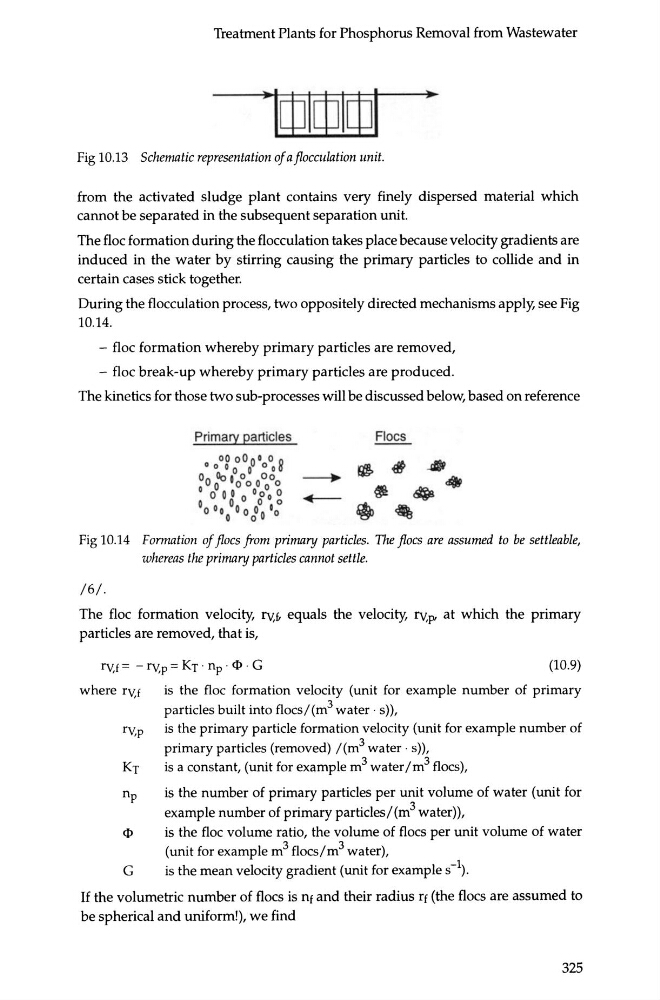
Fig 10.13 Schematic representation of a flocculation unit.
from the activated sludge plant contains very finely dispersed material which
cannot be separated in the subsequent separation unit.
The floc formation during the flocculation takes place because velocity gradients are
induced in the water by stirring causing the primary particles to collide and in
certain cases stick together.
During the flocculation process, two oppositely directed mechanisms apply, see Fig
10.14.
- floc formation whereby primary particles are removed,
- floc break-up whereby primary particles are produced.
The kinetics for those two sub-processes will be discussed below, based on reference
Floes
Fig 10.14 Formation of floes from primary particles. The floes are assumed to be settleable,
whereas the primary particles cannot settle.
/6/ .
The floc formation velocity, rv,c, equals the velocity, rv,P' at which the primary
particles are removed, that is,
rv,f= -rv,p=KT·np··G
(10.9)
where rv,f
rv,p
is the floc formation velocity (unit for example number of primary
particles built into flocs/(m 3 water· s)),
is the primary particle formation velocity (unit for example number of
primary particles (removed) /(m 3 water · s)),
is a constant, (unit for example m 3 water/m 3 floes),
np
is the number of primary particles per unit volume of water (unit for
example number of primary particles/(m 3 water)),
<1>
is the floc volume ratio, the volume of floes per unit volume of water
(unit for example m 3 flocs/m 3 water),
G
is the mean velocity gradient (unit for example s- 1 ).
If the volumetric number of floes is nf and their radius rf (the floes are assumed to
be spherical and uniform!), we find
325
ltJidliCbl
Fig 10.13 Schematic representation of a flocculation unit.
from the activated sludge plant contains very finely dispersed material which
cannot be separated in the subsequent separation unit.
The floc formation during the flocculation takes place because velocity gradients are
induced in the water by stirring causing the primary particles to collide and in
certain cases stick together.
During the flocculation process, two oppositely directed mechanisms apply, see Fig
10.14.
- floc formation whereby primary particles are removed,
- floc break-up whereby primary particles are produced.
The kinetics for those two sub-processes will be discussed below, based on reference
Floes
Fig 10.14 Formation of floes from primary particles. The floes are assumed to be settleable,
whereas the primary particles cannot settle.
/6/ .
The floc formation velocity, rv,c, equals the velocity, rv,P' at which the primary
particles are removed, that is,
rv,f= -rv,p=KT·np··G
(10.9)
where rv,f
rv,p
is the floc formation velocity (unit for example number of primary
particles built into flocs/(m 3 water· s)),
is the primary particle formation velocity (unit for example number of
primary particles (removed) /(m 3 water · s)),
is a constant, (unit for example m 3 water/m 3 floes),
np
is the number of primary particles per unit volume of water (unit for
example number of primary particles/(m 3 water)),
<1>
is the floc volume ratio, the volume of floes per unit volume of water
(unit for example m 3 flocs/m 3 water),
G
is the mean velocity gradient (unit for example s- 1 ).
If the volumetric number of floes is nf and their radius rf (the floes are assumed to
be spherical and uniform!), we find
325