

Treatment Plants for Phosphorus Removal from Wastewater
, jJ~: ~f, ggg~~
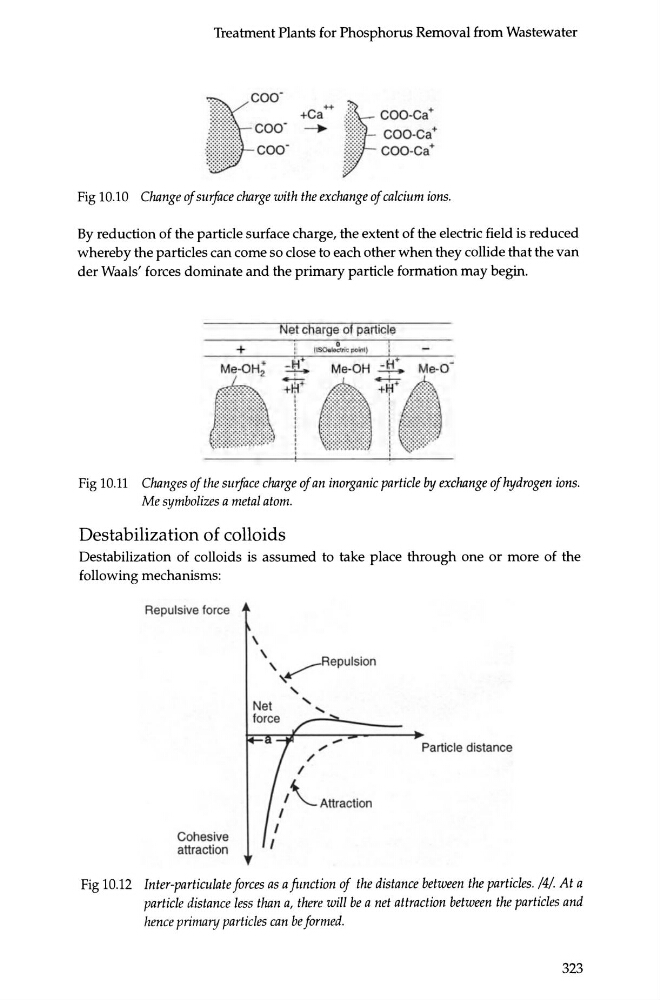
Fig 10.10 Change of surface charge with the exchange of calcium ions.
By reduction of the particle surface charge, the extent of the electric field is reduced
whereby the particles can come so close to each other when they collide that the van
der Waals' forces dominate and the primary particle formation may begin.
Net charge of particle
0
IISOoloetric polnl)
Fig 10.11 Changes of the surface charge of an inorganic particle by exchange of hydrogen ions.
Me symbolizes a metal atom.
Destabilization of colloids
Destabilization of colloids is assumed to take place through one or more of the
following mechanisms:
Repulsive force
Cohesive
attraction
\
\ , ~Repulsion
'< ' '
/
I
'
....
/
1 \_Attraction
I
I
I
Particle distance
Fig 10.12 Inter-particulate forces as a function of the di stance between the particles. /4/. At a
particle distance l
ess than a, there will be a n
et attraction between the particles and
hence primary particles can be formed.
323
, jJ~: ~f, ggg~~
Fig 10.10 Change of surface charge with the exchange of calcium ions.
By reduction of the particle surface charge, the extent of the electric field is reduced
whereby the particles can come so close to each other when they collide that the van
der Waals' forces dominate and the primary particle formation may begin.
Net charge of particle
0
IISOoloetric polnl)
Fig 10.11 Changes of the surface charge of an inorganic particle by exchange of hydrogen ions.
Me symbolizes a metal atom.
Destabilization of colloids
Destabilization of colloids is assumed to take place through one or more of the
following mechanisms:
Repulsive force
Cohesive
attraction
\
\ , ~Repulsion
'< ' '
/
I
'
....
/
1 \_Attraction
I
I
I
Particle distance
Fig 10.12 Inter-particulate forces as a function of the di stance between the particles. /4/. At a
particle distance l
ess than a, there will be a n
et attraction between the particles and
hence primary particles can be formed.
323