

The DCPs are grounded and protected to some extent from lightning strikes with
the use of in-line lightning protectors in the telemetry antenna cables and in-line
fuses in the sensor power feeds. Figure 18 shows a water quality monitoring station
that includes a data logger, cellular telemetry system, solar panel, solar regulator,
battery, water quality sensors, and meteorological sensors.
While standalone, temporally intensive monitoring programs provide a wealth
of data and information not observed with discrete monitoring programs, they do
not provide timely information. Telemetry is a great addition to any DCP because it
provides real-time eyes on your data for quality assurance/quality control and for
immediate decision support. Real-time data ensures that the user is collecting the
highest quality data. For example, if a sensor drifts as a result of fouling, the user
will know about it from observing the real-time data, and they can proceed to
correct the problem by cleaning and recalibrating the sensor (or replace the drifting
sensor with a freshly calibrated one) right away rather than waiting until the normal
maintenance cycle only to find that some of the data are bad. It’s inefficient and
sometimes costly to deploy sensors (without real-time data) for a few weeks and
then learn about a problem when the data is downloaded from the data logger.
Telemetry also provides real-time alarming and alerting to changing conditions
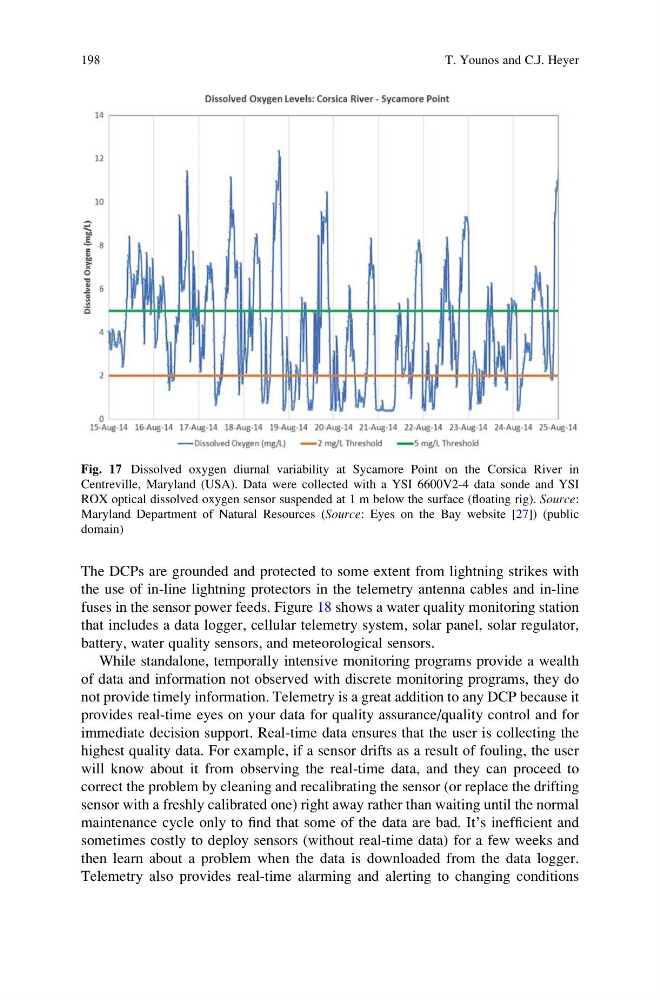
Fig. 17 Dissolved oxygen diurnal variability at Sycamore Point on the Corsica River in
Centreville, Maryland (USA). Data were collected with a YSI 6600V2-4 data sonde and YSI
ROX optical dissolved oxygen sensor suspended at 1 m below the surface (floating rig). Source:
Maryland Department of Natural Resources (Source: Eyes on the Bay website [27]) (public
domain)
198
T. Younos and C.J. Heyer
the use of in-line lightning protectors in the telemetry antenna cables and in-line
fuses in the sensor power feeds. Figure 18 shows a water quality monitoring station
that includes a data logger, cellular telemetry system, solar panel, solar regulator,
battery, water quality sensors, and meteorological sensors.
While standalone, temporally intensive monitoring programs provide a wealth
of data and information not observed with discrete monitoring programs, they do
not provide timely information. Telemetry is a great addition to any DCP because it
provides real-time eyes on your data for quality assurance/quality control and for
immediate decision support. Real-time data ensures that the user is collecting the
highest quality data. For example, if a sensor drifts as a result of fouling, the user
will know about it from observing the real-time data, and they can proceed to
correct the problem by cleaning and recalibrating the sensor (or replace the drifting
sensor with a freshly calibrated one) right away rather than waiting until the normal
maintenance cycle only to find that some of the data are bad. It’s inefficient and
sometimes costly to deploy sensors (without real-time data) for a few weeks and
then learn about a problem when the data is downloaded from the data logger.
Telemetry also provides real-time alarming and alerting to changing conditions
Fig. 17 Dissolved oxygen diurnal variability at Sycamore Point on the Corsica River in
Centreville, Maryland (USA). Data were collected with a YSI 6600V2-4 data sonde and YSI
ROX optical dissolved oxygen sensor suspended at 1 m below the surface (floating rig). Source:
Maryland Department of Natural Resources (Source: Eyes on the Bay website [27]) (public
domain)
198
T. Younos and C.J. Heyer