

In our study, algal blooms were derived from NDVI monthly mean from
preprocessing of MODIS 16-day NDVI composites. By exploiting sensitivity of
NDVI to vegetation spectral features [32], an area within Lake Taihu is identified as
algal bloom in a specific month through a simple threshold approach separating
clear water, characterized by strongly negative NDVI values, by very high phytoplankton concentration (mean monthly NDVI > 0.05). Note that these are surface
accumulations and initiation date is not intended to identify the start of
cyanobacteria bloom within a water column.
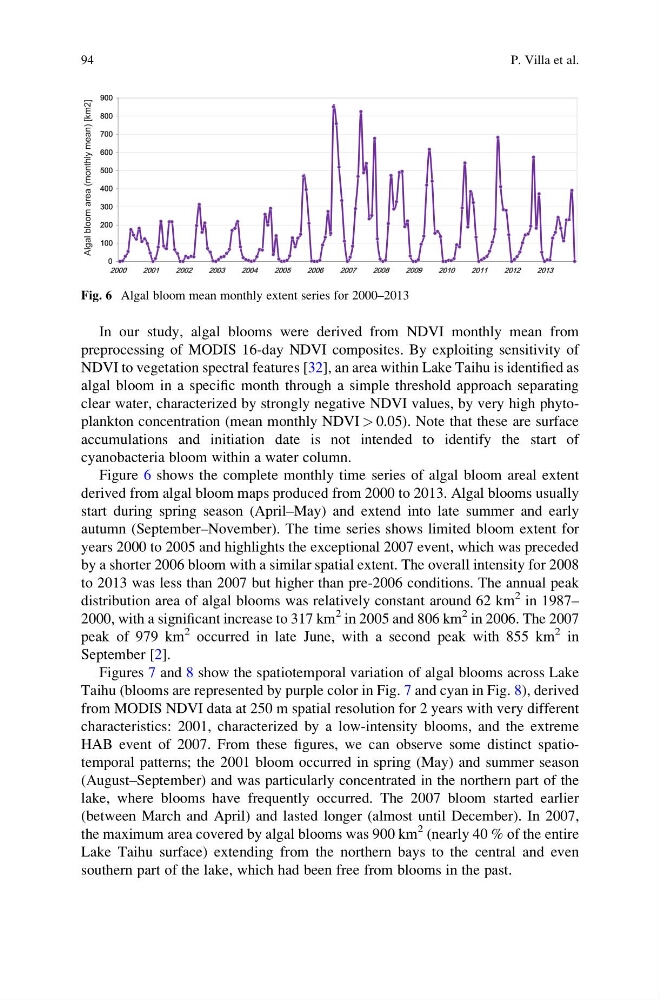
Figure 6 shows the complete monthly time series of algal bloom areal extent
derived from algal bloom maps produced from 2000 to 2013. Algal blooms usually
start during spring season (April–May) and extend into late summer and early
autumn (September–November). The time series shows limited bloom extent for
years 2000 to 2005 and highlights the exceptional 2007 event, which was preceded
by a shorter 2006 bloom with a similar spatial extent. The overall intensity for 2008
to 2013 was less than 2007 but higher than pre-2006 conditions. The annual peak
distribution area of algal blooms was relatively constant around 62 km
2 in 1987–
2000, with a significant increase to 317 km
2 in 2005 and 806 km
2 in 2006. The 2007
peak of 979 km
2 occurred in late June, with a second peak with 855 km
2 in
September [2].
Figures 7 and 8 show the spatiotemporal variation of algal blooms across Lake
Taihu (blooms are represented by purple color in Fig. 7 and cyan in Fig. 8), derived
from MODIS NDVI data at 250 m spatial resolution for 2 years with very different
characteristics: 2001, characterized by a low-intensity blooms, and the extreme
HAB event of 2007. From these figures, we can observe some distinct spatiotemporal patterns; the 2001 bloom occurred in spring (May) and summer season
(August–September) and was particularly concentrated in the northern part of the
lake, where blooms have frequently occurred. The 2007 bloom started earlier
(between March and April) and lasted longer (almost until December). In 2007,
the maximum area covered by algal blooms was 900 km
2 (nearly 40 % of the entire
Lake Taihu surface) extending from the northern bays to the central and even
southern part of the lake, which had been free from blooms in the past.
0
100
200
300
400
500
600
700
800
900
2000
2001
2002
2003
2004
2005
2006
2007
2008
2009
2010
2011
2012
2013
Algal bloom area (monthly mean) [km2]
Fig. 6 Algal bloom mean monthly extent series for 2000–2013
94
P. Villa et al.
preprocessing of MODIS 16-day NDVI composites. By exploiting sensitivity of
NDVI to vegetation spectral features [32], an area within Lake Taihu is identified as
algal bloom in a specific month through a simple threshold approach separating
clear water, characterized by strongly negative NDVI values, by very high phytoplankton concentration (mean monthly NDVI > 0.05). Note that these are surface
accumulations and initiation date is not intended to identify the start of
cyanobacteria bloom within a water column.
Figure 6 shows the complete monthly time series of algal bloom areal extent
derived from algal bloom maps produced from 2000 to 2013. Algal blooms usually
start during spring season (April–May) and extend into late summer and early
autumn (September–November). The time series shows limited bloom extent for
years 2000 to 2005 and highlights the exceptional 2007 event, which was preceded
by a shorter 2006 bloom with a similar spatial extent. The overall intensity for 2008
to 2013 was less than 2007 but higher than pre-2006 conditions. The annual peak
distribution area of algal blooms was relatively constant around 62 km
2 in 1987–
2000, with a significant increase to 317 km
2 in 2005 and 806 km
2 in 2006. The 2007
peak of 979 km
2 occurred in late June, with a second peak with 855 km
2 in
September [2].
Figures 7 and 8 show the spatiotemporal variation of algal blooms across Lake
Taihu (blooms are represented by purple color in Fig. 7 and cyan in Fig. 8), derived
from MODIS NDVI data at 250 m spatial resolution for 2 years with very different
characteristics: 2001, characterized by a low-intensity blooms, and the extreme
HAB event of 2007. From these figures, we can observe some distinct spatiotemporal patterns; the 2001 bloom occurred in spring (May) and summer season
(August–September) and was particularly concentrated in the northern part of the
lake, where blooms have frequently occurred. The 2007 bloom started earlier
(between March and April) and lasted longer (almost until December). In 2007,
the maximum area covered by algal blooms was 900 km
2 (nearly 40 % of the entire
Lake Taihu surface) extending from the northern bays to the central and even
southern part of the lake, which had been free from blooms in the past.
0
100
200
300
400
500
600
700
800
900
2000
2001
2002
2003
2004
2005
2006
2007
2008
2009
2010
2011
2012
2013
Algal bloom area (monthly mean) [km2]
Fig. 6 Algal bloom mean monthly extent series for 2000–2013
94
P. Villa et al.