

121
liquid water, and some of these are now fi lled
with snow and ice. As the climate gets warmer, it
is probable that they will melt out and a new HA
lake would emerge. However, I am sceptical, if
an HA lake should be disqualifi ed if it freezes
solid all the way down to the bottom during the
winter. Must a lake contain at least 1 m
3 of liquid
water year-round? It could be so. But how do we
check this? Who gets to climb up to a potential
lake in the middle of winter, drill through the ice
at hopefully the deepest point, verify that there is
no water before hitting rock bottom and try to do
all this in a ‘typical’ winter? Nevertheless, there
are, possibly, persons, notably Nathalie Cabrol at
NASA, who could be interested to monitor and
study the development of new Alpine habitats.
For example, the volcano Parinacota on the border between Bolivia and Chile is situated at a
height of 6,348 m MSL. It has a spectacular summit crater about 300 m in diameter. If the climate
in that area gets warmer, or if the volcano heats
up a bit, it may be possible that a crater lake could
form there that would displace Lake Licancabur
as the highest lake on earth. Concomitantly, dryness is also the enemy of an HA lake. Dr. Cabrol
points out that a potential lake must be perennial
(lasting throughout the whole year) in order to
qualify. Dryness is especially a problem in
Chile’s Atacama Desert. There are some known
bodies of liquid water that form only during the
snowmelt season and dry up completely during
the dry season (at Sairecabur). This does not prevent little hibernating bugs from living there, but
it does disqualify the site from being a true lake.
In this case, we might have an emerging high lake
if the climate gets wetter.
Ojos del Salado Pool (Argentina)
Ojos del Salado Pool, lying at 6,390 m MSL, is
situated on the east face of Ojos del Salado, the
highest active volcano on the southeast side of
the border between Chile and Argentina. It is an
almost circular lake having an approx. diameter
and surface area of 100 m and 0.785 ha, respectively. As such, this lentic body could better be
designated as a ‘pool’, rather than a true ‘lake’
which could be at least 1.0 ha in area.
Lhagba Pool (Tibet)
Lhagba Pool, lying at 6,368 m MSL, is situated
between 28° 3′ N and 86° 58′ E, just <1.0 km
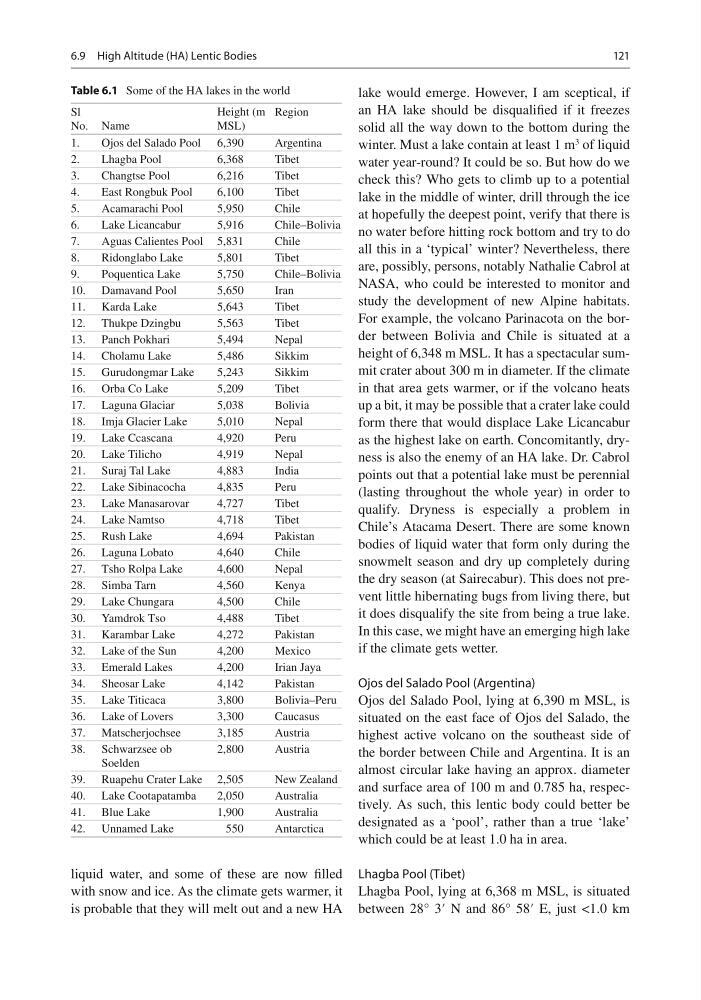
Table 6.1 Some of the HA lakes in the world
Sl
No. Name
Height (m
MSL)
Region
1.
Ojos del Salado Pool 6,390
Argentina
2.
Lhagba Pool
6,368
Tibet
3.
Changtse Pool
6,216
Tibet
4.
East Rongbuk Pool
6,100
Tibet
5.
Acamarachi Pool
5,950
Chile
6.
Lake Licancabur
5,916
Chile–Bolivia
7.
Aguas Calientes Pool 5,831
Chile
8.
Ridonglabo Lake
5,801
Tibet
9.
Poquentica Lake
5,750
Chile–Bolivia
10. Damavand Pool
5,650
Iran
11. Karda Lake
5,643
Tibet
12. Thukpe Dzingbu
5,563
Tibet
13. Panch Pokhari
5,494
Nepal
14. Cholamu Lake
5,486
Sikkim
15. Gurudongmar Lake
5,243
Sikkim
16. Orba Co Lake
5,209
Tibet
17. Laguna Glaciar
5,038
Bolivia
18. Imja Glacier Lake
5,010
Nepal
19. Lake Ccascana
4,920
Peru
20. Lake Tilicho
4,919
Nepal
21. Suraj Tal Lake
4,883
India
22. Lake Sibinacocha
4,835
Peru
23. Lake Manasarovar
4,727
Tibet
24. Lake Namtso
4,718
Tibet
25. Rush Lake
4,694
Pakistan
26. Laguna Lobato
4,640
Chile
27. Tsho Rolpa Lake
4,600
Nepal
28. Simba Tarn
4,560
Kenya
29. Lake Chungara
4,500
Chile
30. Yamdrok Tso
4,488
Tibet
31. Karambar Lake
4,272
Pakistan
32. Lake of the Sun
4,200
Mexico
33. Emerald Lakes
4,200
Irian Jaya
34. Sheosar Lake
4,142
Pakistan
35. Lake Titicaca
3,800
Bolivia–Peru
36. Lake of Lovers
3,300
Caucasus
37. Matscherjochsee
3,185
Austria
38. Schwarzsee ob
Soelden
2,800
Austria
39. Ruapehu Crater Lake 2,505
New Zealand
40. Lake Cootapatamba
2,050
Australia
41. Blue Lake
1,900
Australia
42. Unnamed Lake
550
Antarctica
6.9 High Altitude (HA) Lentic Bodies
liquid water, and some of these are now fi lled
with snow and ice. As the climate gets warmer, it
is probable that they will melt out and a new HA
lake would emerge. However, I am sceptical, if
an HA lake should be disqualifi ed if it freezes
solid all the way down to the bottom during the
winter. Must a lake contain at least 1 m
3 of liquid
water year-round? It could be so. But how do we
check this? Who gets to climb up to a potential
lake in the middle of winter, drill through the ice
at hopefully the deepest point, verify that there is
no water before hitting rock bottom and try to do
all this in a ‘typical’ winter? Nevertheless, there
are, possibly, persons, notably Nathalie Cabrol at
NASA, who could be interested to monitor and
study the development of new Alpine habitats.
For example, the volcano Parinacota on the border between Bolivia and Chile is situated at a
height of 6,348 m MSL. It has a spectacular summit crater about 300 m in diameter. If the climate
in that area gets warmer, or if the volcano heats
up a bit, it may be possible that a crater lake could
form there that would displace Lake Licancabur
as the highest lake on earth. Concomitantly, dryness is also the enemy of an HA lake. Dr. Cabrol
points out that a potential lake must be perennial
(lasting throughout the whole year) in order to
qualify. Dryness is especially a problem in
Chile’s Atacama Desert. There are some known
bodies of liquid water that form only during the
snowmelt season and dry up completely during
the dry season (at Sairecabur). This does not prevent little hibernating bugs from living there, but
it does disqualify the site from being a true lake.
In this case, we might have an emerging high lake
if the climate gets wetter.
Ojos del Salado Pool (Argentina)
Ojos del Salado Pool, lying at 6,390 m MSL, is
situated on the east face of Ojos del Salado, the
highest active volcano on the southeast side of
the border between Chile and Argentina. It is an
almost circular lake having an approx. diameter
and surface area of 100 m and 0.785 ha, respectively. As such, this lentic body could better be
designated as a ‘pool’, rather than a true ‘lake’
which could be at least 1.0 ha in area.
Lhagba Pool (Tibet)
Lhagba Pool, lying at 6,368 m MSL, is situated
between 28° 3′ N and 86° 58′ E, just <1.0 km
Table 6.1 Some of the HA lakes in the world
Sl
No. Name
Height (m
MSL)
Region
1.
Ojos del Salado Pool 6,390
Argentina
2.
Lhagba Pool
6,368
Tibet
3.
Changtse Pool
6,216
Tibet
4.
East Rongbuk Pool
6,100
Tibet
5.
Acamarachi Pool
5,950
Chile
6.
Lake Licancabur
5,916
Chile–Bolivia
7.
Aguas Calientes Pool 5,831
Chile
8.
Ridonglabo Lake
5,801
Tibet
9.
Poquentica Lake
5,750
Chile–Bolivia
10. Damavand Pool
5,650
Iran
11. Karda Lake
5,643
Tibet
12. Thukpe Dzingbu
5,563
Tibet
13. Panch Pokhari
5,494
Nepal
14. Cholamu Lake
5,486
Sikkim
15. Gurudongmar Lake
5,243
Sikkim
16. Orba Co Lake
5,209
Tibet
17. Laguna Glaciar
5,038
Bolivia
18. Imja Glacier Lake
5,010
Nepal
19. Lake Ccascana
4,920
Peru
20. Lake Tilicho
4,919
Nepal
21. Suraj Tal Lake
4,883
India
22. Lake Sibinacocha
4,835
Peru
23. Lake Manasarovar
4,727
Tibet
24. Lake Namtso
4,718
Tibet
25. Rush Lake
4,694
Pakistan
26. Laguna Lobato
4,640
Chile
27. Tsho Rolpa Lake
4,600
Nepal
28. Simba Tarn
4,560
Kenya
29. Lake Chungara
4,500
Chile
30. Yamdrok Tso
4,488
Tibet
31. Karambar Lake
4,272
Pakistan
32. Lake of the Sun
4,200
Mexico
33. Emerald Lakes
4,200
Irian Jaya
34. Sheosar Lake
4,142
Pakistan
35. Lake Titicaca
3,800
Bolivia–Peru
36. Lake of Lovers
3,300
Caucasus
37. Matscherjochsee
3,185
Austria
38. Schwarzsee ob
Soelden
2,800
Austria
39. Ruapehu Crater Lake 2,505
New Zealand
40. Lake Cootapatamba
2,050
Australia
41. Blue Lake
1,900
Australia
42. Unnamed Lake
550
Antarctica
6.9 High Altitude (HA) Lentic Bodies