

87
willows provide poor habitat for native animals and reduce the recruitment to channels of large wood that provides vital habitat for native fish. Willows also alter
aquatic and riparian food webs through shading of river margins and changes in leaf
litter volume and nutrient content of leaf detritus (Schulze and Walker 1997).
Salinization of river waters and floodplain soils in the Murray-Darling drainage
results from three factors. The first is naturally high evaporation rates in the dry
climate. The second and third factors reflect human alterations. Mobilization of
salts from soils as irrigation water infiltrates creates salinization, as does replacement of native vegetation with introduced plants. The introduced plants have lower
transpiration rates. This allows riparian water tables to rise and naturally saline
ground water to reach the surface (Allison et al. 1990). Salinization is of concern
because it limits growth of native vegetation and crops in river bottomlands and can
exacerbate saline runoff into river channels.
Increased nutrient runoff to channels has exacerbated blooms of blue-green algae
in river waters of the Murray-Darling drainage. Low volumes of slowly moving
flow associated with water withdrawals from the river network and ponds upstream
of locks and dams also exacerbate algal blooms (Bowling and Baker 1996). Bluegreen algal blooms create problems because they can produce toxic byproducts that
sicken or kill other organisms, including humans. An algal bloom extending along
1000 km of the Darling River in 1991 killed an estimated 1600 sheep and cattle and
threatened human water supplies for several rural regions (Wohl 2011).
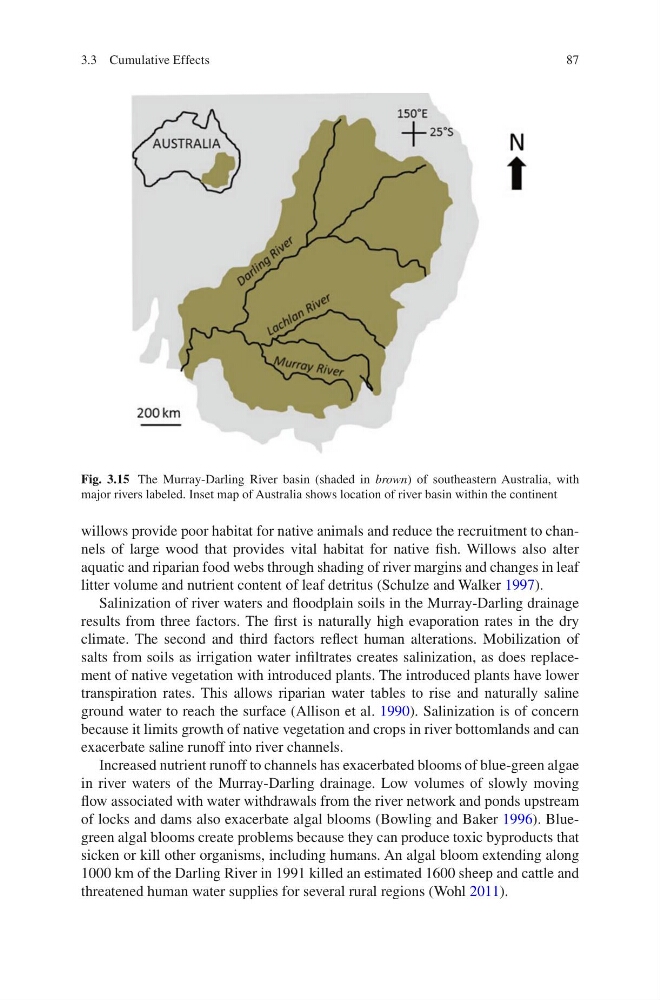
Fig. 3.15 The Murray-Darling River basin (shaded in brown) of southeastern Australia, with
major rivers labeled. Inset map of Australia shows location of river basin within the continent
3.3 Cumulative Effects
willows provide poor habitat for native animals and reduce the recruitment to channels of large wood that provides vital habitat for native fish. Willows also alter
aquatic and riparian food webs through shading of river margins and changes in leaf
litter volume and nutrient content of leaf detritus (Schulze and Walker 1997).
Salinization of river waters and floodplain soils in the Murray-Darling drainage
results from three factors. The first is naturally high evaporation rates in the dry
climate. The second and third factors reflect human alterations. Mobilization of
salts from soils as irrigation water infiltrates creates salinization, as does replacement of native vegetation with introduced plants. The introduced plants have lower
transpiration rates. This allows riparian water tables to rise and naturally saline
ground water to reach the surface (Allison et al. 1990). Salinization is of concern
because it limits growth of native vegetation and crops in river bottomlands and can
exacerbate saline runoff into river channels.
Increased nutrient runoff to channels has exacerbated blooms of blue-green algae
in river waters of the Murray-Darling drainage. Low volumes of slowly moving
flow associated with water withdrawals from the river network and ponds upstream
of locks and dams also exacerbate algal blooms (Bowling and Baker 1996). Bluegreen algal blooms create problems because they can produce toxic byproducts that
sicken or kill other organisms, including humans. An algal bloom extending along
1000 km of the Darling River in 1991 killed an estimated 1600 sheep and cattle and
threatened human water supplies for several rural regions (Wohl 2011).
Fig. 3.15 The Murray-Darling River basin (shaded in brown) of southeastern Australia, with
major rivers labeled. Inset map of Australia shows location of river basin within the continent
3.3 Cumulative Effects