

74
and Latin America. Large dams are no longer built in North America and Europe,
partly because most of the suitable sites already have dams and partly because of the
recognition of the enormous negative effects of dams on river ecosystems.
The primary effects of dams on river ecosystems are fourfold (Williams and
Wolman 1984; Ligon et al. 1995; Kondolf 1997; Poff and Hart 2002) (Fig. 3.10).
First, dams create large backwaters that store sediment and organic matter. This
limits or eliminates supplies of these materials to downstream river segments, which
can cause exacerbated downstream erosion and limit nutrient availability (Erskine
1985; Ligon et al. 1995; Wang et al. 2007a, b). Dams designed to be overtopped
during peak flows, which are sometimes known as run-of-river dams, weirs, or barrages, can pass suspended sediment, but are still likely to store coarser sediment
moving in contact with the river bed and thus create sediment deficits downstream.
Second, dams alter downstream flow regimes, typically by increasing base flows
and decreasing peak flows (Magilligan and Nislow 2001), but also by creating
abrupt diurnal fluctuations in flow in the case of hydropower dams. Reduction of
peak flows causes multiple effects, including changes in channel geometry and
planform such as narrowing, reduced lateral mobility, or transition from a braided
to a single channel (Surian 1999; Swanson et al. 2011). Changes in channel form
alter habitat abundance and distribution (Vietz et al. 2013) and reduced peak flows
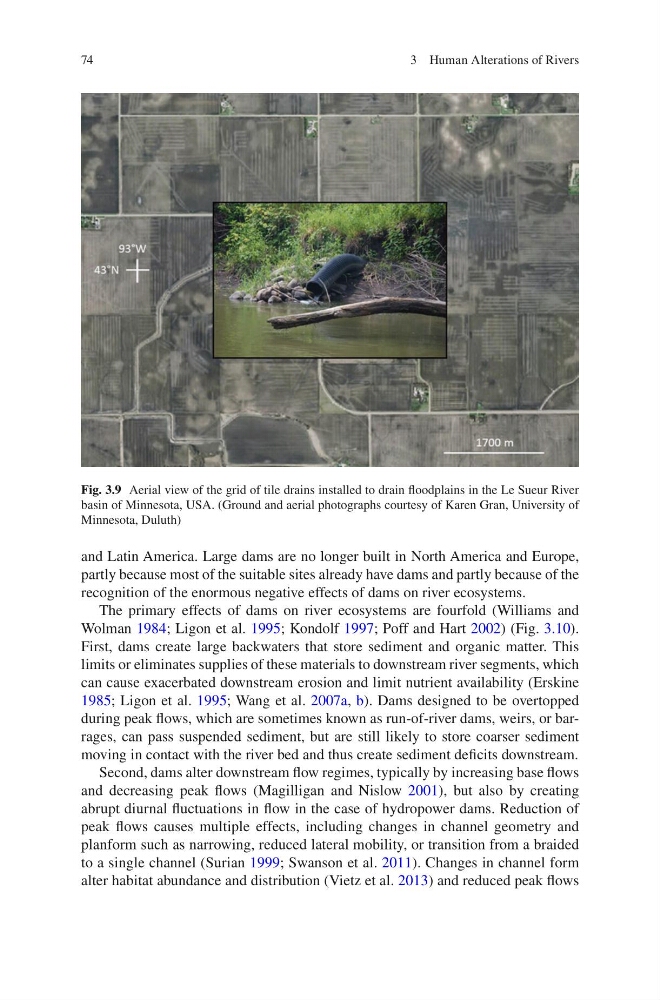
Fig. 3.9 Aerial view of the grid of tile drains installed to drain floodplains in the Le Sueur River
basin of Minnesota, USA. (Ground and aerial photographs courtesy of Karen Gran, University of
Minnesota, Duluth)
3 Human Alterations of Rivers
and Latin America. Large dams are no longer built in North America and Europe,
partly because most of the suitable sites already have dams and partly because of the
recognition of the enormous negative effects of dams on river ecosystems.
The primary effects of dams on river ecosystems are fourfold (Williams and
Wolman 1984; Ligon et al. 1995; Kondolf 1997; Poff and Hart 2002) (Fig. 3.10).
First, dams create large backwaters that store sediment and organic matter. This
limits or eliminates supplies of these materials to downstream river segments, which
can cause exacerbated downstream erosion and limit nutrient availability (Erskine
1985; Ligon et al. 1995; Wang et al. 2007a, b). Dams designed to be overtopped
during peak flows, which are sometimes known as run-of-river dams, weirs, or barrages, can pass suspended sediment, but are still likely to store coarser sediment
moving in contact with the river bed and thus create sediment deficits downstream.
Second, dams alter downstream flow regimes, typically by increasing base flows
and decreasing peak flows (Magilligan and Nislow 2001), but also by creating
abrupt diurnal fluctuations in flow in the case of hydropower dams. Reduction of
peak flows causes multiple effects, including changes in channel geometry and
planform such as narrowing, reduced lateral mobility, or transition from a braided
to a single channel (Surian 1999; Swanson et al. 2011). Changes in channel form
alter habitat abundance and distribution (Vietz et al. 2013) and reduced peak flows
Fig. 3.9 Aerial view of the grid of tile drains installed to drain floodplains in the Le Sueur River
basin of Minnesota, USA. (Ground and aerial photographs courtesy of Karen Gran, University of
Minnesota, Duluth)
3 Human Alterations of Rivers