

32
of bars and islands within channels. Flow pulses enhance nutrient availability, habitat, and biodiversity (Tockner et al. 2000).
Changes through time have been conceptualized in terms of river resistance and
resilience, as described previously, and in terms of alternate states. Alternate stable
states describe ecological systems than can exist in multiple, distinct, and selfreinforcing states in equilibrium under equivalent environmental conditions (Holling
1973; May 1977). This scenario relies on a disturbance or a threshold in response to
ongoing changing conditions that is capable of driving the ecosystem into an alternate state. The ecosystem then takes a different pathway of recovery in response to
the disturbance, which ultimately leads to a self-sustaining reorganization of ecosystem structure. The existence of alternate stable states has typically been evaluated based on biotic community structure (e.g., Scheffer and Carpenter 2003),
although the concept is controversial because of the difficulty in demonstrating
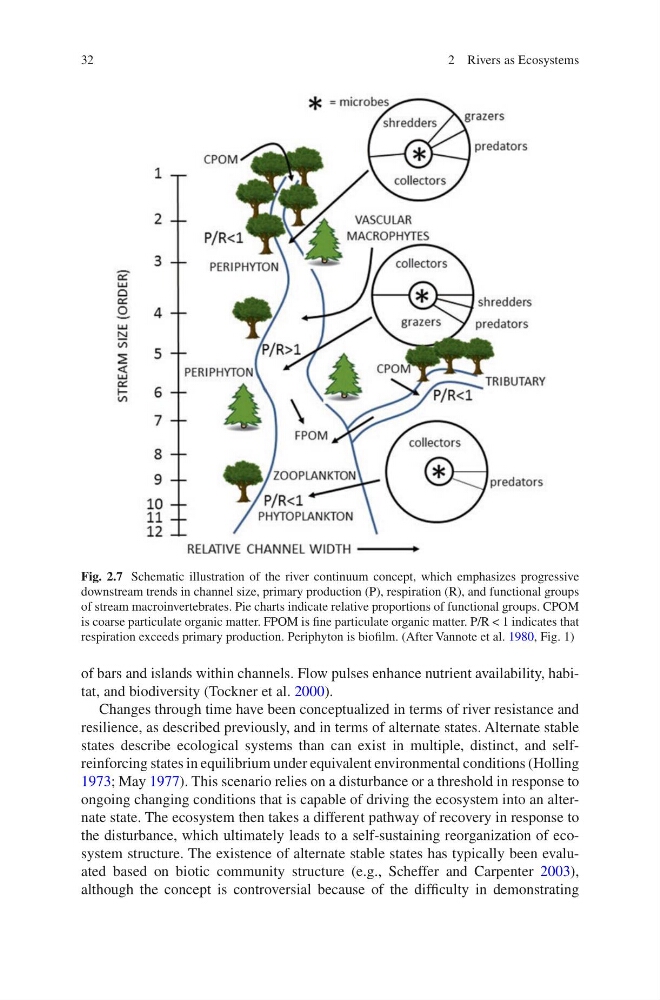
Fig. 2.7 Schematic illustration of the river continuum concept, which emphasizes progressive
downstream trends in channel size, primary production (P), respiration (R), and functional groups
of stream macroinvertebrates. Pie charts indicate relative proportions of functional groups. CPOM
is coarse particulate organic matter. FPOM is fine particulate organic matter. P/R < 1 indicates that
respiration exceeds primary production. Periphyton is biofilm. (After Vannote et al. 1980, Fig. 1)
2 Rivers as Ecosystems
of bars and islands within channels. Flow pulses enhance nutrient availability, habitat, and biodiversity (Tockner et al. 2000).
Changes through time have been conceptualized in terms of river resistance and
resilience, as described previously, and in terms of alternate states. Alternate stable
states describe ecological systems than can exist in multiple, distinct, and selfreinforcing states in equilibrium under equivalent environmental conditions (Holling
1973; May 1977). This scenario relies on a disturbance or a threshold in response to
ongoing changing conditions that is capable of driving the ecosystem into an alternate state. The ecosystem then takes a different pathway of recovery in response to
the disturbance, which ultimately leads to a self-sustaining reorganization of ecosystem structure. The existence of alternate stable states has typically been evaluated based on biotic community structure (e.g., Scheffer and Carpenter 2003),
although the concept is controversial because of the difficulty in demonstrating
Fig. 2.7 Schematic illustration of the river continuum concept, which emphasizes progressive
downstream trends in channel size, primary production (P), respiration (R), and functional groups
of stream macroinvertebrates. Pie charts indicate relative proportions of functional groups. CPOM
is coarse particulate organic matter. FPOM is fine particulate organic matter. P/R < 1 indicates that
respiration exceeds primary production. Periphyton is biofilm. (After Vannote et al. 1980, Fig. 1)
2 Rivers as Ecosystems