

131
on environmental flows and allowing the river corridor to adjust to fluctuations in
water and sediment inputs by removing artificial constraints such as bank and bed
stabilization. These types of projects can be expensive and require sustained, multiyear efforts for planning, implementation, monitoring, and adaptive management.
The benefits from the activities may not be immediate or may be difficult to quantify, particularly in a monetary context. Increasing evidence suggests that benefits
are present, however, and that these new management directions enhance river ecosystems (Pedersen et al. 2007; Opperman et al. 2010).
4.7 Where Next?
If societies treat river networks like canals, the result will be expensive, unruly
canals that require continual maintenance and provide very little function beyond
downstream conveyance of water. One of my favorite phrases in the scientific literature comes from a paper by my colleagues Kurt Fausch and Kevin Bestgen.
Examining endangered native fish species in rivers of the U.S. Great Plains, where
ground water pumping has lowered alluvial water tables and caused some streams
to go dry, Fausch and Bestgen (1997) write “without water, there can be no fish.” So
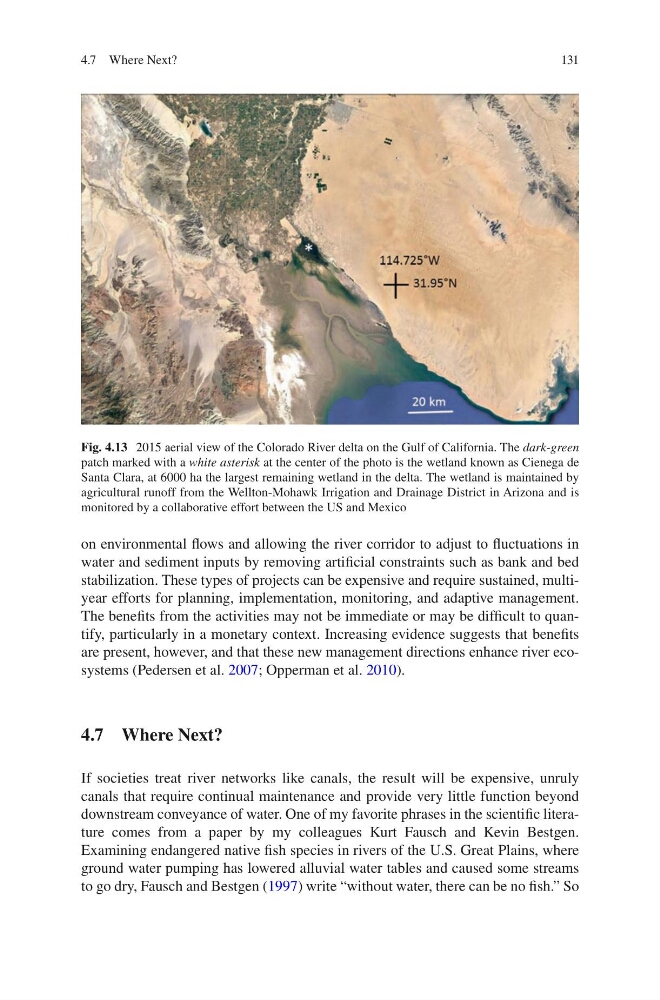
Fig. 4.13 2015 aerial view of the Colorado River delta on the Gulf of California. The dark-green
patch marked with a white asterisk at the center of the photo is the wetland known as Cienega de
Santa Clara, at 6000 ha the largest remaining wetland in the delta. The wetland is maintained by
agricultural runoff from the Wellton-Mohawk Irrigation and Drainage District in Arizona and is
monitored by a collaborative effort between the US and Mexico
4.7 Where Next?
on environmental flows and allowing the river corridor to adjust to fluctuations in
water and sediment inputs by removing artificial constraints such as bank and bed
stabilization. These types of projects can be expensive and require sustained, multiyear efforts for planning, implementation, monitoring, and adaptive management.
The benefits from the activities may not be immediate or may be difficult to quantify, particularly in a monetary context. Increasing evidence suggests that benefits
are present, however, and that these new management directions enhance river ecosystems (Pedersen et al. 2007; Opperman et al. 2010).
4.7 Where Next?
If societies treat river networks like canals, the result will be expensive, unruly
canals that require continual maintenance and provide very little function beyond
downstream conveyance of water. One of my favorite phrases in the scientific literature comes from a paper by my colleagues Kurt Fausch and Kevin Bestgen.
Examining endangered native fish species in rivers of the U.S. Great Plains, where
ground water pumping has lowered alluvial water tables and caused some streams
to go dry, Fausch and Bestgen (1997) write “without water, there can be no fish.” So
Fig. 4.13 2015 aerial view of the Colorado River delta on the Gulf of California. The dark-green
patch marked with a white asterisk at the center of the photo is the wetland known as Cienega de
Santa Clara, at 6000 ha the largest remaining wetland in the delta. The wetland is maintained by
agricultural runoff from the Wellton-Mohawk Irrigation and Drainage District in Arizona and is
monitored by a collaborative effort between the US and Mexico
4.7 Where Next?