

> 40 %
20 - 40 %
~ 0-20%
D No Data
Spatial Modeling of Nitrogen Leaching
49
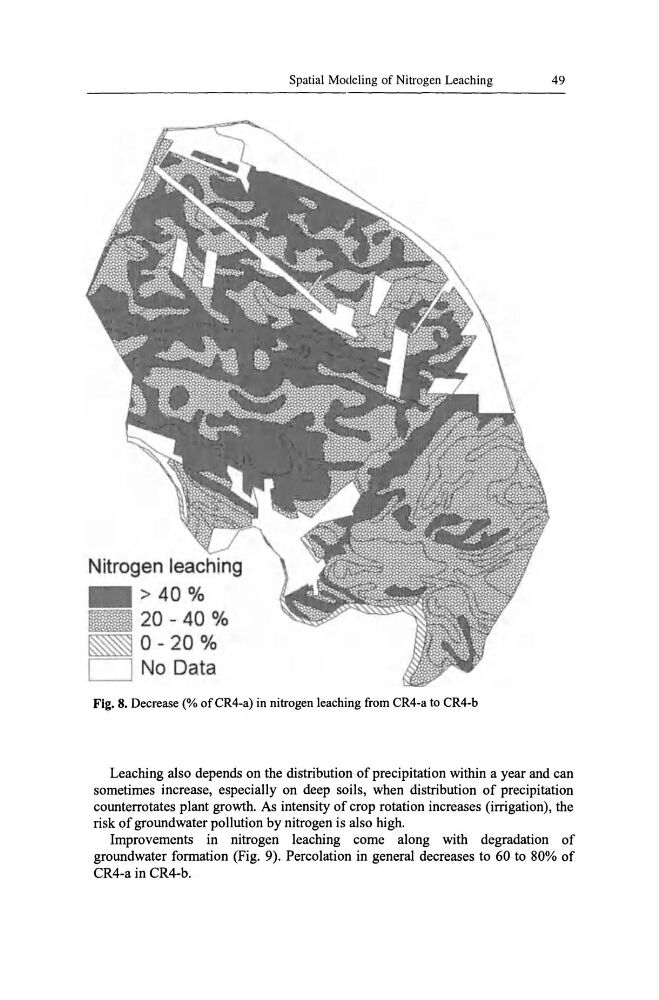
Fig. 8. Decrease (% ofCR4-a) in nitrogen leaching from CR4-a to CR4-b
Leaching also depends on the distribution of precipitation within a year and can
sometimes increase, especially on deep soils, when distribution of precipitation
counterrotates plant growth. As intensity of crop rotation increases (irrigation), the
risk of groundwater pollution by nitrogen is also high.
Improvements in nitrogen leaching come along with degradation of
groundwater formation (Fig. 9). Percolation in general decreases to 60 to 80% of
CR4-a in CR4-b.
20 - 40 %
~ 0-20%
D No Data
Spatial Modeling of Nitrogen Leaching
49
Fig. 8. Decrease (% ofCR4-a) in nitrogen leaching from CR4-a to CR4-b
Leaching also depends on the distribution of precipitation within a year and can
sometimes increase, especially on deep soils, when distribution of precipitation
counterrotates plant growth. As intensity of crop rotation increases (irrigation), the
risk of groundwater pollution by nitrogen is also high.
Improvements in nitrogen leaching come along with degradation of
groundwater formation (Fig. 9). Percolation in general decreases to 60 to 80% of
CR4-a in CR4-b.