

334
N.I. Galil and Y. Levinsky
FLOW
REGULATION
and
EQUALIZATION
OIL-WATER
SEPARATION
(OWS)
RECIRCULA TED I_'V'VV~ I
BIOLOGICAL
TREATMENT
by
AERATED
PONDS
(AP)
COOLING
SYSTEM
(RCS)
CHEMICAL
I"L---I CLARIFICATION
~~:L __ ~==:::r--~r---j and
"
SOFTENING
(CCSI)
RIVER +--1+-----4
and
SOFTENING
(CCS2)
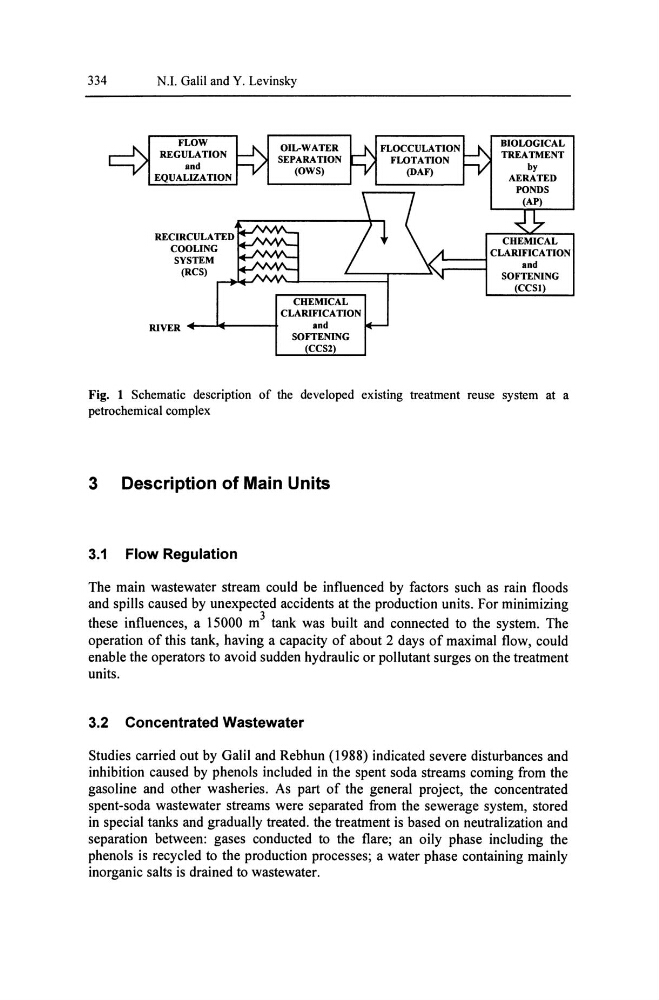
Fig. 1 Schematic description of the developed existing treatment reuse system at a
petrochemical complex
3 Description of Main Units
3.1 Flow Regulation
The main wastewater stream could be influenced by factors such as rain floods
and spills caused by unexpected accidents at the production units. For minimizing
these influences, a 15000 m 3 tank was built and connected to the system. The
operation of this tank, having a capacity of about 2 days of maximal flow, could
enable the operators to avoid sudden hydraulic or pollutant surges on the treatment
units.
3.2 Concentrated Wastewater
Studies carried out by Galil and Rebhun (1988) indicated severe disturbances and
inhibition caused by phenols included in the spent soda streams coming from the
gasoline and other washeries. As part of the general project, the concentrated
spent-soda wastewater streams were separated from the sewerage system, stored
in special tanks and gradually treated. the treatment is based on neutralization and
separation between: gases conducted to the flare; an oily phase including the
phenols is recycled to the production processes; a water phase containing mainly
inorganic salts is drained to wastewater.
N.I. Galil and Y. Levinsky
FLOW
REGULATION
and
EQUALIZATION
OIL-WATER
SEPARATION
(OWS)
RECIRCULA TED I_'V'VV~ I
BIOLOGICAL
TREATMENT
by
AERATED
PONDS
(AP)
COOLING
SYSTEM
(RCS)
CHEMICAL
I"L---I CLARIFICATION
~~:L __ ~==:::r--~r---j and
"
SOFTENING
(CCSI)
RIVER +--1+-----4
and
SOFTENING
(CCS2)
Fig. 1 Schematic description of the developed existing treatment reuse system at a
petrochemical complex
3 Description of Main Units
3.1 Flow Regulation
The main wastewater stream could be influenced by factors such as rain floods
and spills caused by unexpected accidents at the production units. For minimizing
these influences, a 15000 m 3 tank was built and connected to the system. The
operation of this tank, having a capacity of about 2 days of maximal flow, could
enable the operators to avoid sudden hydraulic or pollutant surges on the treatment
units.
3.2 Concentrated Wastewater
Studies carried out by Galil and Rebhun (1988) indicated severe disturbances and
inhibition caused by phenols included in the spent soda streams coming from the
gasoline and other washeries. As part of the general project, the concentrated
spent-soda wastewater streams were separated from the sewerage system, stored
in special tanks and gradually treated. the treatment is based on neutralization and
separation between: gases conducted to the flare; an oily phase including the
phenols is recycled to the production processes; a water phase containing mainly
inorganic salts is drained to wastewater.