

Groundwater Management Strategies to Improve Surface Water
267
made responsible for the dominance of small-sized zooplankton, which
contributes to turbidity.
amant altematlves
atar management
Immediate Improvement
Sustainable restoration by dynamic
~-:===:::;:===~====~ c.: h ydf-=:.I' O=Iog:...:..:ica=I' -' .I' 8Q=...::::.lm:.:..:eo---_ _ _ _ ----'
Option 1: increased outflow by
urface withdrawal
ilution
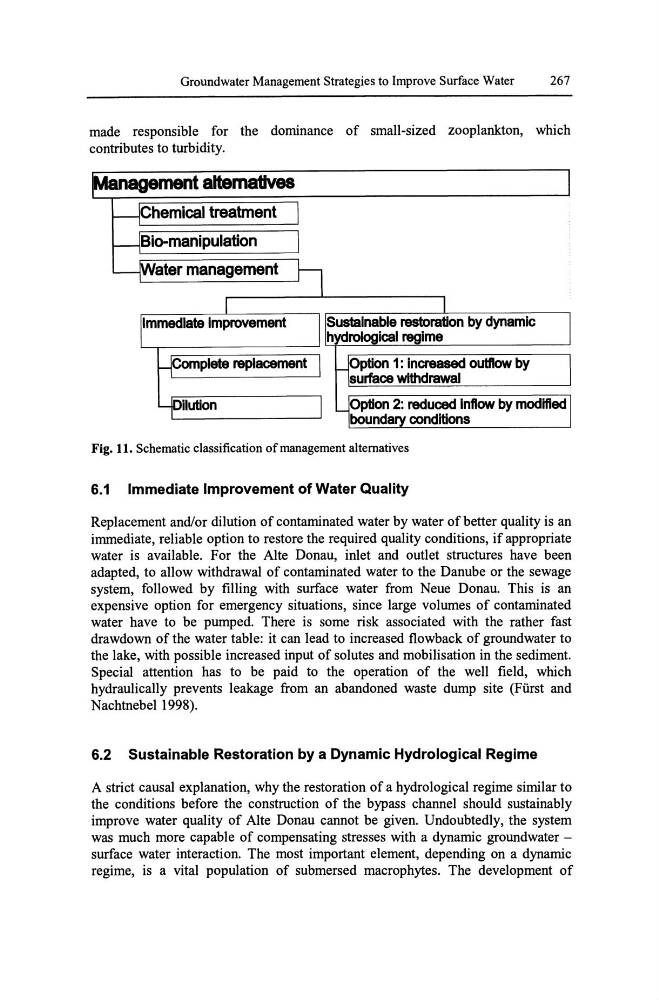
Fig. 11. Schematic classification of management alternatives
6.1 Immediate Improvement of Water Quality
Replacement and/or dilution of contaminated water by water of better quality is an
immediate, reliable option to restore the required quality conditions, if appropriate
water is available. For the Alte Donau, inlet and outlet structures have been
adapted, to allow withdrawal of contaminated water to the Danube or the sewage
system, followed by filling with surface water from Neue Donau. This is an
expensive option for emergency situations, since large volumes of contaminated
water have to be pumped. There is some risk associated with the rather fast
drawdown of the water table: it can lead to increased flowback of groundwater to
the lake, with possible increased input of solutes and mobilisation in the sediment.
Special attention has to be paid to the operation of the well field, which
hydraulically prevents leakage from an abandoned waste dump site (FUrst and
NachtnebeI1998).
6.2 Sustainable Restoration by a Dynamic Hydrological Regime
A strict causal explanation, why the restoration of a hydrological regime similar to
the conditions before the construction of the bypass channel should sustainably
improve water quality of Alte Donau cannot be given. Undoubtedly, the system
was much more capable of compensating stresses with a dynamic groundwater -
surface water interaction. The most important element, depending on a dynamic
regime, is a vital population of submersed macrophytes. The development of
267
made responsible for the dominance of small-sized zooplankton, which
contributes to turbidity.
amant altematlves
atar management
Immediate Improvement
Sustainable restoration by dynamic
~-:===:::;:===~====~ c.: h ydf-=:.I' O=Iog:...:..:ica=I' -' .I' 8Q=...::::.lm:.:..:eo---_ _ _ _ ----'
Option 1: increased outflow by
urface withdrawal
ilution
Fig. 11. Schematic classification of management alternatives
6.1 Immediate Improvement of Water Quality
Replacement and/or dilution of contaminated water by water of better quality is an
immediate, reliable option to restore the required quality conditions, if appropriate
water is available. For the Alte Donau, inlet and outlet structures have been
adapted, to allow withdrawal of contaminated water to the Danube or the sewage
system, followed by filling with surface water from Neue Donau. This is an
expensive option for emergency situations, since large volumes of contaminated
water have to be pumped. There is some risk associated with the rather fast
drawdown of the water table: it can lead to increased flowback of groundwater to
the lake, with possible increased input of solutes and mobilisation in the sediment.
Special attention has to be paid to the operation of the well field, which
hydraulically prevents leakage from an abandoned waste dump site (FUrst and
NachtnebeI1998).
6.2 Sustainable Restoration by a Dynamic Hydrological Regime
A strict causal explanation, why the restoration of a hydrological regime similar to
the conditions before the construction of the bypass channel should sustainably
improve water quality of Alte Donau cannot be given. Undoubtedly, the system
was much more capable of compensating stresses with a dynamic groundwater -
surface water interaction. The most important element, depending on a dynamic
regime, is a vital population of submersed macrophytes. The development of