

266
J. FOrst and H. P. Nachtnebel
Additionally, groundwater enters the lake at a lower temperature (and thus
higher density) from the bottom, providing oxygen to the sediment.
IE I
.
ary spnng
Summer
T
~.
Dynamic regime With '"' f]-u-ct -u-al\ll ting wa:~;able ~
I
•
Early spring
Summer
Static regime with constant water table
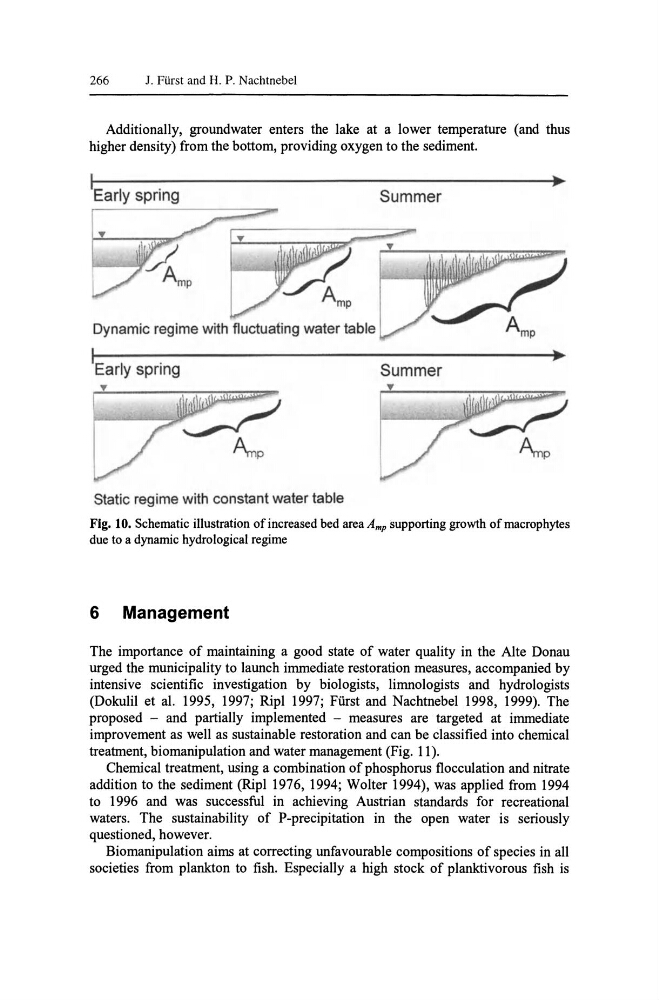
Fig. 10. Schematic illustration of increased bed area Amp supporting growth of macrophytes
due to a dynamic hydrological regime
6 Management
The importance of maintaining a good state of water quality in the Alte Donau
urged the municipality to launch immediate restoration measures, accompanied by
intensive scientific investigation by biologists, limnologists and hydrologists
(Dokulil et al. 1995, 1997; Ripl 1997; Furst and Nachtnebel 1998, 1999). The
proposed - and partially implemented - measures are targeted at immediate
improvement as well as sustainable restoration and can be classified into chemical
treatment, biomanipulation and water management (Fig. 11).
Chemical treatment, using a combination of phosphorus flocculation and nitrate
addition to the sediment (RipI1976, 1994; Wolter 1994), was applied from 1994
to 1996 and was successful in achieving Austrian standards for recreational
waters. The sustainability of P-precipitation in the open water is seriously
questioned, however.
Biomanipulation aims at correcting unfavourable compositions of species in all
societies from plankton to fish. Especially a high stock of planktivorous fish is
J. FOrst and H. P. Nachtnebel
Additionally, groundwater enters the lake at a lower temperature (and thus
higher density) from the bottom, providing oxygen to the sediment.
IE I
.
ary spnng
Summer
T
~.
Dynamic regime With '"' f]-u-ct -u-al\ll ting wa:~;able ~
I
•
Early spring
Summer
Static regime with constant water table
Fig. 10. Schematic illustration of increased bed area Amp supporting growth of macrophytes
due to a dynamic hydrological regime
6 Management
The importance of maintaining a good state of water quality in the Alte Donau
urged the municipality to launch immediate restoration measures, accompanied by
intensive scientific investigation by biologists, limnologists and hydrologists
(Dokulil et al. 1995, 1997; Ripl 1997; Furst and Nachtnebel 1998, 1999). The
proposed - and partially implemented - measures are targeted at immediate
improvement as well as sustainable restoration and can be classified into chemical
treatment, biomanipulation and water management (Fig. 11).
Chemical treatment, using a combination of phosphorus flocculation and nitrate
addition to the sediment (RipI1976, 1994; Wolter 1994), was applied from 1994
to 1996 and was successful in achieving Austrian standards for recreational
waters. The sustainability of P-precipitation in the open water is seriously
questioned, however.
Biomanipulation aims at correcting unfavourable compositions of species in all
societies from plankton to fish. Especially a high stock of planktivorous fish is