

238
R. Orthofer and W. Loibl
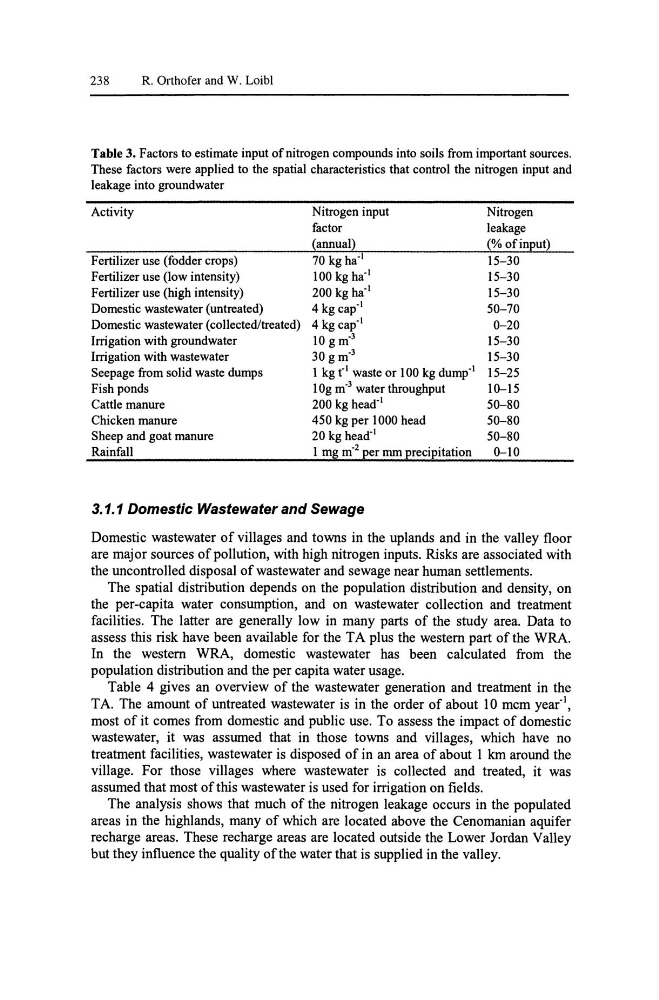
Table 3. Factors to estimate input of nitrogen compounds into soils from important sources.
These factors were applied to the spatial characteristics that control the nitrogen input and
leakage into groundwater
Activity
Nitrogen input
Nitrogen
factor
leakage
(annual)
(% of input)
Fertilizer use (fodder crops)
70 kg ha· 1
15-30
Fertilizer use (low intensity)
100 kg ha· 1
15-30
Fertilizer use (high intensity)
200 kg ha· 1
15-30
Domestic wastewater (untreated)
4 kg cap·l
50-70
Domestic wastewater (collected/treated) 4 kg cap·l
0-20
Irrigation with groundwater
10 g m· 3
15-30
Irrigation with wastewater
30 gm· 3
15-30
Seepage from solid waste dumps
1 kg rl waste or 100 kg dump' 1 15-25
Fish ponds
109 m· 3 water throughput
10-15
Cattle manure
200 kg head' 1
50-80
Chicken manure
450 kg per 1000 head
50-80
Sheep and goat manure
20 kg head' 1
50-80
Rainfall
1 mg m· 2 per mm precipitation
0-10
3.1.1 Domestic Wastewater and Sewage
Domestic wastewater of villages and towns in the uplands and in the valley floor
are major sources of pollution, with high nitrogen inputs. Risks are associated with
the uncontrolled disposal of wastewater and sewage near human settlements.
The spatial distribution depends on the population distribution and density, on
the per-capita water consumption, and on wastewater collection and treatment
facilities. The latter are generally low in many parts of the study area. Data to
assess this risk have been available for the T A plus the western part of the WRA.
In the western WRA, domestic wastewater has been calculated from the
population distribution and the per capita water usage.
Table 4 gives an overview of the wastewater generation and treatment in the
T A. The amount of untreated wastewater is in the order of about 10 mcm year" 1 ,
most of it comes from domestic and public use. To assess the impact of domestic
wastewater, it was assumed that in those towns and villages, which have no
treatment facilities, wastewater is disposed of in an area of about I km around the
village. For those villages where wastewater is collected and treated, it was
assumed that most of this wastewater is used for irrigation on fields.
The analysis shows that much of the nitrogen leakage occurs in the populated
areas in the highlands, many of which are located above the Cenomanian aquifer
recharge areas. These recharge areas are located outside the Lower Jordan Valley
but they influence the quality of the water that is supplied in the valley.
R. Orthofer and W. Loibl
Table 3. Factors to estimate input of nitrogen compounds into soils from important sources.
These factors were applied to the spatial characteristics that control the nitrogen input and
leakage into groundwater
Activity
Nitrogen input
Nitrogen
factor
leakage
(annual)
(% of input)
Fertilizer use (fodder crops)
70 kg ha· 1
15-30
Fertilizer use (low intensity)
100 kg ha· 1
15-30
Fertilizer use (high intensity)
200 kg ha· 1
15-30
Domestic wastewater (untreated)
4 kg cap·l
50-70
Domestic wastewater (collected/treated) 4 kg cap·l
0-20
Irrigation with groundwater
10 g m· 3
15-30
Irrigation with wastewater
30 gm· 3
15-30
Seepage from solid waste dumps
1 kg rl waste or 100 kg dump' 1 15-25
Fish ponds
109 m· 3 water throughput
10-15
Cattle manure
200 kg head' 1
50-80
Chicken manure
450 kg per 1000 head
50-80
Sheep and goat manure
20 kg head' 1
50-80
Rainfall
1 mg m· 2 per mm precipitation
0-10
3.1.1 Domestic Wastewater and Sewage
Domestic wastewater of villages and towns in the uplands and in the valley floor
are major sources of pollution, with high nitrogen inputs. Risks are associated with
the uncontrolled disposal of wastewater and sewage near human settlements.
The spatial distribution depends on the population distribution and density, on
the per-capita water consumption, and on wastewater collection and treatment
facilities. The latter are generally low in many parts of the study area. Data to
assess this risk have been available for the T A plus the western part of the WRA.
In the western WRA, domestic wastewater has been calculated from the
population distribution and the per capita water usage.
Table 4 gives an overview of the wastewater generation and treatment in the
T A. The amount of untreated wastewater is in the order of about 10 mcm year" 1 ,
most of it comes from domestic and public use. To assess the impact of domestic
wastewater, it was assumed that in those towns and villages, which have no
treatment facilities, wastewater is disposed of in an area of about I km around the
village. For those villages where wastewater is collected and treated, it was
assumed that most of this wastewater is used for irrigation on fields.
The analysis shows that much of the nitrogen leakage occurs in the populated
areas in the highlands, many of which are located above the Cenomanian aquifer
recharge areas. These recharge areas are located outside the Lower Jordan Valley
but they influence the quality of the water that is supplied in the valley.