

222
B. Nilkens et al.
gen, total dissolved solids, specific chemical species, such as nitrogen and phosphorus, pathogenic organisms and indicators, water temperature, pH value and
others. These parameters are simulated within each subproject. In some cases parameters are modeled only locally. For example, in reservoirs and lakes, different
substances are of main importance than in flowing water. With the Spree model,
calculations of the development of water quality until 2035 are possible. Users can
change boundary conditions in steps of 1 or more years. New intakes such as
treatment plants etc. can be added easily at any balance node.
During simulation, each submodel is called a 100 times per simulated month in
order to receive statistically stable results. In a complete run for a simulation time
of35 years, 42000 simulations have to be carried out. With just 1 s per simulation,
the total calculation time would exceed II h. Therefore every submodel has to
keep a maximum time for calculation. Calculation time has to be optimized. Thus,
simplifications in modeling have to be made. In order to be able to provide a
meaningful and reliable management tool, each modeler has to find the optimum
between the maximum accepted running time and minimum of necessary detail in
calculation.
Integration of modules
Flow scheme
Flow Scheme
•
user
reservoir
•
balance node
Integration of modules
Data from quantity model
D modul internal data
D modul calculation
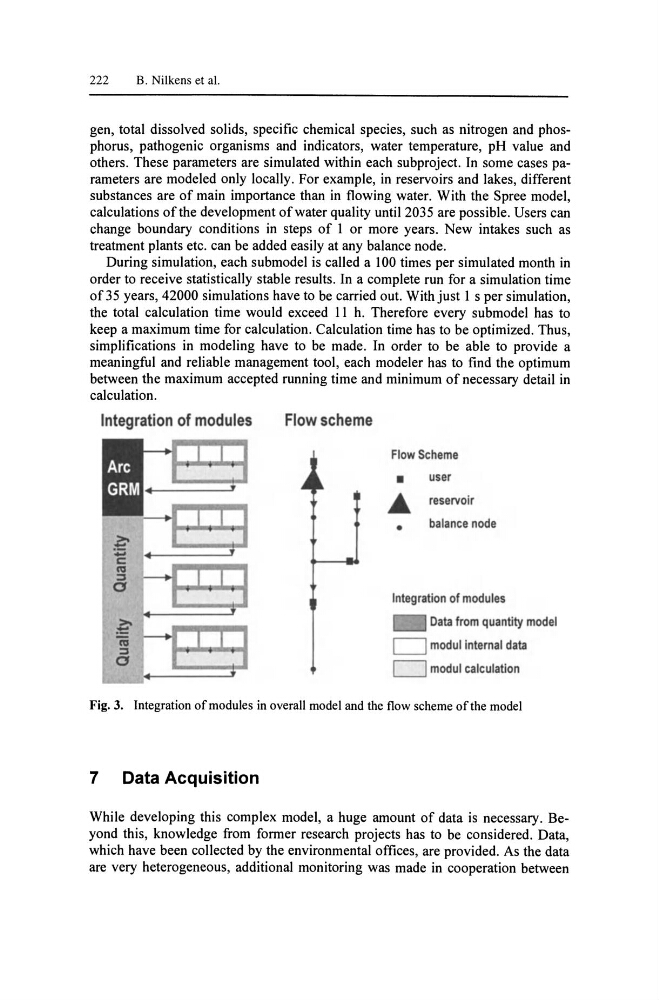
Fig. 3. Integration of modules in overall model and the flow scheme of the model
7 Data Acquisition
While developing this complex model, a huge amount of data is necessary. Beyond this, knowledge from former research projects has to be considered. Data,
which have been collected by the environmental offices, are provided. As the data
are very heterogeneous, additional monitoring was made in cooperation between
B. Nilkens et al.
gen, total dissolved solids, specific chemical species, such as nitrogen and phosphorus, pathogenic organisms and indicators, water temperature, pH value and
others. These parameters are simulated within each subproject. In some cases parameters are modeled only locally. For example, in reservoirs and lakes, different
substances are of main importance than in flowing water. With the Spree model,
calculations of the development of water quality until 2035 are possible. Users can
change boundary conditions in steps of 1 or more years. New intakes such as
treatment plants etc. can be added easily at any balance node.
During simulation, each submodel is called a 100 times per simulated month in
order to receive statistically stable results. In a complete run for a simulation time
of35 years, 42000 simulations have to be carried out. With just 1 s per simulation,
the total calculation time would exceed II h. Therefore every submodel has to
keep a maximum time for calculation. Calculation time has to be optimized. Thus,
simplifications in modeling have to be made. In order to be able to provide a
meaningful and reliable management tool, each modeler has to find the optimum
between the maximum accepted running time and minimum of necessary detail in
calculation.
Integration of modules
Flow scheme
Flow Scheme
•
user
reservoir
•
balance node
Integration of modules
Data from quantity model
D modul internal data
D modul calculation
Fig. 3. Integration of modules in overall model and the flow scheme of the model
7 Data Acquisition
While developing this complex model, a huge amount of data is necessary. Beyond this, knowledge from former research projects has to be considered. Data,
which have been collected by the environmental offices, are provided. As the data
are very heterogeneous, additional monitoring was made in cooperation between