

162
J. Atkinson
Time
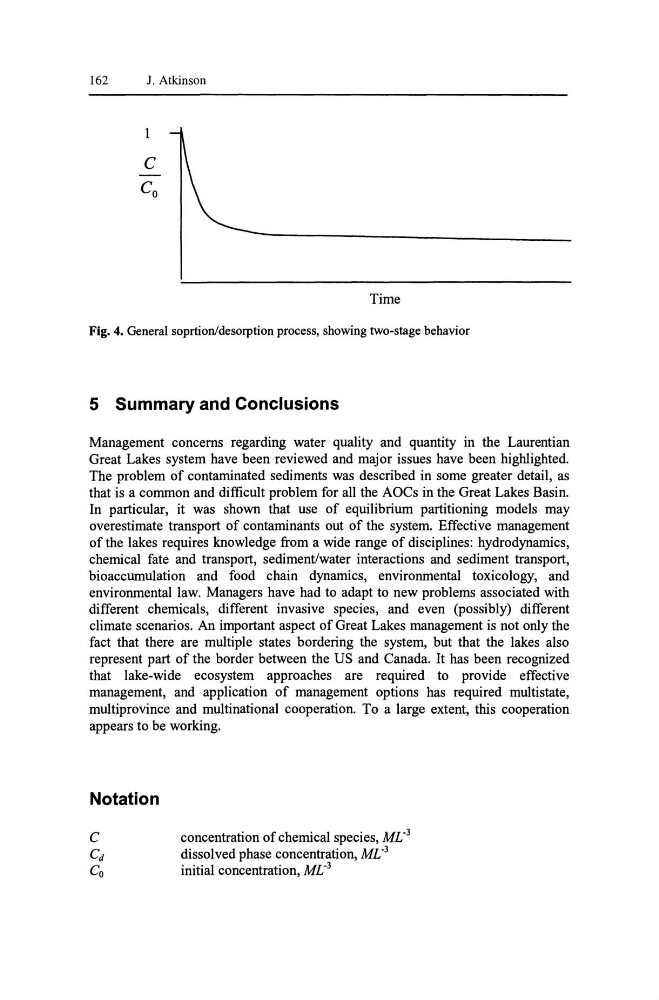
Fig. 4. General soprtionldesorption process, showing two-stage behavior
5 Summary and Conclusions
Management concerns regarding water quality and quantity in the Laurentian
Great Lakes system have been reviewed and major issues have been highlighted.
The problem of contaminated sediments was described in some greater detail, as
that is a common and difficult problem for all the AOCs in the Great Lakes Basin.
In particular, it was shown that use of equilibrium partitioning models may
overestimate transport of contaminants out of the system. Effective management
of the lakes requires knowledge from a wide range of disciplines: hydrodynamics,
chemical fate and transport, sediment/water interactions and sediment transport,
bioaccumulation and food chain dynamics, environmental toxicology, and
environmental law. Managers have had to adapt to new problems associated with
different chemicals, different invasive species, and even (possibly) different
climate scenarios. An important aspect of Great Lakes management is not only the
fact that there are multiple states bordering the system, but that the lakes also
represent part of the border between the US and Canada. It has been recognized
that lake-wide ecosystem approaches are required to provide effective
management, and application of management options has required multi state,
multiprovince and multinational cooperation. To a large extent, this cooperation
appears to be working.
Notation
concentration of chemical species, ML· 3
dissolved phase concentration, Mr 3
initial concentration, Mr 3
J. Atkinson
Time
Fig. 4. General soprtionldesorption process, showing two-stage behavior
5 Summary and Conclusions
Management concerns regarding water quality and quantity in the Laurentian
Great Lakes system have been reviewed and major issues have been highlighted.
The problem of contaminated sediments was described in some greater detail, as
that is a common and difficult problem for all the AOCs in the Great Lakes Basin.
In particular, it was shown that use of equilibrium partitioning models may
overestimate transport of contaminants out of the system. Effective management
of the lakes requires knowledge from a wide range of disciplines: hydrodynamics,
chemical fate and transport, sediment/water interactions and sediment transport,
bioaccumulation and food chain dynamics, environmental toxicology, and
environmental law. Managers have had to adapt to new problems associated with
different chemicals, different invasive species, and even (possibly) different
climate scenarios. An important aspect of Great Lakes management is not only the
fact that there are multiple states bordering the system, but that the lakes also
represent part of the border between the US and Canada. It has been recognized
that lake-wide ecosystem approaches are required to provide effective
management, and application of management options has required multi state,
multiprovince and multinational cooperation. To a large extent, this cooperation
appears to be working.
Notation
concentration of chemical species, ML· 3
dissolved phase concentration, Mr 3
initial concentration, Mr 3