

Organometallic Compounds
171
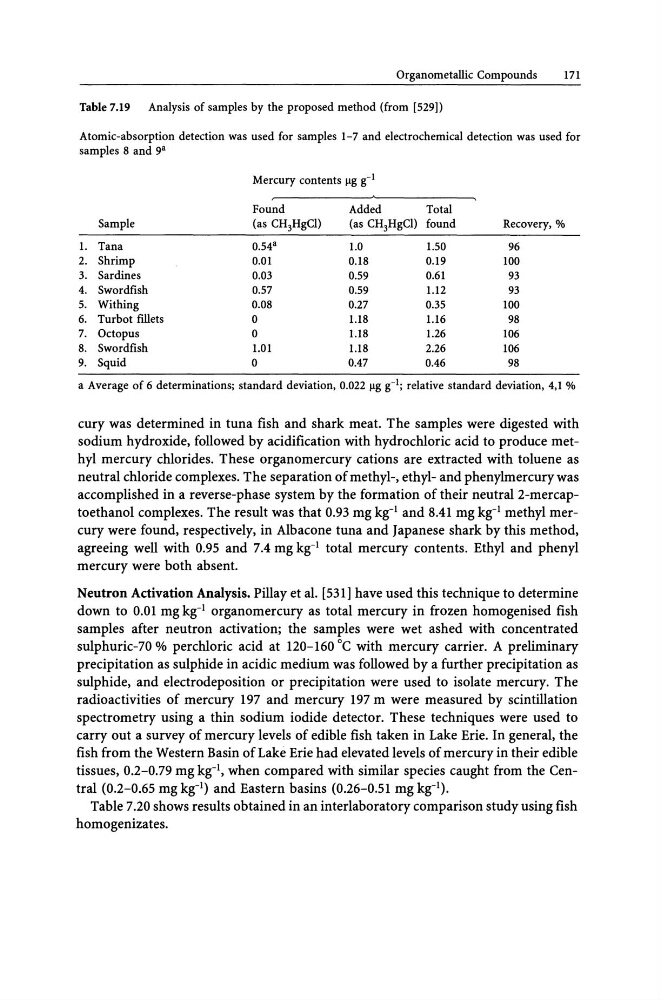
Table 7.19 Analysis of samples by the proposed method (from [529])
Atomic-absorption detection was used for samples 1-7 and electrochemical detection was used for
samples 8 and 9"
Mercury contents I1g g-I
Found
Added
Total
Sample
(as CH3HgCI)
(as CH 3 HgCI) found
Recovery, %
1. Tana
0.54"
1.0
1.50
96
2. Shrimp
0.01
0.18
0.19
100
3. Sardines
0.03
0.59
0.61
93
4. Swordfish
0.57
0.59
1.12
93
5. Withing
0.08
0.27
0.35
100
6. Turbot fillets
0
1.18
1.16
98
7. Octopus
0
1.18
1.26
106
8. Swordfish
1.01
1.18
2.26
106
9. Squid
0
0.47
0.46
98
a Average of 6 determinations; standard deviation, 0.022 I1g g-I; relative standard deviation, 4,1 %
cury was determined in tuna fish and shark meat. The samples were digested with
sodium hydroxide, followed by acidification with hydrochloric acid to produce methyl mercury chlorides. These organomercury cations are extracted with toluene as
neutral chloride complexes. The separation of methyl-, ethyl- and phenylmercury was
accomplished in a reverse-phase system by the formation of their neutral 2-mercaptoethanol complexes. The result was that 0.93 mg kg-I and 8.41 mg kg-I methyl mercury were found, respectively, in Albacone tuna and Japanese shark by this method,
agreeing well with 0.95 and 7.4 mg kg-I total mercury contents. Ethyl and phenyl
mercury were both absent.
Neutron Activation Analysis. Pillay et al. [531] have used this technique to determine
down to 0.01 mg kg-I organomercury as total mercury in frozen homogenised fish
samples after neutron activation; the samples were wet ashed with concentrated
sulphuric-70 % perchloric acid at 120-160°C with mercury carrier. A preliminary
precipitation as sulphide in acidic medium was followed by a further precipitation as
sulphide, and electrodeposition or precipitation were used to isolate mercury. The
radioactivities of mercury 197 and mercury 197 m were measured by scintillation
spectrometry using a thin sodium iodide detector. These techniques were used to
carry out a survey of mercury levels of edible fish taken in Lake Erie. In general, the
fish from the Western Basin of Lake Erie had elevated levels of mercury in their edible
tissues, 0.2-0.79 mg kg-I, when compared with similar species caught from the Central (0.2-0.65 mg kg-I) and Eastern basins (0.26-0.51 mg kg-I).
Table 7.20 shows results obtained in an interlaboratory comparison study using fish
homogenizates.
171
Table 7.19 Analysis of samples by the proposed method (from [529])
Atomic-absorption detection was used for samples 1-7 and electrochemical detection was used for
samples 8 and 9"
Mercury contents I1g g-I
Found
Added
Total
Sample
(as CH3HgCI)
(as CH 3 HgCI) found
Recovery, %
1. Tana
0.54"
1.0
1.50
96
2. Shrimp
0.01
0.18
0.19
100
3. Sardines
0.03
0.59
0.61
93
4. Swordfish
0.57
0.59
1.12
93
5. Withing
0.08
0.27
0.35
100
6. Turbot fillets
0
1.18
1.16
98
7. Octopus
0
1.18
1.26
106
8. Swordfish
1.01
1.18
2.26
106
9. Squid
0
0.47
0.46
98
a Average of 6 determinations; standard deviation, 0.022 I1g g-I; relative standard deviation, 4,1 %
cury was determined in tuna fish and shark meat. The samples were digested with
sodium hydroxide, followed by acidification with hydrochloric acid to produce methyl mercury chlorides. These organomercury cations are extracted with toluene as
neutral chloride complexes. The separation of methyl-, ethyl- and phenylmercury was
accomplished in a reverse-phase system by the formation of their neutral 2-mercaptoethanol complexes. The result was that 0.93 mg kg-I and 8.41 mg kg-I methyl mercury were found, respectively, in Albacone tuna and Japanese shark by this method,
agreeing well with 0.95 and 7.4 mg kg-I total mercury contents. Ethyl and phenyl
mercury were both absent.
Neutron Activation Analysis. Pillay et al. [531] have used this technique to determine
down to 0.01 mg kg-I organomercury as total mercury in frozen homogenised fish
samples after neutron activation; the samples were wet ashed with concentrated
sulphuric-70 % perchloric acid at 120-160°C with mercury carrier. A preliminary
precipitation as sulphide in acidic medium was followed by a further precipitation as
sulphide, and electrodeposition or precipitation were used to isolate mercury. The
radioactivities of mercury 197 and mercury 197 m were measured by scintillation
spectrometry using a thin sodium iodide detector. These techniques were used to
carry out a survey of mercury levels of edible fish taken in Lake Erie. In general, the
fish from the Western Basin of Lake Erie had elevated levels of mercury in their edible
tissues, 0.2-0.79 mg kg-I, when compared with similar species caught from the Central (0.2-0.65 mg kg-I) and Eastern basins (0.26-0.51 mg kg-I).
Table 7.20 shows results obtained in an interlaboratory comparison study using fish
homogenizates.