

Metals
133
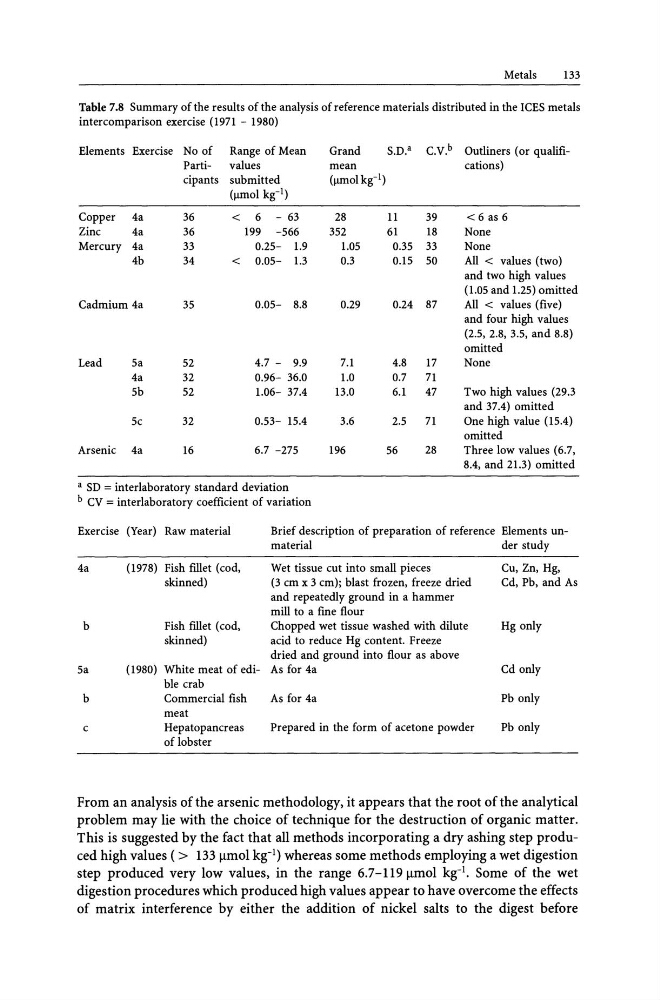
Table 7.8 Summary of the results of the analysis of reference materials distributed in the ICES metals
intercomparison exercise (1971 - 1980)
Elements Exercise No of Range of Mean
Grand
S.D." C.V. b Outliners (or qualifiParti- values
mean
cations)
cipants submitted
(lIffiol kg-I)
(lIffiol kg-I)
Copper 4a
36
< 6 - 63
28
11
39
<6 as 6
Zinc
4a
36
199 -566
352
61
18
None
Mercury 4a
33
0.25- 1.9
1.05
0.35 33
None
4b
34
< 0.05- 1.3
0.3
0.15 50
All < values (two)
and two high values
(1.05 and 1.25) omitted
Cadmium 4a
35
0.05- 8.8
0.29
0.24 87
All < values (five)
and four high values
(2.5, 2.8, 3.5, and 8.8)
omitted
Lead
Sa
52
4.7 - 9.9
7.1
4.8
17
None
4a
32
0.96- 36.0
1.0
0.7
71
5b
52
1.06- 37.4
13.0
6.1
47
Two high values (29.3
and 37.4) omitted
5c
32
0.53- 15.4
3.6
2.5
71
One high value (15.4)
omitted
Arsenic 4a
16
6.7 -275
196
56
28
Three low values (6.7,
8.4, and 21.3) omitted
" SO = interlaboratory standard deviation
b CV = interlaboratory coefficient of variation
Exercise (Year) Raw material
Brief description of preparation of reference Elements unmaterial
der study
4a
(1978) Fish fillet (cod,
Wet tissue cut into small pieces
Cu, Zn, Hg,
skinned)
(3 cm x 3 cm); blast frozen, freeze dried
Cd, Pb, and As
and repeatedly ground in a hammer
mill to a fine flour
b
Fish fillet (cod,
Chopped wet tissue washed with dilute
Hgonly
skinned)
acid to reduce Hg content. Freeze
dried and ground into flour as above
Sa
(1980) White meat of edi- As for 4a
Cd only
ble crab
b
Commercial fish
As for 4a
Pb only
meat
c
Hepatopancreas
Prepared in the form of acetone powder
Pb only
of lobster
From an analysis of the arsenic methodology, it appears that the root of the analytical
problem may lie with the choice of technique for the destruction of organic matter.
This is suggested by the fact that all methods incorporating a dry ashing step produced high values (> 133 Jlffiol kg-I) whereas some methods employing a wet digestion
step produced very low values, in the range 6.7-119 Jlffiol kg-I. Some of the wet
digestion procedures which produced high values appear to have overcome the effects
of matrix interference by either the addition of nickel salts to the digest before
133
Table 7.8 Summary of the results of the analysis of reference materials distributed in the ICES metals
intercomparison exercise (1971 - 1980)
Elements Exercise No of Range of Mean
Grand
S.D." C.V. b Outliners (or qualifiParti- values
mean
cations)
cipants submitted
(lIffiol kg-I)
(lIffiol kg-I)
Copper 4a
36
< 6 - 63
28
11
39
<6 as 6
Zinc
4a
36
199 -566
352
61
18
None
Mercury 4a
33
0.25- 1.9
1.05
0.35 33
None
4b
34
< 0.05- 1.3
0.3
0.15 50
All < values (two)
and two high values
(1.05 and 1.25) omitted
Cadmium 4a
35
0.05- 8.8
0.29
0.24 87
All < values (five)
and four high values
(2.5, 2.8, 3.5, and 8.8)
omitted
Lead
Sa
52
4.7 - 9.9
7.1
4.8
17
None
4a
32
0.96- 36.0
1.0
0.7
71
5b
52
1.06- 37.4
13.0
6.1
47
Two high values (29.3
and 37.4) omitted
5c
32
0.53- 15.4
3.6
2.5
71
One high value (15.4)
omitted
Arsenic 4a
16
6.7 -275
196
56
28
Three low values (6.7,
8.4, and 21.3) omitted
" SO = interlaboratory standard deviation
b CV = interlaboratory coefficient of variation
Exercise (Year) Raw material
Brief description of preparation of reference Elements unmaterial
der study
4a
(1978) Fish fillet (cod,
Wet tissue cut into small pieces
Cu, Zn, Hg,
skinned)
(3 cm x 3 cm); blast frozen, freeze dried
Cd, Pb, and As
and repeatedly ground in a hammer
mill to a fine flour
b
Fish fillet (cod,
Chopped wet tissue washed with dilute
Hgonly
skinned)
acid to reduce Hg content. Freeze
dried and ground into flour as above
Sa
(1980) White meat of edi- As for 4a
Cd only
ble crab
b
Commercial fish
As for 4a
Pb only
meat
c
Hepatopancreas
Prepared in the form of acetone powder
Pb only
of lobster
From an analysis of the arsenic methodology, it appears that the root of the analytical
problem may lie with the choice of technique for the destruction of organic matter.
This is suggested by the fact that all methods incorporating a dry ashing step produced high values (> 133 Jlffiol kg-I) whereas some methods employing a wet digestion
step produced very low values, in the range 6.7-119 Jlffiol kg-I. Some of the wet
digestion procedures which produced high values appear to have overcome the effects
of matrix interference by either the addition of nickel salts to the digest before