

ture. Brenowitz et al. (1985) showed that auditory neurons in the central
nervous system that are sensitive to pulse rate show the same temperature
scaling as the call and the preferences.
6.1.2. Pattern Generators
The dominant, or carrier, frequency of a signal is often determined by the
mass of the primary vibrator that produces the sound and can be modified
by radiating and resonating properties upstream from the vibrator. Temporal parameters of signals, on the other hand, are often actively regulated
by behavioral–physiological properties, such as rate of stridulation or expiration. In such cases, there could be a neural oscillator that regulates the
production mechanism to achieve the appropriate temporal characteristics
of the signal. Receivers must decode these temporal signal characters. This
could be achieved by comparing the pattern of auditory stimulation to a
neural oscillator that acts as a template for temporal-pattern recognition.
If the signal and receiver were both under control of the same neural oscillator or central pattern generator, any change in the temporal aspect of one
component of the communication dyad would be immediately matched by
the same change in the other component (Alexander 1962; Hoy et al. 1977).
250
M.J. Ryan and N.M. Kime
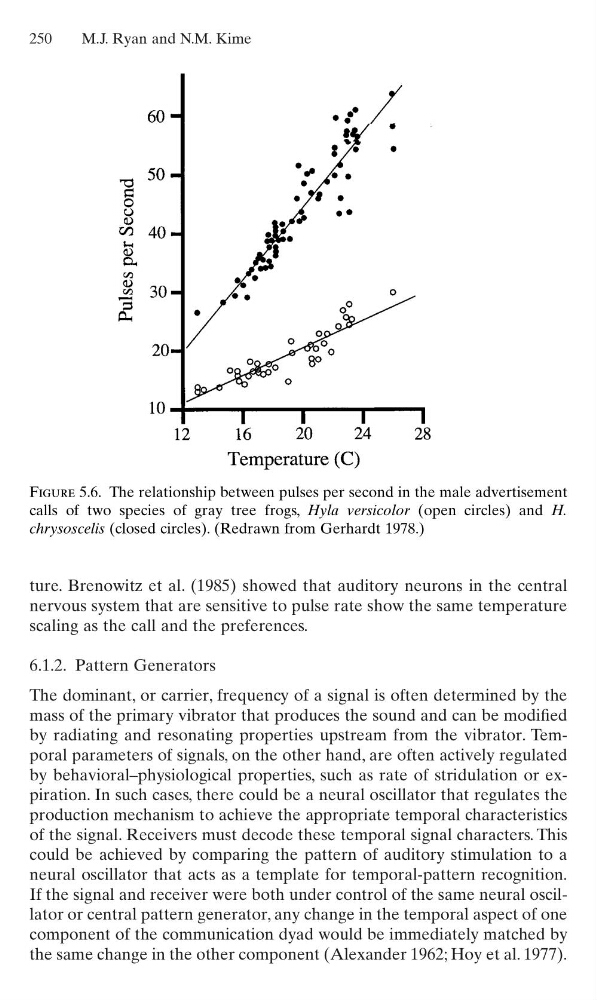
Figure 5.6. The relationship between pulses per second in the male advertisement
calls of two species of gray tree frogs, Hyla versicolor (open circles) and H.
chrysoscelis (closed circles). (Redrawn from Gerhardt 1978.)
nervous system that are sensitive to pulse rate show the same temperature
scaling as the call and the preferences.
6.1.2. Pattern Generators
The dominant, or carrier, frequency of a signal is often determined by the
mass of the primary vibrator that produces the sound and can be modified
by radiating and resonating properties upstream from the vibrator. Temporal parameters of signals, on the other hand, are often actively regulated
by behavioral–physiological properties, such as rate of stridulation or expiration. In such cases, there could be a neural oscillator that regulates the
production mechanism to achieve the appropriate temporal characteristics
of the signal. Receivers must decode these temporal signal characters. This
could be achieved by comparing the pattern of auditory stimulation to a
neural oscillator that acts as a template for temporal-pattern recognition.
If the signal and receiver were both under control of the same neural oscillator or central pattern generator, any change in the temporal aspect of one
component of the communication dyad would be immediately matched by
the same change in the other component (Alexander 1962; Hoy et al. 1977).
250
M.J. Ryan and N.M. Kime
Figure 5.6. The relationship between pulses per second in the male advertisement
calls of two species of gray tree frogs, Hyla versicolor (open circles) and H.
chrysoscelis (closed circles). (Redrawn from Gerhardt 1978.)