

7. Electrophysiological Techniques
305
Stimulus
Input
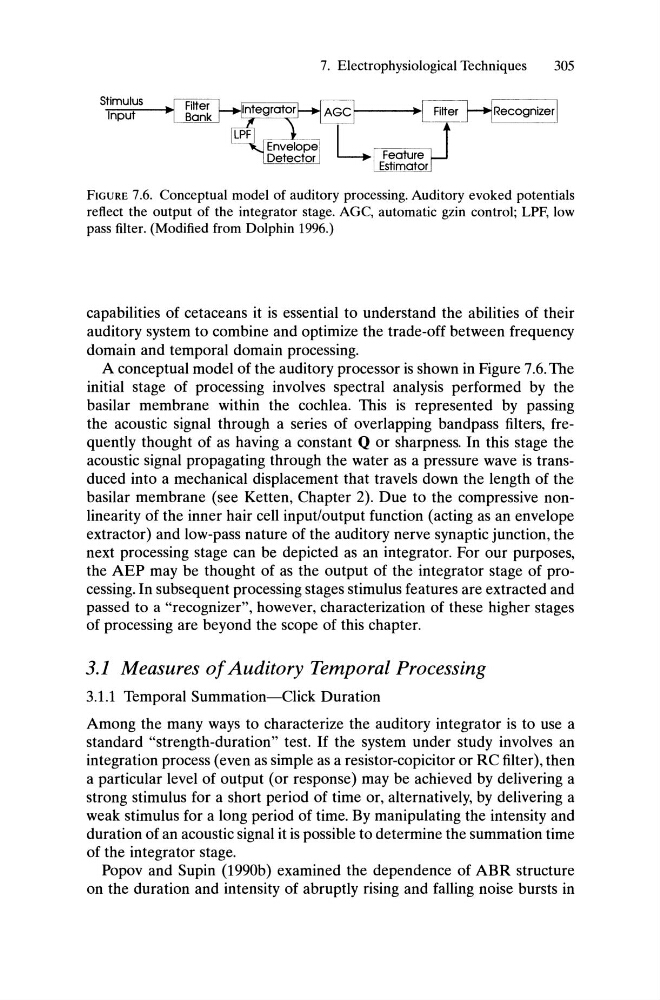
FIGURE 7.6. Conceptual model of auditory processing. Auditory evoked potentials
reflect the output of the integrator stage. AGC, automatic gzin control; LPF, low
pass filter. (Modified from Dolphin 1996.)
capabilities of cetaceans it is essential to understand the abilities of their
auditory system to combine and optimize the trade-off between frequency
domain and temporal domain processing.
A conceptual model of the auditory processor is shown in Figure 7.6. The
initial stage of processing involves spectral analysis performed by the
basilar membrane within the cochlea. This is represented by passing
the acoustic signal through a series of overlapping bandpass filters, frequently thought of as having a constant Q or sharpness. In this stage the
acoustic signal propagating through the water as a pressure wave is transduced into a mechanical displacement that travels down the length of the
basilar membrane (see Ketten, Chapter 2). Due to the compressive nonlinearity of the inner hair cell input/output function (acting as an envelope
extractor) and low-pass nature of the auditory nerve synaptic junction, the
next processing stage can be depicted as an integrator. For our purposes,
the AEP may be thought of as the output of the integrator stage of processing. In subsequent processing stages stimulus features are extracted and
passed to a "recognizer", however, characterization of these higher stages
of processing are beyond the scope of this chapter.
3.1 Measures ofAuditory Temporal Processing
3.1.1 Temporal Summation-Click Duration
Among the many ways to characterize the auditory integrator is to use a
standard "strength-duration" test. If the system under study involves an
integration process (even as simple as a resistor-copicitor or RC filter), then
a particular level of output (or response) may be achieved by delivering a
strong stimulus for a short period of time or, alternatively, by delivering a
weak stimulus for a long period of time. By manipulating the intensity and
duration of an acoustic signal it is possible to determine the summation time
of the integrator stage.
Popov and Supin (1990b) examined the dependence of ABR structure
on the duration and intensity of abruptly rising and falling noise bursts in
305
Stimulus
Input
FIGURE 7.6. Conceptual model of auditory processing. Auditory evoked potentials
reflect the output of the integrator stage. AGC, automatic gzin control; LPF, low
pass filter. (Modified from Dolphin 1996.)
capabilities of cetaceans it is essential to understand the abilities of their
auditory system to combine and optimize the trade-off between frequency
domain and temporal domain processing.
A conceptual model of the auditory processor is shown in Figure 7.6. The
initial stage of processing involves spectral analysis performed by the
basilar membrane within the cochlea. This is represented by passing
the acoustic signal through a series of overlapping bandpass filters, frequently thought of as having a constant Q or sharpness. In this stage the
acoustic signal propagating through the water as a pressure wave is transduced into a mechanical displacement that travels down the length of the
basilar membrane (see Ketten, Chapter 2). Due to the compressive nonlinearity of the inner hair cell input/output function (acting as an envelope
extractor) and low-pass nature of the auditory nerve synaptic junction, the
next processing stage can be depicted as an integrator. For our purposes,
the AEP may be thought of as the output of the integrator stage of processing. In subsequent processing stages stimulus features are extracted and
passed to a "recognizer", however, characterization of these higher stages
of processing are beyond the scope of this chapter.
3.1 Measures ofAuditory Temporal Processing
3.1.1 Temporal Summation-Click Duration
Among the many ways to characterize the auditory integrator is to use a
standard "strength-duration" test. If the system under study involves an
integration process (even as simple as a resistor-copicitor or RC filter), then
a particular level of output (or response) may be achieved by delivering a
strong stimulus for a short period of time or, alternatively, by delivering a
weak stimulus for a long period of time. By manipulating the intensity and
duration of an acoustic signal it is possible to determine the summation time
of the integrator stage.
Popov and Supin (1990b) examined the dependence of ABR structure
on the duration and intensity of abruptly rising and falling noise bursts in