

202
PL. Tyack and c.w. Clark
20
15
10
5
15
IX 10
;:)
0
5
:r:
w
..J
« 15
:r:
~
10
......
CIl
5
0
z
;:)
0
15
CIl
~ 10
w 5
..J
«
:r: 15
~
...... 10
w
~
5
«
a:
0
15
z
::> 10
0
CIl
z 5
«
w
::E
UP CALLS
..
..
..
.l
DOWN CALLS
CONSTANT CALLS
HIGH CALLS
.~
..
I
.~
...
I
.
I
I
HYBRID CALLS
...
oJ•
I
...
..
•
.
I
PULSIVE CALLS
..
..
•
I
..
...
•
N
(10)
(B7)
(59)
RESTING SWIMMING MILDLY
ACTIVE
(23)
(6)
FULLY SEXUALLY
ACTIVE
ACTIVE
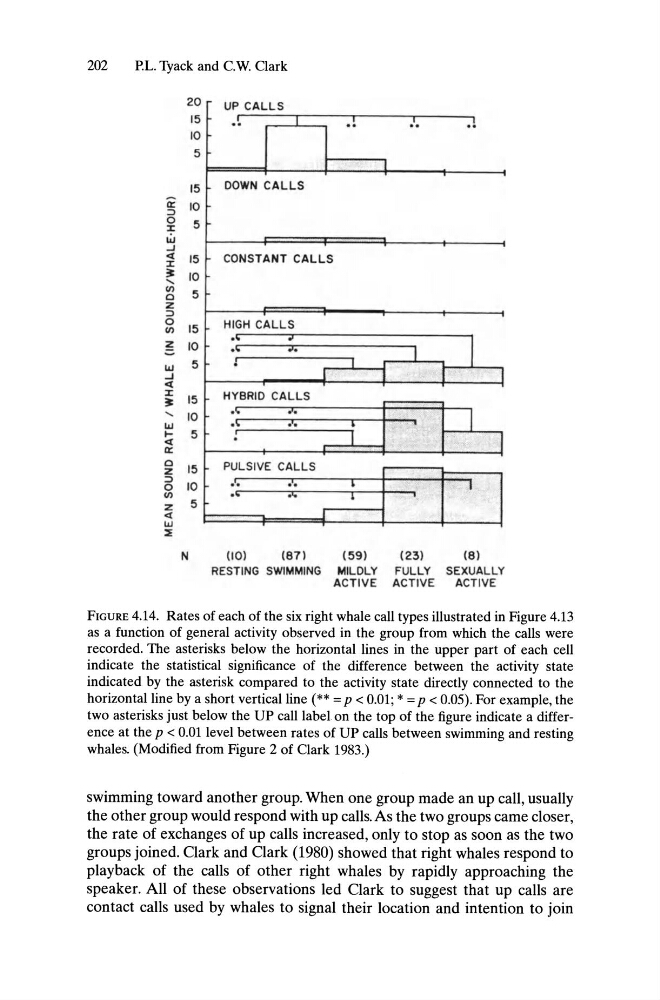
FIGURE 4.14. Rates of each of the six right whale call types illustrated in Figure 4.13
as a function of general activity observed in the group from which the calls were
recorded. The asterisks below the horizontal lines in the upper part of each cell
indicate the statistical significance of the difference between the activity state
indicated by the asterisk compared to the activity state directly connected to the
horizontal line by a short vertical line (** =p < 0.01; * =p < 0.05). For example, the
two asterisks just below the UP call label on the top of the figure indicate a difference at the p < 0.01 level between rates of UP calls between swimming and resting
whales. (Modified from Figure 2 of Clark 1983.)
swimming toward another group. When one group made an up call, usually
the other group would respond with up calls. As the two groups came closer,
the rate of exchanges of up calls increased, only to stop as soon as the two
groups joined. Clark and Clark (1980) showed that right whales respond to
playback of the calls of other right whales by rapidly approaching the
speaker. All of these observations led Clark to suggest that up calls are
contact calls used by whales to signal their location and intention to join
PL. Tyack and c.w. Clark
20
15
10
5
15
IX 10
;:)
0
5
:r:
w
..J
« 15
:r:
~
10
......
CIl
5
0
z
;:)
0
15
CIl
~ 10
w 5
..J
«
:r: 15
~
...... 10
w
~
5
«
a:
0
15
z
::> 10
0
CIl
z 5
«
w
::E
UP CALLS
..
..
..
.l
DOWN CALLS
CONSTANT CALLS
HIGH CALLS
.~
..
I
.~
...
I
.
I
I
HYBRID CALLS
...
oJ•
I
...
..
•
.
I
PULSIVE CALLS
..
..
•
I
..
...
•
N
(10)
(B7)
(59)
RESTING SWIMMING MILDLY
ACTIVE
(23)
(6)
FULLY SEXUALLY
ACTIVE
ACTIVE
FIGURE 4.14. Rates of each of the six right whale call types illustrated in Figure 4.13
as a function of general activity observed in the group from which the calls were
recorded. The asterisks below the horizontal lines in the upper part of each cell
indicate the statistical significance of the difference between the activity state
indicated by the asterisk compared to the activity state directly connected to the
horizontal line by a short vertical line (** =p < 0.01; * =p < 0.05). For example, the
two asterisks just below the UP call label on the top of the figure indicate a difference at the p < 0.01 level between rates of UP calls between swimming and resting
whales. (Modified from Figure 2 of Clark 1983.)
swimming toward another group. When one group made an up call, usually
the other group would respond with up calls. As the two groups came closer,
the rate of exchanges of up calls increased, only to stop as soon as the two
groups joined. Clark and Clark (1980) showed that right whales respond to
playback of the calls of other right whales by rapidly approaching the
speaker. All of these observations led Clark to suggest that up calls are
contact calls used by whales to signal their location and intention to join