

172
PPI is a phenomenon by which the response evoked by a high intensity stimulus
can be suppressed by the prior presentation of a lower intensity stimulus (the prepulse). In the case of inhibiting the ASR, the prepulse can be operationalized as a
low intensity tone presented prior to a startle-inducing tone, which then acts to
reduce the probability of the ASR. PPI has been used to study auditory sensitivity in
rodents (Willott et al. 1994 ; McCaughran et al. 1999 ), but only recently it has been
use to characterize the sensitivity of the teleost auditory system. The circuitry for
PPI in teleosts has also been well studied (Neumeister et al. 2008 ; Weiss et al. 2006 ;
Korn and Faber 2005 ; Burgess and Granato 2007 ; Kohashi et al. 2012 ). Briefl y, the
M-cells are inhibited not only by the contralateral M-cells but also by a set of neurons near the body and axon hillock of the M-cells. The most prominent of these is
the passive hyperpolarization (PHP) cell, which also receives input from the VIIIth
nerve afferents and hyperpolarizes the axon hillock of the M-cell, leading to a suppression of fi ring probability in the M-cell (Medan and Preuss 2014 ). This
suppression happens at stimulus intensities too low to activate the M-cell, and is
presumably a mechanism that prevents unnecessary fi ring of the M-cell.
The use of PPI to determine auditory thresholds has recently been used in larval
zebrafi sh (Bhandiwad et al. 2013 ). In this study, the authors determined that an
acoustic stimulus of 820 Hz at 20 dB re 1 m/s
2 was a reliable startle stimulus and
suffi cient to produce an 80–90 % startle response probability for a plate of 24 larval
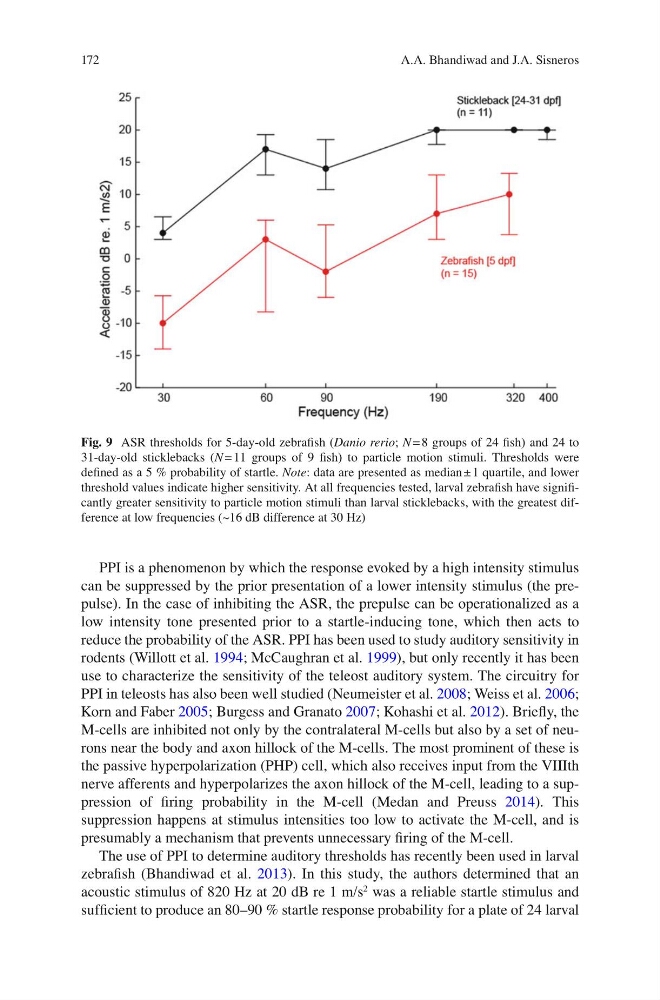
Fig. 9 ASR thresholds for 5-day-old zebrafi sh ( Danio rerio ; N = 8 groups of 24 fi sh) and 24 to
31-day-old sticklebacks ( N = 11 groups of 9 fi sh) to particle motion stimuli. Thresholds were
defi ned as a 5 % probability of startle. Note : data are presented as median ± 1 quartile, and lower
threshold values indicate higher sensitivity. At all frequencies tested, larval zebrafi sh have signifi -
cantly greater sensitivity to particle motion stimuli than larval sticklebacks, with the greatest difference at low frequencies (~16 dB difference at 30 Hz)
A.A. Bhandiwad and J.A. Sisneros
PPI is a phenomenon by which the response evoked by a high intensity stimulus
can be suppressed by the prior presentation of a lower intensity stimulus (the prepulse). In the case of inhibiting the ASR, the prepulse can be operationalized as a
low intensity tone presented prior to a startle-inducing tone, which then acts to
reduce the probability of the ASR. PPI has been used to study auditory sensitivity in
rodents (Willott et al. 1994 ; McCaughran et al. 1999 ), but only recently it has been
use to characterize the sensitivity of the teleost auditory system. The circuitry for
PPI in teleosts has also been well studied (Neumeister et al. 2008 ; Weiss et al. 2006 ;
Korn and Faber 2005 ; Burgess and Granato 2007 ; Kohashi et al. 2012 ). Briefl y, the
M-cells are inhibited not only by the contralateral M-cells but also by a set of neurons near the body and axon hillock of the M-cells. The most prominent of these is
the passive hyperpolarization (PHP) cell, which also receives input from the VIIIth
nerve afferents and hyperpolarizes the axon hillock of the M-cell, leading to a suppression of fi ring probability in the M-cell (Medan and Preuss 2014 ). This
suppression happens at stimulus intensities too low to activate the M-cell, and is
presumably a mechanism that prevents unnecessary fi ring of the M-cell.
The use of PPI to determine auditory thresholds has recently been used in larval
zebrafi sh (Bhandiwad et al. 2013 ). In this study, the authors determined that an
acoustic stimulus of 820 Hz at 20 dB re 1 m/s
2 was a reliable startle stimulus and
suffi cient to produce an 80–90 % startle response probability for a plate of 24 larval
Fig. 9 ASR thresholds for 5-day-old zebrafi sh ( Danio rerio ; N = 8 groups of 24 fi sh) and 24 to
31-day-old sticklebacks ( N = 11 groups of 9 fi sh) to particle motion stimuli. Thresholds were
defi ned as a 5 % probability of startle. Note : data are presented as median ± 1 quartile, and lower
threshold values indicate higher sensitivity. At all frequencies tested, larval zebrafi sh have signifi -
cantly greater sensitivity to particle motion stimuli than larval sticklebacks, with the greatest difference at low frequencies (~16 dB difference at 30 Hz)
A.A. Bhandiwad and J.A. Sisneros