

86
Binoculars are telescope mounted parallel pointing in the same direction, allowing
the observer to use both eyes, providing more visual comfort. Normally the binoculars size permits to be held by both hands, and some may be also mounted on a tripod.
All binoculars have numbers, such as 7×50 and 10×42. The first number refers to
their magnification and the second number refers to objective lens diameter. The
higher the magnification, smaller is the field of view. The bigger objective lens diameter the brighter image however, it makes the binocular heavier. Depending on the
characteristic of the land-based station and the target species, different specifications
for lens magnification, objective lens diameter and the use of a tripod may be applied.
Unlike spotting scope binoculars permit a three-dimensional image with an
impression of depth of field, and although with less magnificent power than spotting
scope, binocular allows to easily find animals, even in movement, what is especially
necessary for observation of aquatic mammals with longer dive periods and fast
displacement. Besides, binoculars are not expensive and are easy to carry and
transport.
Some binoculars are provided with internal compass, vertical and horizontal
reticles that enable the observer to have an approximate position of the target animal. To this end, although not mandatory, it is preferable to use the binoculars
mounted on a tripod, which should be always at the exactly same known location.
The binoculars should always be leveled (normally tripods present leveling bubbles). The height of the ground up to the eyepiece must be exactly measured and
summed to the height of the land station in relation to the sea level, in order to obtain
the approximate position of the target animals (see theodolite/total station section
for measurements of cliff elevation and other factors that must be taken into to
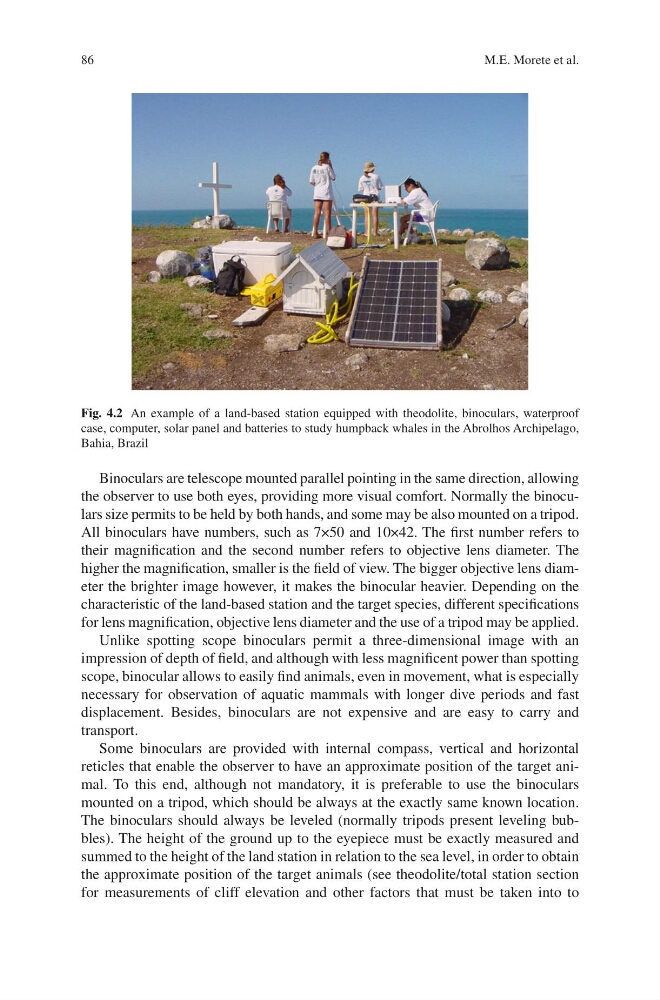
Fig. 4.2 An example of a land-based station equipped with theodolite, binoculars, waterproof
case, computer, solar panel and batteries to study humpback whales in the Abrolhos Archipelago,
Bahia, Brazil
M.E. Morete et al.
Binoculars are telescope mounted parallel pointing in the same direction, allowing
the observer to use both eyes, providing more visual comfort. Normally the binoculars size permits to be held by both hands, and some may be also mounted on a tripod.
All binoculars have numbers, such as 7×50 and 10×42. The first number refers to
their magnification and the second number refers to objective lens diameter. The
higher the magnification, smaller is the field of view. The bigger objective lens diameter the brighter image however, it makes the binocular heavier. Depending on the
characteristic of the land-based station and the target species, different specifications
for lens magnification, objective lens diameter and the use of a tripod may be applied.
Unlike spotting scope binoculars permit a three-dimensional image with an
impression of depth of field, and although with less magnificent power than spotting
scope, binocular allows to easily find animals, even in movement, what is especially
necessary for observation of aquatic mammals with longer dive periods and fast
displacement. Besides, binoculars are not expensive and are easy to carry and
transport.
Some binoculars are provided with internal compass, vertical and horizontal
reticles that enable the observer to have an approximate position of the target animal. To this end, although not mandatory, it is preferable to use the binoculars
mounted on a tripod, which should be always at the exactly same known location.
The binoculars should always be leveled (normally tripods present leveling bubbles). The height of the ground up to the eyepiece must be exactly measured and
summed to the height of the land station in relation to the sea level, in order to obtain
the approximate position of the target animals (see theodolite/total station section
for measurements of cliff elevation and other factors that must be taken into to
Fig. 4.2 An example of a land-based station equipped with theodolite, binoculars, waterproof
case, computer, solar panel and batteries to study humpback whales in the Abrolhos Archipelago,
Bahia, Brazil
M.E. Morete et al.