

50
travelling) (Corbelli 2006). Baker and Herman (1989) found that humpback whales
responded to vessels operating at distances of up to 4,000 m. Changes in behaviour
were correlated with the speed, size, distance, and numbers of vessels and included
shorter blow intervals, longer dive times and swimming away from the vessel’s
path. They also found a reduction in aerial behaviours in response to closer vessel
approaches.
Whale-watching vessels also produce underwater noise that can interfere with
whale communication. Sousa-Lima and Clark (2009) studied the acoustic interactions between tourism boats and humpback whales in Abrolhos and found the noise
produced by approaching vessels caused male singers to stop singing and abandon
the area. If, as suggested by Bejder et al. (2006), only the individuals less sensitive
to boat disturbances would remain in the area, female choice and consequently the
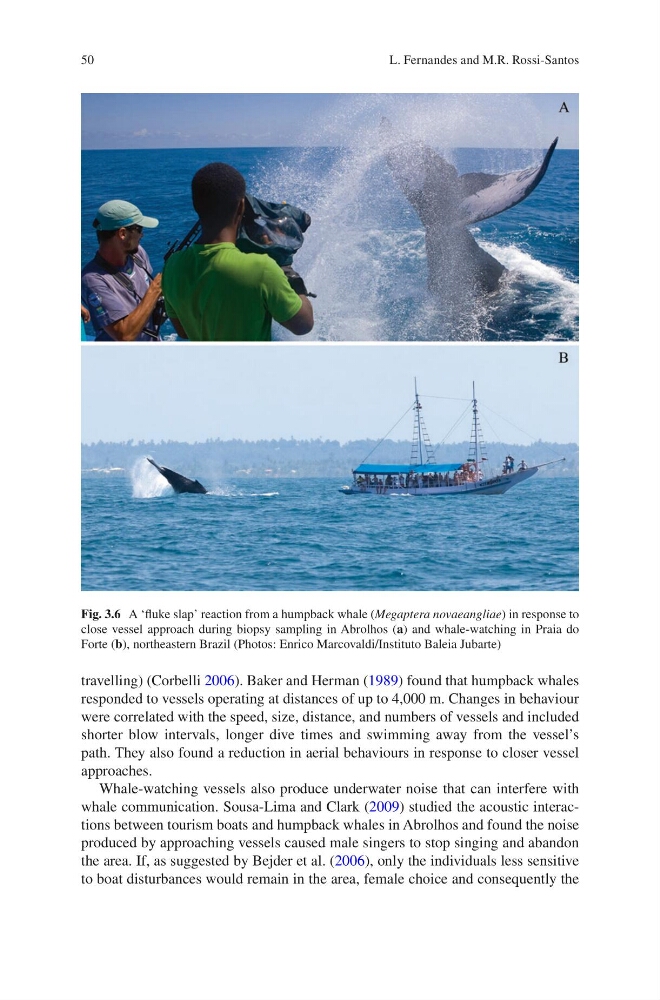
Fig. 3.6 A ‘fluke slap’ reaction from a humpback whale (Megaptera novaeangliae) in response to
close vessel approach during biopsy sampling in Abrolhos (a) and whale-watching in Praia do
Forte (b), northeastern Brazil (Photos: Enrico Marcovaldi/Instituto Baleia Jubarte)
L. Fernandes and M.R. Rossi-Santos
travelling) (Corbelli 2006). Baker and Herman (1989) found that humpback whales
responded to vessels operating at distances of up to 4,000 m. Changes in behaviour
were correlated with the speed, size, distance, and numbers of vessels and included
shorter blow intervals, longer dive times and swimming away from the vessel’s
path. They also found a reduction in aerial behaviours in response to closer vessel
approaches.
Whale-watching vessels also produce underwater noise that can interfere with
whale communication. Sousa-Lima and Clark (2009) studied the acoustic interactions between tourism boats and humpback whales in Abrolhos and found the noise
produced by approaching vessels caused male singers to stop singing and abandon
the area. If, as suggested by Bejder et al. (2006), only the individuals less sensitive
to boat disturbances would remain in the area, female choice and consequently the
Fig. 3.6 A ‘fluke slap’ reaction from a humpback whale (Megaptera novaeangliae) in response to
close vessel approach during biopsy sampling in Abrolhos (a) and whale-watching in Praia do
Forte (b), northeastern Brazil (Photos: Enrico Marcovaldi/Instituto Baleia Jubarte)
L. Fernandes and M.R. Rossi-Santos