

488
17.6 Density, Abundance, and Residence
Estimates of population size are important for assessment of conservation status,
and identification of temporal or spatial trends in abundance is an integral component of conservation and management strategies (Heppell et al. 2000; Bearzi et al.
1997).
Recognition of individuals in a population permits to understand patterns of residence. Photoidentification is the primary technique used to estimate abundances of
small cetaceans, and consists of identifying individuals by natural or artificial markings (e.g., Hammond et al. 1990) (Figs. 17.11 and 17.12). Color patterns, scars,
scratches, nicks, and mutilations are markings commonly used for recognition; dorsal fin and dorsal surface markings are primarily used for small cetaceans (Würsig
and Jefferson 1990). These markings are typically acquired over time and can be
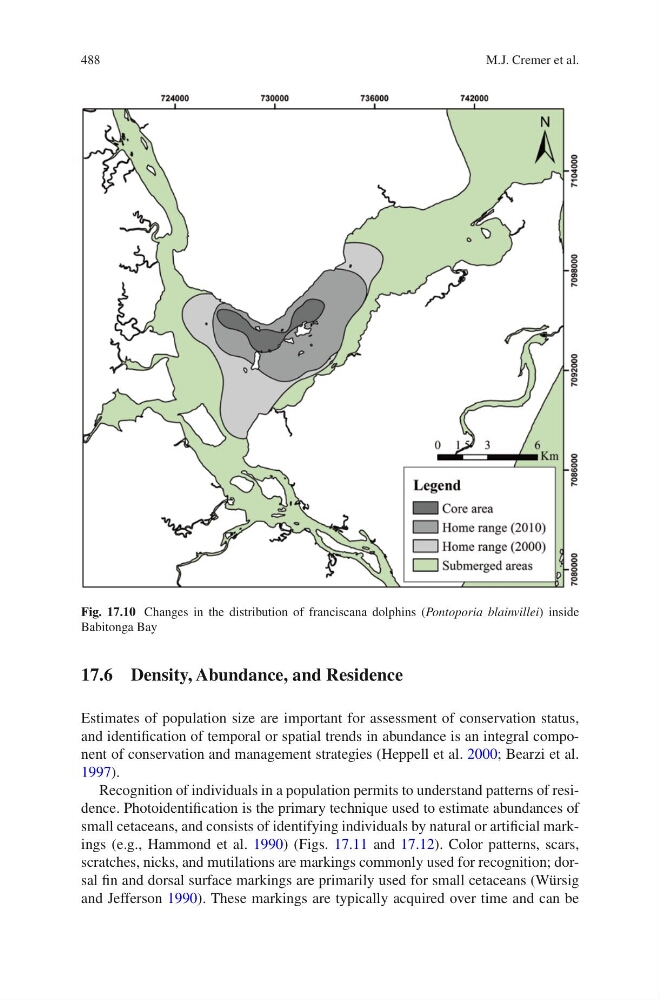
Fig. 17.10 Changes in the distribution of franciscana dolphins (Pontoporia blainvillei) inside
Babitonga Bay
M.J. Cremer et al.
17.6 Density, Abundance, and Residence
Estimates of population size are important for assessment of conservation status,
and identification of temporal or spatial trends in abundance is an integral component of conservation and management strategies (Heppell et al. 2000; Bearzi et al.
1997).
Recognition of individuals in a population permits to understand patterns of residence. Photoidentification is the primary technique used to estimate abundances of
small cetaceans, and consists of identifying individuals by natural or artificial markings (e.g., Hammond et al. 1990) (Figs. 17.11 and 17.12). Color patterns, scars,
scratches, nicks, and mutilations are markings commonly used for recognition; dorsal fin and dorsal surface markings are primarily used for small cetaceans (Würsig
and Jefferson 1990). These markings are typically acquired over time and can be
Fig. 17.10 Changes in the distribution of franciscana dolphins (Pontoporia blainvillei) inside
Babitonga Bay
M.J. Cremer et al.