

454
16.5 The Matching of the Photographs
Before the digital photography age, the process of analyzing photographs looking
for matches of right whales was done manually, from the categorization of photographs according to specific characteristics of the identification pattern, to the comparison with individuals already catalogued. So each new photograph was compared
by eye to the existing catalogue, which was as selection of slides or prints organized
as a photo album. For catalogues with a large number of identified individuals the
by eye comparison becomes a laborious and time consuming task. The advent of
digital images (obtained through scanning of slides, negatives or prints) enabled
the development of computer-assisted automated systems. About 15 years ago
digital cameras have largely replaced film cameras for photo-identification work
(Markowitz et al. 2003), enabling to obtain images in real-time, facilitating manipulation and storage. The development of high-resolution digital cameras also
improved the quality of photographs.
Manipulate large amounts of photographs is time consuming and prone to errors.
The use of computers for analysis and comparison of individuals can limit the number of photographs that must be visually inspected to verify that two observations
are of the same individual.
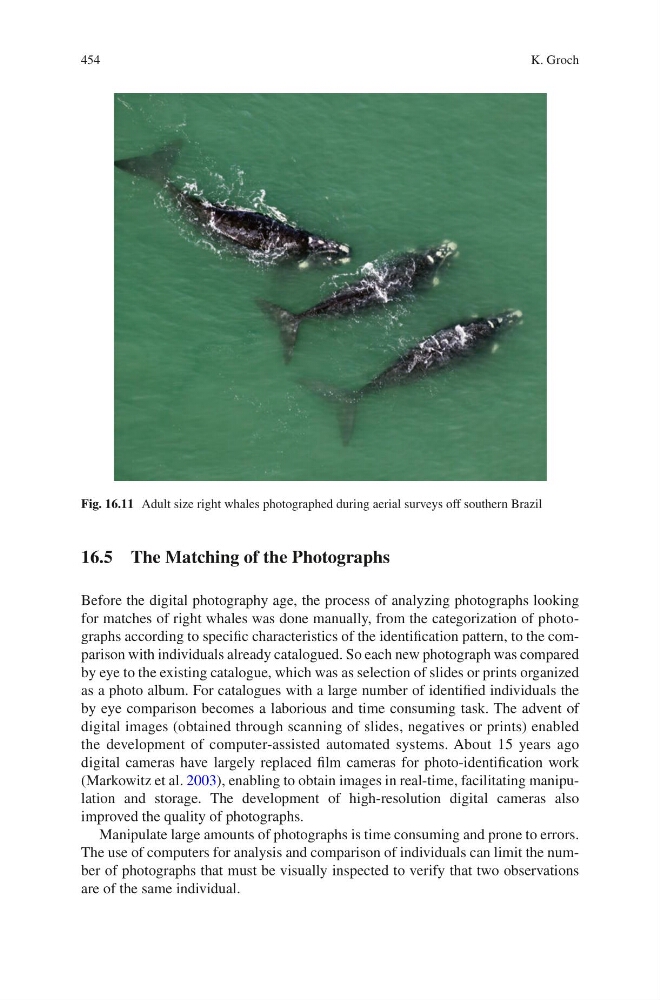
Fig. 16.11 Adult size right whales photographed during aerial surveys off southern Brazil
K. Groch
16.5 The Matching of the Photographs
Before the digital photography age, the process of analyzing photographs looking
for matches of right whales was done manually, from the categorization of photographs according to specific characteristics of the identification pattern, to the comparison with individuals already catalogued. So each new photograph was compared
by eye to the existing catalogue, which was as selection of slides or prints organized
as a photo album. For catalogues with a large number of identified individuals the
by eye comparison becomes a laborious and time consuming task. The advent of
digital images (obtained through scanning of slides, negatives or prints) enabled
the development of computer-assisted automated systems. About 15 years ago
digital cameras have largely replaced film cameras for photo-identification work
(Markowitz et al. 2003), enabling to obtain images in real-time, facilitating manipulation and storage. The development of high-resolution digital cameras also
improved the quality of photographs.
Manipulate large amounts of photographs is time consuming and prone to errors.
The use of computers for analysis and comparison of individuals can limit the number of photographs that must be visually inspected to verify that two observations
are of the same individual.
Fig. 16.11 Adult size right whales photographed during aerial surveys off southern Brazil
K. Groch