

33
(Cananéia). The two study areas were chosen because they are two different habitats
with respect to environmental and geomorphological parameters, which we expect
that after the analysis, will recognize the influence of latitude, temperature, salinity,
depth, turbidity and the sound source of the distance in the repertoire Guiana dolphin sound.
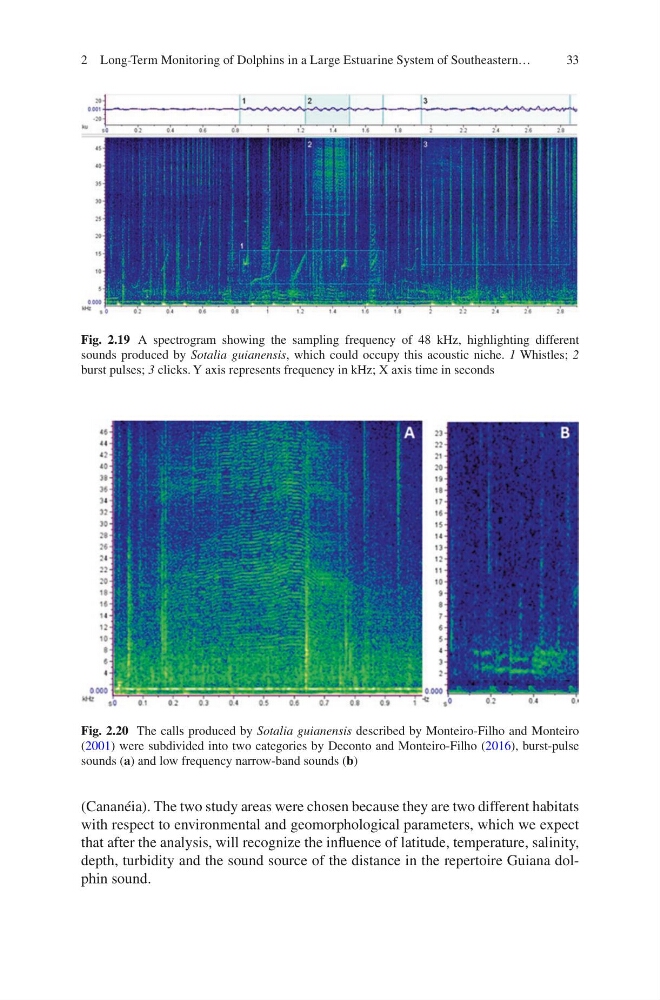
Fig. 2.19 A spectrogram showing the sampling frequency of 48 kHz, highlighting different
sounds produced by Sotalia guianensis, which could occupy this acoustic niche. 1 Whistles; 2
burst pulses; 3 clicks. Y axis represents frequency in kHz; X axis time in seconds
Fig. 2.20 The calls produced by Sotalia guianensis described by Monteiro-Filho and Monteiro
(2001) were subdivided into two categories by Deconto and Monteiro-Filho (2016), burst-pulse
sounds (a) and low frequency narrow-band sounds (b)
2 Long-Term Monitoring of Dolphins in a Large Estuarine System of Southeastern…
(Cananéia). The two study areas were chosen because they are two different habitats
with respect to environmental and geomorphological parameters, which we expect
that after the analysis, will recognize the influence of latitude, temperature, salinity,
depth, turbidity and the sound source of the distance in the repertoire Guiana dolphin sound.
Fig. 2.19 A spectrogram showing the sampling frequency of 48 kHz, highlighting different
sounds produced by Sotalia guianensis, which could occupy this acoustic niche. 1 Whistles; 2
burst pulses; 3 clicks. Y axis represents frequency in kHz; X axis time in seconds
Fig. 2.20 The calls produced by Sotalia guianensis described by Monteiro-Filho and Monteiro
(2001) were subdivided into two categories by Deconto and Monteiro-Filho (2016), burst-pulse
sounds (a) and low frequency narrow-band sounds (b)
2 Long-Term Monitoring of Dolphins in a Large Estuarine System of Southeastern…