

419
15.2.2.5 Dive Time
Dive time was systematically registered during 2008 and 2009 breeding seasons,
utilizing a digital chronometer, in order to measure and compare breathing behavior
of small groups (less than four individuals), to date, Alone Males (solitary), Couples,
Female with calf pairs, Female with Calf plus one escort male.
The dive time data was organized into the following definitions: (D.O.- minutes) = Direct Observation (the time spent observing humpback whale groups);
(D.P. range – seconds) = Dive time – the time whales spent underwater; (Mean
range D.P > 100 s) = mean number of Dive time larger than 100 s; (# of
measur.) = number of dive measurements; (# measure. > 100 s) = number of dive
measurements larger than 100 s; (Fe-Ca pairs) = female and calf pairs;
(FeCa-E1) = female and calf pairs plus one escort male.
15.2.2.6 Tide and Moon Analysis
Tidal states were divided into eight different classes, looking for a similar time division and fine scale during the tidal regimen. Significant differences in tide and moon
phases categories were analyzed utilizing the Chi-Square test (5%).
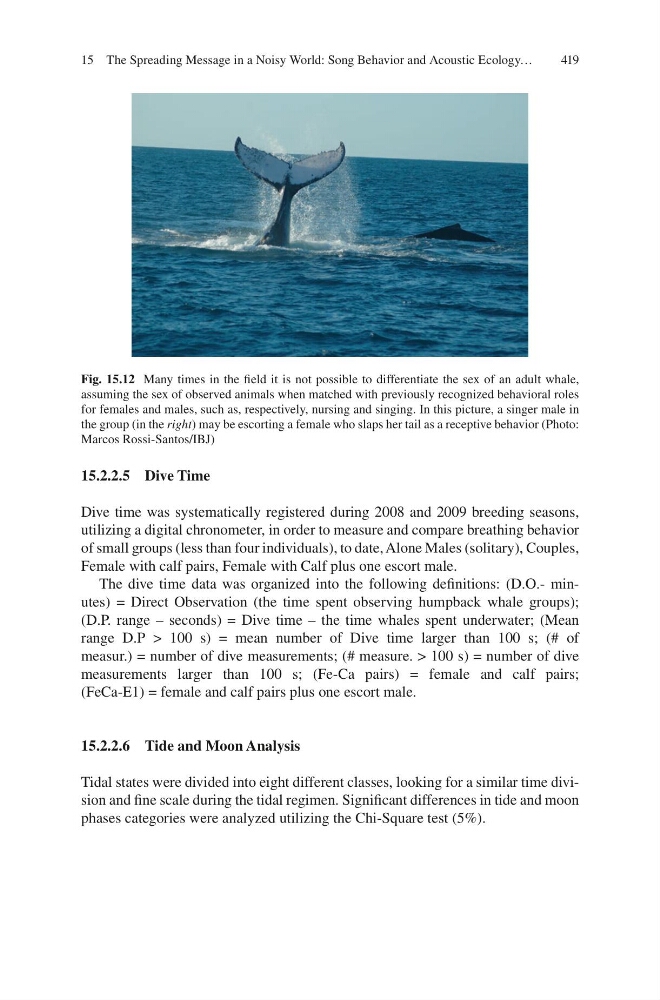
Fig. 15.12 Many times in the field it is not possible to differentiate the sex of an adult whale,
assuming the sex of observed animals when matched with previously recognized behavioral roles
for females and males, such as, respectively, nursing and singing. In this picture, a singer male in
the group (in the right) may be escorting a female who slaps her tail as a receptive behavior (Photo:
Marcos Rossi-Santos/IBJ)
15 The Spreading Message in a Noisy World: Song Behavior and Acoustic Ecology…
15.2.2.5 Dive Time
Dive time was systematically registered during 2008 and 2009 breeding seasons,
utilizing a digital chronometer, in order to measure and compare breathing behavior
of small groups (less than four individuals), to date, Alone Males (solitary), Couples,
Female with calf pairs, Female with Calf plus one escort male.
The dive time data was organized into the following definitions: (D.O.- minutes) = Direct Observation (the time spent observing humpback whale groups);
(D.P. range – seconds) = Dive time – the time whales spent underwater; (Mean
range D.P > 100 s) = mean number of Dive time larger than 100 s; (# of
measur.) = number of dive measurements; (# measure. > 100 s) = number of dive
measurements larger than 100 s; (Fe-Ca pairs) = female and calf pairs;
(FeCa-E1) = female and calf pairs plus one escort male.
15.2.2.6 Tide and Moon Analysis
Tidal states were divided into eight different classes, looking for a similar time division and fine scale during the tidal regimen. Significant differences in tide and moon
phases categories were analyzed utilizing the Chi-Square test (5%).
Fig. 15.12 Many times in the field it is not possible to differentiate the sex of an adult whale,
assuming the sex of observed animals when matched with previously recognized behavioral roles
for females and males, such as, respectively, nursing and singing. In this picture, a singer male in
the group (in the right) may be escorting a female who slaps her tail as a receptive behavior (Photo:
Marcos Rossi-Santos/IBJ)
15 The Spreading Message in a Noisy World: Song Behavior and Acoustic Ecology…