

355
need. Therefore, it is concluded that the ecology of Guiana dolphins are affected by
wood-barges and dredging activity on the use of signals, but especially in pulsed
calls, for the reason of its lower frequencies indicating a potential to masking.
Wood-barges activity are very often in Caravelas estuary, exposing the population of Guiana dolphins to high levels of noise intensity very often, which may lead
to impacts on the hearing thresholds (TTS or even PTS) depending on the acoustic
effect suffered by the noise, which can suffer, for example, reverberation due to
local morphology (stratification of the water column, bottom hardness and low
depths) (Breitzke and Bohlen 2010) (Fig. 13.30).
A study of the noise of dredging activities showed intensity levels over 150 dB
re 1 μPa @ 1 m (Reine et al. 2014), and this noise was perceptible about 7 km distance from the source (depending on the dredger type and environment conditions)
(Clarke et al. 2002).
Considering the Caravelas estuary setting, with shallow and low hydrodynamics
areas, it is likely that the average noise and high frequencies (> 1 kHz) of dredging
activity is perceived by the animals that inhabit the region and is potentially impactful. It is noteworthy that this activity is held annually in the mouth of the Caravelas
estuary generating an intense acoustic impact, which can cause long-term effects.
The water pump in Pipa beach has the potential to impact the pulsed calls and
whistles, but only at night (when it was turned on) and especially when the dolphins
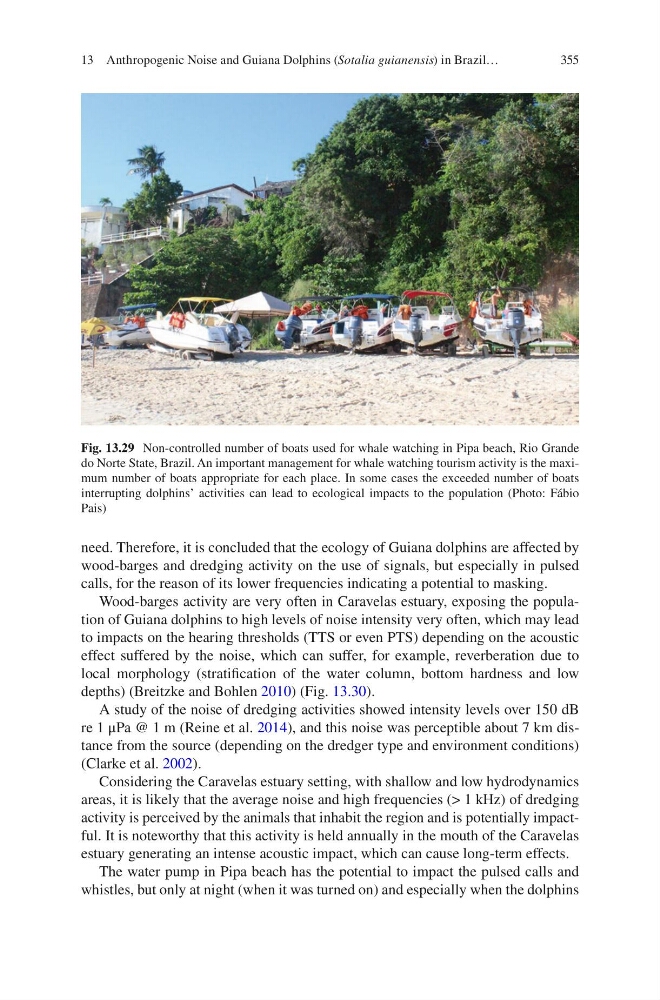
Fig. 13.29 Non-controlled number of boats used for whale watching in Pipa beach, Rio Grande
do Norte State, Brazil. An important management for whale watching tourism activity is the maximum number of boats appropriate for each place. In some cases the exceeded number of boats
interrupting dolphins’ activities can lead to ecological impacts to the population (Photo: Fábio
Pais)
13 Anthropogenic Noise and Guiana Dolphins (Sotalia guianensis) in Brazil…
need. Therefore, it is concluded that the ecology of Guiana dolphins are affected by
wood-barges and dredging activity on the use of signals, but especially in pulsed
calls, for the reason of its lower frequencies indicating a potential to masking.
Wood-barges activity are very often in Caravelas estuary, exposing the population of Guiana dolphins to high levels of noise intensity very often, which may lead
to impacts on the hearing thresholds (TTS or even PTS) depending on the acoustic
effect suffered by the noise, which can suffer, for example, reverberation due to
local morphology (stratification of the water column, bottom hardness and low
depths) (Breitzke and Bohlen 2010) (Fig. 13.30).
A study of the noise of dredging activities showed intensity levels over 150 dB
re 1 μPa @ 1 m (Reine et al. 2014), and this noise was perceptible about 7 km distance from the source (depending on the dredger type and environment conditions)
(Clarke et al. 2002).
Considering the Caravelas estuary setting, with shallow and low hydrodynamics
areas, it is likely that the average noise and high frequencies (> 1 kHz) of dredging
activity is perceived by the animals that inhabit the region and is potentially impactful. It is noteworthy that this activity is held annually in the mouth of the Caravelas
estuary generating an intense acoustic impact, which can cause long-term effects.
The water pump in Pipa beach has the potential to impact the pulsed calls and
whistles, but only at night (when it was turned on) and especially when the dolphins
Fig. 13.29 Non-controlled number of boats used for whale watching in Pipa beach, Rio Grande
do Norte State, Brazil. An important management for whale watching tourism activity is the maximum number of boats appropriate for each place. In some cases the exceeded number of boats
interrupting dolphins’ activities can lead to ecological impacts to the population (Photo: Fábio
Pais)
13 Anthropogenic Noise and Guiana Dolphins (Sotalia guianensis) in Brazil…