

343
It is important that the recording system is adequate for the target species, in
order to be able to sample the entire acoustic repertoire. (Oswald et al. 2004; Simão
et al. 2007).
13.3 Results
The data recorded describes the acoustic repertoire of the Guiana dolphin, especially whistles (Table 13.2) and pulsed calls (Table 13.3), also fishing boats, tourism
boats, wood-barges, a water pump and dredging activity (Table 13.4).
Regarding S. guianensis whistles, values of three populations were similar in
general, but with some small differences, for example, the amplitude of minimum
frequencies in Caravelas (2.5 kHz) is higher than in Cananéia (4.6 kHz) and Pipa
(5.6 kHz) and the higher frequency have also been registered in this location (24
kHz).
The acoustic signals related to pulsed sounds showed wider variations among the
three populations. The highest amplitudes of minimum and maximum frequencies,
as well as whistles, were recorded in Caravelas (0.18–24 kHz), and this site also had
the highest number of harmonics (38 harmonics). The greater value of minimum
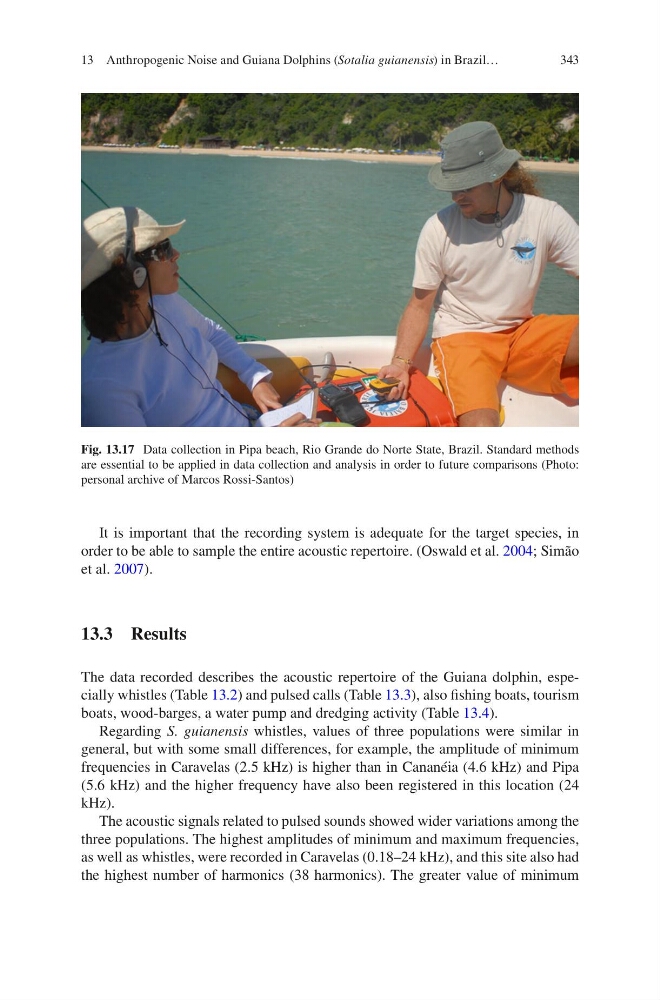
Fig. 13.17 Data collection in Pipa beach, Rio Grande do Norte State, Brazil. Standard methods
are essential to be applied in data collection and analysis in order to future comparisons (Photo:
personal archive of Marcos Rossi-Santos)
13 Anthropogenic Noise and Guiana Dolphins (Sotalia guianensis) in Brazil…
It is important that the recording system is adequate for the target species, in
order to be able to sample the entire acoustic repertoire. (Oswald et al. 2004; Simão
et al. 2007).
13.3 Results
The data recorded describes the acoustic repertoire of the Guiana dolphin, especially whistles (Table 13.2) and pulsed calls (Table 13.3), also fishing boats, tourism
boats, wood-barges, a water pump and dredging activity (Table 13.4).
Regarding S. guianensis whistles, values of three populations were similar in
general, but with some small differences, for example, the amplitude of minimum
frequencies in Caravelas (2.5 kHz) is higher than in Cananéia (4.6 kHz) and Pipa
(5.6 kHz) and the higher frequency have also been registered in this location (24
kHz).
The acoustic signals related to pulsed sounds showed wider variations among the
three populations. The highest amplitudes of minimum and maximum frequencies,
as well as whistles, were recorded in Caravelas (0.18–24 kHz), and this site also had
the highest number of harmonics (38 harmonics). The greater value of minimum
Fig. 13.17 Data collection in Pipa beach, Rio Grande do Norte State, Brazil. Standard methods
are essential to be applied in data collection and analysis in order to future comparisons (Photo:
personal archive of Marcos Rossi-Santos)
13 Anthropogenic Noise and Guiana Dolphins (Sotalia guianensis) in Brazil…