

305
appears to be only found in the nearshore waters of Gandoca-Manzanillo and the
Changuinola area in the Panamanian side. In both sites, biological productivity is
highly influenced by large rivers, in the Costa Rican side by the Sixaola River and
in the Panamanian side by the Changuinala River. However, its distribution may had
been more ample in the past. For instance, the first documentation of Guiana dolphins for Panama was in Colon, near the Caribbean entrance to the Panama Canal,
(Bossenecker 1978) but since this report there has been not sightings of these
dolphins in Colon. This highlights the needs for standardized and long-term surveys
in the region that can help us understand not only the diversity of cetaceans in it but
also the threats to which they may be exposed to.
A special aspect of the dolphins inhabiting Gandoca-Manzanillo is the daily formation of interspecific groups. Gamboa-Poveda (2009) found that the majority of
the dolphin groups observed within the refuge belong to the Guiana dolphins (50%),
followed by mixed species groups (27.2%) and bottlenose dolphins (22.8%).
The mixed groups of Guiana and bottlenose dolphins are observed on daily basis
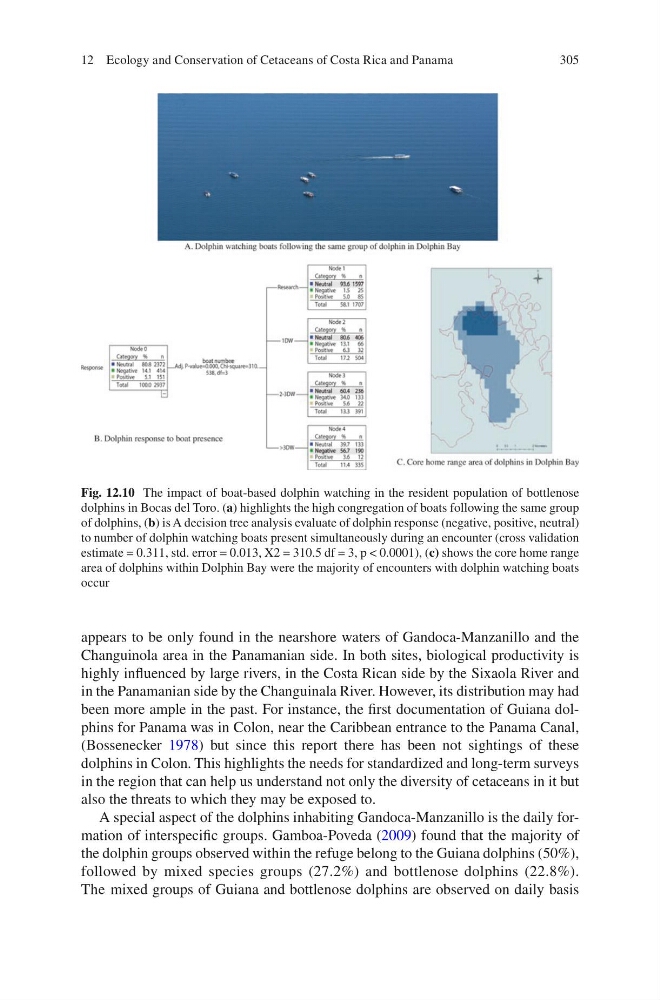
Fig. 12.10 The impact of boat-based dolphin watching in the resident population of bottlenose
dolphins in Bocas del Toro. (a) highlights the high congregation of boats following the same group
of dolphins, (b) is A decision tree analysis evaluate of dolphin response (negative, positive, neutral)
to number of dolphin watching boats present simultaneously during an encounter (cross validation
estimate = 0.311, std. error = 0.013, X2 = 310.5 df = 3, p < 0.0001), (c) shows the core home range
area of dolphins within Dolphin Bay were the majority of encounters with dolphin watching boats
occur
12 Ecology and Conservation of Cetaceans of Costa Rica and Panama
appears to be only found in the nearshore waters of Gandoca-Manzanillo and the
Changuinola area in the Panamanian side. In both sites, biological productivity is
highly influenced by large rivers, in the Costa Rican side by the Sixaola River and
in the Panamanian side by the Changuinala River. However, its distribution may had
been more ample in the past. For instance, the first documentation of Guiana dolphins for Panama was in Colon, near the Caribbean entrance to the Panama Canal,
(Bossenecker 1978) but since this report there has been not sightings of these
dolphins in Colon. This highlights the needs for standardized and long-term surveys
in the region that can help us understand not only the diversity of cetaceans in it but
also the threats to which they may be exposed to.
A special aspect of the dolphins inhabiting Gandoca-Manzanillo is the daily formation of interspecific groups. Gamboa-Poveda (2009) found that the majority of
the dolphin groups observed within the refuge belong to the Guiana dolphins (50%),
followed by mixed species groups (27.2%) and bottlenose dolphins (22.8%).
The mixed groups of Guiana and bottlenose dolphins are observed on daily basis
Fig. 12.10 The impact of boat-based dolphin watching in the resident population of bottlenose
dolphins in Bocas del Toro. (a) highlights the high congregation of boats following the same group
of dolphins, (b) is A decision tree analysis evaluate of dolphin response (negative, positive, neutral)
to number of dolphin watching boats present simultaneously during an encounter (cross validation
estimate = 0.311, std. error = 0.013, X2 = 310.5 df = 3, p < 0.0001), (c) shows the core home range
area of dolphins within Dolphin Bay were the majority of encounters with dolphin watching boats
occur
12 Ecology and Conservation of Cetaceans of Costa Rica and Panama