

273
Manatees are also present in the Mamanguape river estuary, in Paraíba state,
where the species is abundant (Lima 1997; Silva et al. 1992). Recently, the sidescan sonar was also tested in this estuary as a tool to detect manatees (FMA 2015).
In the northern region, in the state of Amapá, in the border with French Guiana,
West Indian manatee is present in the coast and in the estuary. Barbosa (2013)
reported the species in coastal protected areas as Estação Ecológica Maracá-Jipioca,
in Parque Nacional do Cabo Orange and Reserva Biológica Parazinho. Interviews
indicated the species is more commonly observed in Bailique archipelago and
Amapá city. Most animals were reported in estuarine systems, followed by river and
coastal areas.
The species also occurs in the Oiapoque river where, according to De Thoisy
et al. (2003), it can be observed 80 km upriver. Manatees are also present in the river
mouth.
In the state of Pará, the species inhabits areas around islands and indentations.
There are records in Algodoal and Marajó Islands (Emin-Lima et al. 2010; Sousa
et al. 2013), in Salvaterra and Soure municipalities.
11.3 Spatial Ecology
The initiative by few research groups effectively conducting research in South
America has produced important biological information on manatees, however, data
on movements are scarce. Tagging manatees for telemetry monitoring allows to
estimate home range, document movements and seasonal migrations, identify
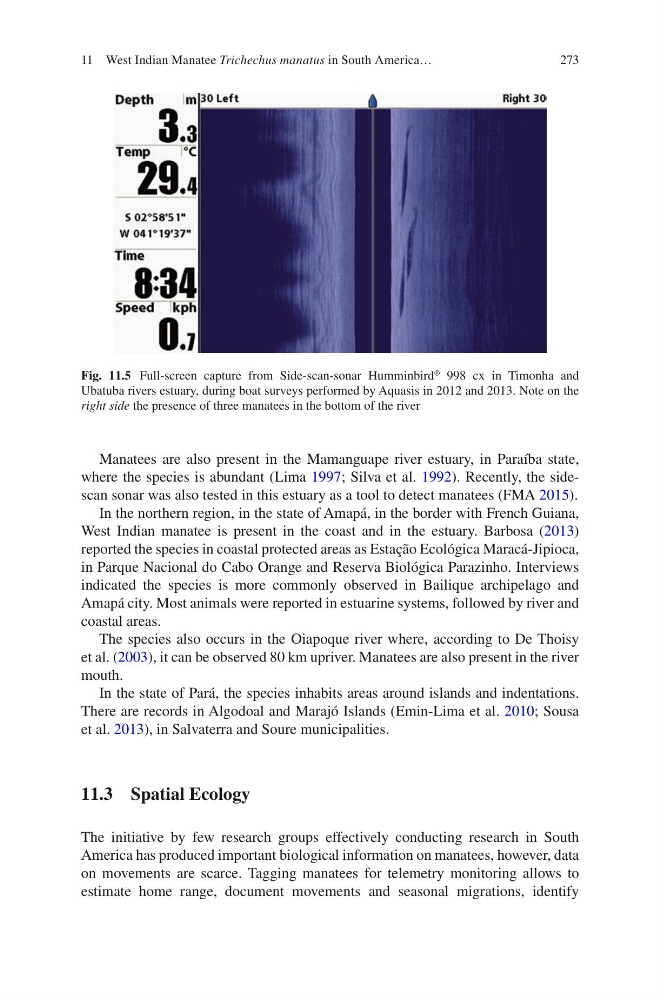
Fig. 11.5 Full-screen capture from Side-scan-sonar Humminbird
® 998 cx in Timonha and
Ubatuba rivers estuary, during boat surveys performed by Aquasis in 2012 and 2013. Note on the
right side the presence of three manatees in the bottom of the river
11 West Indian Manatee Trichechus manatus in South America…
Manatees are also present in the Mamanguape river estuary, in Paraíba state,
where the species is abundant (Lima 1997; Silva et al. 1992). Recently, the sidescan sonar was also tested in this estuary as a tool to detect manatees (FMA 2015).
In the northern region, in the state of Amapá, in the border with French Guiana,
West Indian manatee is present in the coast and in the estuary. Barbosa (2013)
reported the species in coastal protected areas as Estação Ecológica Maracá-Jipioca,
in Parque Nacional do Cabo Orange and Reserva Biológica Parazinho. Interviews
indicated the species is more commonly observed in Bailique archipelago and
Amapá city. Most animals were reported in estuarine systems, followed by river and
coastal areas.
The species also occurs in the Oiapoque river where, according to De Thoisy
et al. (2003), it can be observed 80 km upriver. Manatees are also present in the river
mouth.
In the state of Pará, the species inhabits areas around islands and indentations.
There are records in Algodoal and Marajó Islands (Emin-Lima et al. 2010; Sousa
et al. 2013), in Salvaterra and Soure municipalities.
11.3 Spatial Ecology
The initiative by few research groups effectively conducting research in South
America has produced important biological information on manatees, however, data
on movements are scarce. Tagging manatees for telemetry monitoring allows to
estimate home range, document movements and seasonal migrations, identify
Fig. 11.5 Full-screen capture from Side-scan-sonar Humminbird
® 998 cx in Timonha and
Ubatuba rivers estuary, during boat surveys performed by Aquasis in 2012 and 2013. Note on the
right side the presence of three manatees in the bottom of the river
11 West Indian Manatee Trichechus manatus in South America…