

235
2013) have been reported. The stable isotope composition of these species reflected
the Guiana dolphin and bottlenose dolphin coastal habitat (i.e. higher δ
13
C values),
and more offshore habitats for the other species, with the oceanic Fraser’s and spinner dolphins showing the lowest δ
13
C values. Furthermore, intra-specific different
isotopic values from Guiana dolphins inhabiting the three different bays previously
presented by Bisi et al. (2012) were compared to other species. The similarity of the
δ
13
C values between Guiana dolphins from Ilha Grande Bay and Atlantic spotted
dolphins indicated that both feed in areas under the influence of the South Atlantic
Central Water. Bottlenose dolphins and false killer whales presented the highest
δ
15
N values, which is in accordance to their high trophic position in comparison
with the other species considered in this study.
In subtropical (Botta et al. 2012) and sub Antarctic waters (Riccialdelli et al.
2010), tooth and bone samples from stranded marine mammals collected along
decades and deposited in two of the largest scientific collections of this group in
Latin America (Laboratory of Ecology and Conservation of Marine Megafauna Federal University of Rio Grande-FURG, Brazil and Acatushún Museum, Tierra del
Fuego, Argentina) were analyzed to determine their C and N stable isotopic composition. These multispecies studies included several species of Delphinidae and
Phocoenidae, such as bottlenose dolphins, rough-toothed dolphins, Atlantic spotted
dolphins, common dolphins, Fraser’s dolphins, killer whales (Orcinus orca) (Botta
et al. 2012), false killer whales (Riccialdelli et al. 2010; Botta et al. 2012), Risso’s
dolphins, spectacled (Phocoena dioptrica) and Burmeister’s (P. spinipinnis) porpoises, Commerson’s dolphins (Cephalorhynchus commersonii), Pale’s dolphins
(Lagenorhynchus australis), hourglass dolphins (L. cruciger) and Southern right
whale dolphins (Lissodelphis peronii) (Riccialdelli et al. 2010). Findings reported
in Botta et al. (2012) showed that the coastal ecotype of bottlenose dolphins
(−10.6‰) and killer whales (−10.5‰), had the highest δ
13
C values, while species
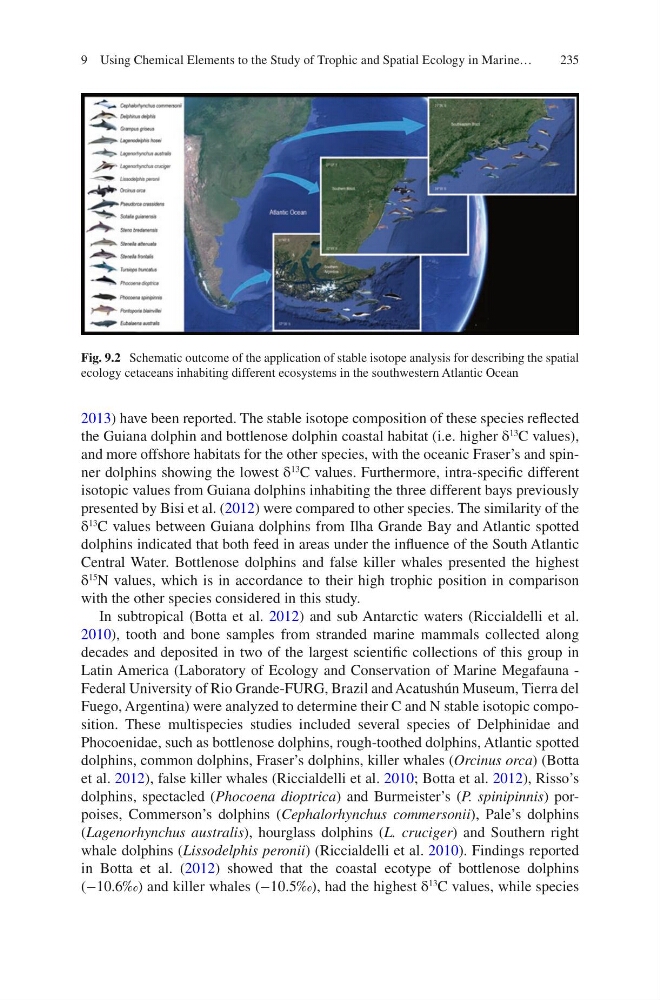
Fig. 9.2 Schematic outcome of the application of stable isotope analysis for describing the spatial
ecology cetaceans inhabiting different ecosystems in the southwestern Atlantic Ocean
9 Using Chemical Elements to the Study of Trophic and Spatial Ecology in Marine…
2013) have been reported. The stable isotope composition of these species reflected
the Guiana dolphin and bottlenose dolphin coastal habitat (i.e. higher δ
13
C values),
and more offshore habitats for the other species, with the oceanic Fraser’s and spinner dolphins showing the lowest δ
13
C values. Furthermore, intra-specific different
isotopic values from Guiana dolphins inhabiting the three different bays previously
presented by Bisi et al. (2012) were compared to other species. The similarity of the
δ
13
C values between Guiana dolphins from Ilha Grande Bay and Atlantic spotted
dolphins indicated that both feed in areas under the influence of the South Atlantic
Central Water. Bottlenose dolphins and false killer whales presented the highest
δ
15
N values, which is in accordance to their high trophic position in comparison
with the other species considered in this study.
In subtropical (Botta et al. 2012) and sub Antarctic waters (Riccialdelli et al.
2010), tooth and bone samples from stranded marine mammals collected along
decades and deposited in two of the largest scientific collections of this group in
Latin America (Laboratory of Ecology and Conservation of Marine Megafauna Federal University of Rio Grande-FURG, Brazil and Acatushún Museum, Tierra del
Fuego, Argentina) were analyzed to determine their C and N stable isotopic composition. These multispecies studies included several species of Delphinidae and
Phocoenidae, such as bottlenose dolphins, rough-toothed dolphins, Atlantic spotted
dolphins, common dolphins, Fraser’s dolphins, killer whales (Orcinus orca) (Botta
et al. 2012), false killer whales (Riccialdelli et al. 2010; Botta et al. 2012), Risso’s
dolphins, spectacled (Phocoena dioptrica) and Burmeister’s (P. spinipinnis) porpoises, Commerson’s dolphins (Cephalorhynchus commersonii), Pale’s dolphins
(Lagenorhynchus australis), hourglass dolphins (L. cruciger) and Southern right
whale dolphins (Lissodelphis peronii) (Riccialdelli et al. 2010). Findings reported
in Botta et al. (2012) showed that the coastal ecotype of bottlenose dolphins
(−10.6‰) and killer whales (−10.5‰), had the highest δ
13
C values, while species
Fig. 9.2 Schematic outcome of the application of stable isotope analysis for describing the spatial
ecology cetaceans inhabiting different ecosystems in the southwestern Atlantic Ocean
9 Using Chemical Elements to the Study of Trophic and Spatial Ecology in Marine…