

183
bearing an orphaned haplotype (Dc_A2) for leatherbacks. This haplotype was considered an orphaned haplotype because no match with nesting population were
found at that moment. In a later comprehensive genetic analysis of worldwide stock
structure, it was ascertained that the origins of the orphaned haplotype came from
Gabon and/ or Western Africa (Dutton et al. 2013).
Later, Vargas et al. (2013) reanalyzed samples from a previous study and estimated the contribution of source rookeries to a Brazilian feeding ground, using
population genetic measures and mixed stock analysis MSA, including two previously genetic undescribed rookeries: Gabon and Guadalupe/Martinique. Results of
the MSA indicated major contribution to the Brazilian pelagic aggregate from
Gabon (78%), the largest population of leatherbacks in the world.
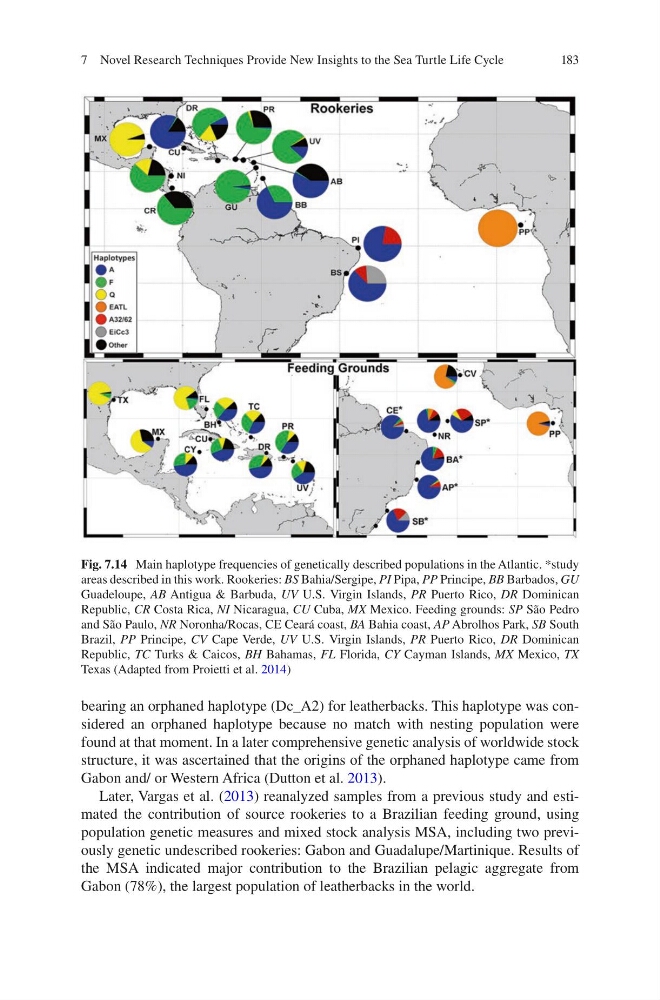
Fig. 7.14 Main haplotype frequencies of genetically described populations in the Atlantic. *study
areas described in this work. Rookeries: BS Bahia/Sergipe, PI Pipa, PP Principe, BB Barbados, GU
Guadeloupe, AB Antigua & Barbuda, UV U.S. Virgin Islands, PR Puerto Rico, DR Dominican
Republic, CR Costa Rica, NI Nicaragua, CU Cuba, MX Mexico. Feeding grounds: SP São Pedro
and São Paulo, NR Noronha/Rocas, CE Ceará coast, BA Bahia coast, AP Abrolhos Park, SB South
Brazil, PP Principe, CV Cape Verde, UV U.S. Virgin Islands, PR Puerto Rico, DR Dominican
Republic, TC Turks & Caicos, BH Bahamas, FL Florida, CY Cayman Islands, MX Mexico, TX
Texas (Adapted from Proietti et al. 2014)
7 Novel Research Techniques Provide New Insights to the Sea Turtle Life Cycle
bearing an orphaned haplotype (Dc_A2) for leatherbacks. This haplotype was considered an orphaned haplotype because no match with nesting population were
found at that moment. In a later comprehensive genetic analysis of worldwide stock
structure, it was ascertained that the origins of the orphaned haplotype came from
Gabon and/ or Western Africa (Dutton et al. 2013).
Later, Vargas et al. (2013) reanalyzed samples from a previous study and estimated the contribution of source rookeries to a Brazilian feeding ground, using
population genetic measures and mixed stock analysis MSA, including two previously genetic undescribed rookeries: Gabon and Guadalupe/Martinique. Results of
the MSA indicated major contribution to the Brazilian pelagic aggregate from
Gabon (78%), the largest population of leatherbacks in the world.
Fig. 7.14 Main haplotype frequencies of genetically described populations in the Atlantic. *study
areas described in this work. Rookeries: BS Bahia/Sergipe, PI Pipa, PP Principe, BB Barbados, GU
Guadeloupe, AB Antigua & Barbuda, UV U.S. Virgin Islands, PR Puerto Rico, DR Dominican
Republic, CR Costa Rica, NI Nicaragua, CU Cuba, MX Mexico. Feeding grounds: SP São Pedro
and São Paulo, NR Noronha/Rocas, CE Ceará coast, BA Bahia coast, AP Abrolhos Park, SB South
Brazil, PP Principe, CV Cape Verde, UV U.S. Virgin Islands, PR Puerto Rico, DR Dominican
Republic, TC Turks & Caicos, BH Bahamas, FL Florida, CY Cayman Islands, MX Mexico, TX
Texas (Adapted from Proietti et al. 2014)
7 Novel Research Techniques Provide New Insights to the Sea Turtle Life Cycle