

117
Regardless of the number of hydrophones in a linear array the ambiguity is present, because it is not possible to distinguish the side of the signal (Au and Hastings
2008). A greater number of hydrophones would enable the localization of the signal
rather than a group of vocalizing individuals (Benda-Beckmann et al. 2013).
However, this has been still discussed in the literature, especially considering the
possible instability associated to towed systems.
In general the spacing between hydrophones considers the frequencies of vocalizations of the target species. The lower is the frequency, the greater will be the distance
between hydrophones (Leaper et al. 1992, 2003; Benda-Beckmann et al. 2013; Gillespie
1997; Barlow and Taylor 1998, 2005; Lewis et al. 2007; Rankin and Barlow 2007; Swift
et al. 2009; Gillespie et al. 2010). However, these systems are mostly indicated to species that produces signals above the noise frequency band produced by the moving
platform and the flow noise of the cable, e.g. sperm whales (Barlow and Taylor 2005),
beaked whales (Gillespie et al. 2010) and harbor porpoise (Sveegaard et al. 2011).
5.3 Basic Bioacoustics Data Analysis
For decades, scientists have been listening to the seas, looking forward to accurately
record and understand the nature and purpose of whales and dolphins sound emissions. Marine mammals produce a variety of vocalizations, each of them suited to a
particular behavior or situation. Bioacoustics is a cross-disciplinary science that is
broadly concerned in understand: animal communication and associated behavior,
sound production anatomy and neurophysiology, effects of human-made noise on
animals, auditory capacities and auditory mechanisms of animals, effects of humanmade noise on animals.
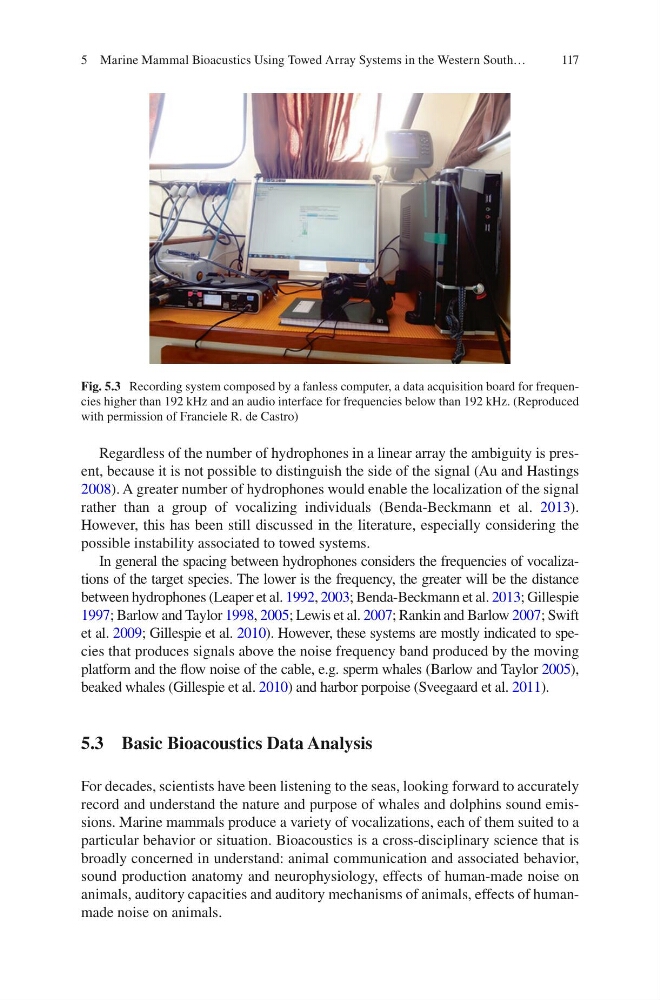
Fig. 5.3 Recording system composed by a fanless computer, a data acquisition board for frequencies higher than 192 kHz and an audio interface for frequencies below than 192 kHz. (Reproduced
with permission of Franciele R. de Castro)
5 Marine Mammal Bioacustics Using Towed Array Systems in the Western South…
Regardless of the number of hydrophones in a linear array the ambiguity is present, because it is not possible to distinguish the side of the signal (Au and Hastings
2008). A greater number of hydrophones would enable the localization of the signal
rather than a group of vocalizing individuals (Benda-Beckmann et al. 2013).
However, this has been still discussed in the literature, especially considering the
possible instability associated to towed systems.
In general the spacing between hydrophones considers the frequencies of vocalizations of the target species. The lower is the frequency, the greater will be the distance
between hydrophones (Leaper et al. 1992, 2003; Benda-Beckmann et al. 2013; Gillespie
1997; Barlow and Taylor 1998, 2005; Lewis et al. 2007; Rankin and Barlow 2007; Swift
et al. 2009; Gillespie et al. 2010). However, these systems are mostly indicated to species that produces signals above the noise frequency band produced by the moving
platform and the flow noise of the cable, e.g. sperm whales (Barlow and Taylor 2005),
beaked whales (Gillespie et al. 2010) and harbor porpoise (Sveegaard et al. 2011).
5.3 Basic Bioacoustics Data Analysis
For decades, scientists have been listening to the seas, looking forward to accurately
record and understand the nature and purpose of whales and dolphins sound emissions. Marine mammals produce a variety of vocalizations, each of them suited to a
particular behavior or situation. Bioacoustics is a cross-disciplinary science that is
broadly concerned in understand: animal communication and associated behavior,
sound production anatomy and neurophysiology, effects of human-made noise on
animals, auditory capacities and auditory mechanisms of animals, effects of humanmade noise on animals.
Fig. 5.3 Recording system composed by a fanless computer, a data acquisition board for frequencies higher than 192 kHz and an audio interface for frequencies below than 192 kHz. (Reproduced
with permission of Franciele R. de Castro)
5 Marine Mammal Bioacustics Using Towed Array Systems in the Western South…