

94
There are some land stations that seems to be well structured and established,
generating much research in a long-term period. For example, the land-based station
of Abrolhos Archipelago (Brazilian Humpback Whale – Institute Instituto Baleia
Jubarte) Bahia, Brazil, initiated in 1997 and although with gaps of few years, continues developing studies (Box 4.3). The land-based station at Isla de Lobos, Uruguay,
utilizes complementary methods and techniques (e.g., biopsy samples, physiological samples) generating important ecological information about the target species,
one of which is highlighted in the Box 4.2 (e.g., Franco-Trecu et al. 2015, 2016a, b).
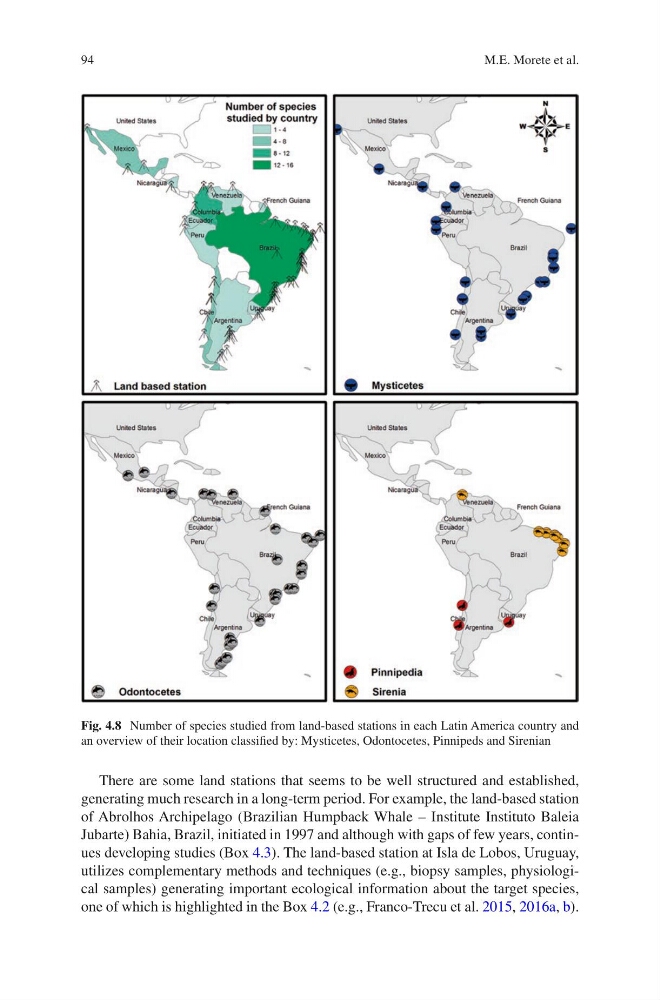
Fig. 4.8 Number of species studied from land-based stations in each Latin America country and
an overview of their location classified by: Mysticetes, Odontocetes, Pinnipeds and Sirenian
M.E. Morete et al.
There are some land stations that seems to be well structured and established,
generating much research in a long-term period. For example, the land-based station
of Abrolhos Archipelago (Brazilian Humpback Whale – Institute Instituto Baleia
Jubarte) Bahia, Brazil, initiated in 1997 and although with gaps of few years, continues developing studies (Box 4.3). The land-based station at Isla de Lobos, Uruguay,
utilizes complementary methods and techniques (e.g., biopsy samples, physiological samples) generating important ecological information about the target species,
one of which is highlighted in the Box 4.2 (e.g., Franco-Trecu et al. 2015, 2016a, b).
Fig. 4.8 Number of species studied from land-based stations in each Latin America country and
an overview of their location classified by: Mysticetes, Odontocetes, Pinnipeds and Sirenian
M.E. Morete et al.