

6.10 Tenacibaculum maritimum
Tenacibaculum maritimum (formally Flexibacter maritimus)
is the aetiological agent of an opportunistic ‘marine flexibacteriosis’ which is primarily a skin infection causing an ulcerative dermatitis in a range of fish species including, rainbow
trout and Atlantic salmon. Infection is characterised by an
eroded and haemorrhagic mouth, necrotic lesions on the body
and head, frayed fins and fin rot, scale loss and oedema and to
a lesser extent, involvement of the gills (Figs. 6.27 and 6.28).
Filamentous mats of bacteria can occur on the liver and skin
in chronic cases (Fig. 6.29). Histologically, early signs
include fragmentation and degeneration of the epithelium
with infiltration and occasionally intra-epithelial cellular
inflammatory cells, plus congestion and haemorrhage of the
superficial dermis. A necrotizing stomatitis may progress to
cellulitis and eventually perforation of the jaw. Infected gill
tissue shows a necrotizing branchitis and acute telangiectasia
with a focal lamellar hyperplasia. In the skin a mild inflammation can occur in the scale pockets with some adherent
bacteria before full epithelial erosion. Typically, there is a
lack of inflammatory response and consequently bacteria may
infect the connective tissue and occasionally the musculature.
Diagnosis is based upon clinical signs and the isolation
and identification of the bacteria. Tenacibaculum maritimum
is a Gram negative filamentous aerobic rod exhibiting gliding motility on wet surfaces. Bacterial colonies are flat, light
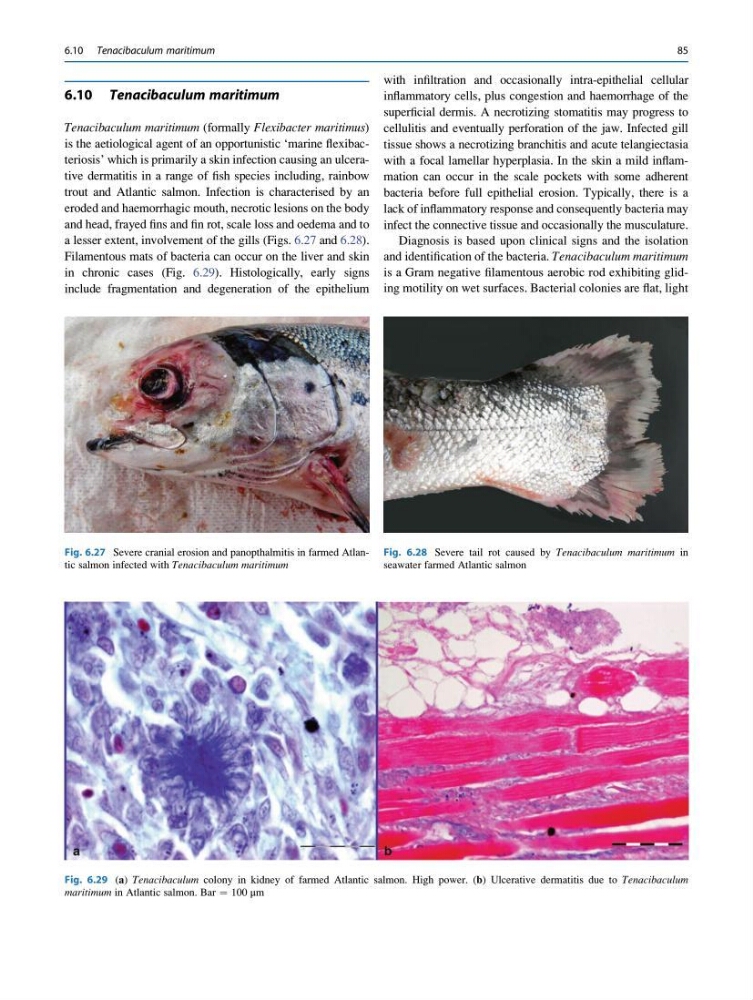
Fig. 6.27 Severe cranial erosion and panopthalmitis in farmed Atlantic salmon infected with Tenacibaculum maritimum
Fig. 6.28 Severe tail rot caused by Tenacibaculum maritimum in
seawater farmed Atlantic salmon
Fig. 6.29 (a) Tenacibaculum colony in kidney of farmed Atlantic salmon. High power. (b) Ulcerative dermatitis due to Tenacibaculum
maritimum in Atlantic salmon. Bar ¼ 100 μm
6.10 Tenacibaculum maritimum
85
Tenacibaculum maritimum (formally Flexibacter maritimus)
is the aetiological agent of an opportunistic ‘marine flexibacteriosis’ which is primarily a skin infection causing an ulcerative dermatitis in a range of fish species including, rainbow
trout and Atlantic salmon. Infection is characterised by an
eroded and haemorrhagic mouth, necrotic lesions on the body
and head, frayed fins and fin rot, scale loss and oedema and to
a lesser extent, involvement of the gills (Figs. 6.27 and 6.28).
Filamentous mats of bacteria can occur on the liver and skin
in chronic cases (Fig. 6.29). Histologically, early signs
include fragmentation and degeneration of the epithelium
with infiltration and occasionally intra-epithelial cellular
inflammatory cells, plus congestion and haemorrhage of the
superficial dermis. A necrotizing stomatitis may progress to
cellulitis and eventually perforation of the jaw. Infected gill
tissue shows a necrotizing branchitis and acute telangiectasia
with a focal lamellar hyperplasia. In the skin a mild inflammation can occur in the scale pockets with some adherent
bacteria before full epithelial erosion. Typically, there is a
lack of inflammatory response and consequently bacteria may
infect the connective tissue and occasionally the musculature.
Diagnosis is based upon clinical signs and the isolation
and identification of the bacteria. Tenacibaculum maritimum
is a Gram negative filamentous aerobic rod exhibiting gliding motility on wet surfaces. Bacterial colonies are flat, light
Fig. 6.27 Severe cranial erosion and panopthalmitis in farmed Atlantic salmon infected with Tenacibaculum maritimum
Fig. 6.28 Severe tail rot caused by Tenacibaculum maritimum in
seawater farmed Atlantic salmon
Fig. 6.29 (a) Tenacibaculum colony in kidney of farmed Atlantic salmon. High power. (b) Ulcerative dermatitis due to Tenacibaculum
maritimum in Atlantic salmon. Bar ¼ 100 μm
6.10 Tenacibaculum maritimum
85