

Similarly, there can be extensive haemorrhage in the
corpuscles of Stannius (Fig. 5.12). Haematological changes
include vacuolation of erythrocytic cytoplasm, leucopenia
and decline in haematocrit to less than 5 in severely affected
fish. A differential diagnosis would be viral haemorrhagic
septicaemia.
ISA virus is a member of the Orthomyxoviridae family.
Although the natural reservoir of the virus remains
unknown, a marine source is considered likely. Subclinical
infection has been recorded in several species including
trout, rainbow trout, Arctic char, chum, Chinook and coho
salmon plus marine species such as herring and pollock.
Experimental data indicate that transmission may occur
effectively through blood, skin mucous and faeces, with
the gill capillary network being the most important route.
Spread of the virus also occurs via movement of latent
carriers or diseased fish, and historically through water and
blood discharged from slaughtering facilities. Sea lice
(Lepeophtheirus spp. and Caligus spp.) may act as vectors
of the virus and the stress associated to lice infestation may
make the fish more susceptible to infection. Vertical transmission of the virus has been suggested, but this is still
controversial and not fully resolved.
Diagnosis is based upon characteristic clinical changes,
histopathology and isolation of the virus in cell lines such
as salmon head kidney (SHK-1), Atlantic salmon kidney
(ASK) and CHSE. Immunohistochemistry and PCR tools
are also available to demonstrate the presence of the virus,
particularly in haematopoietic tissue, endocardial and chloride cells (Fig. 5.13). Variants of ISAV have been
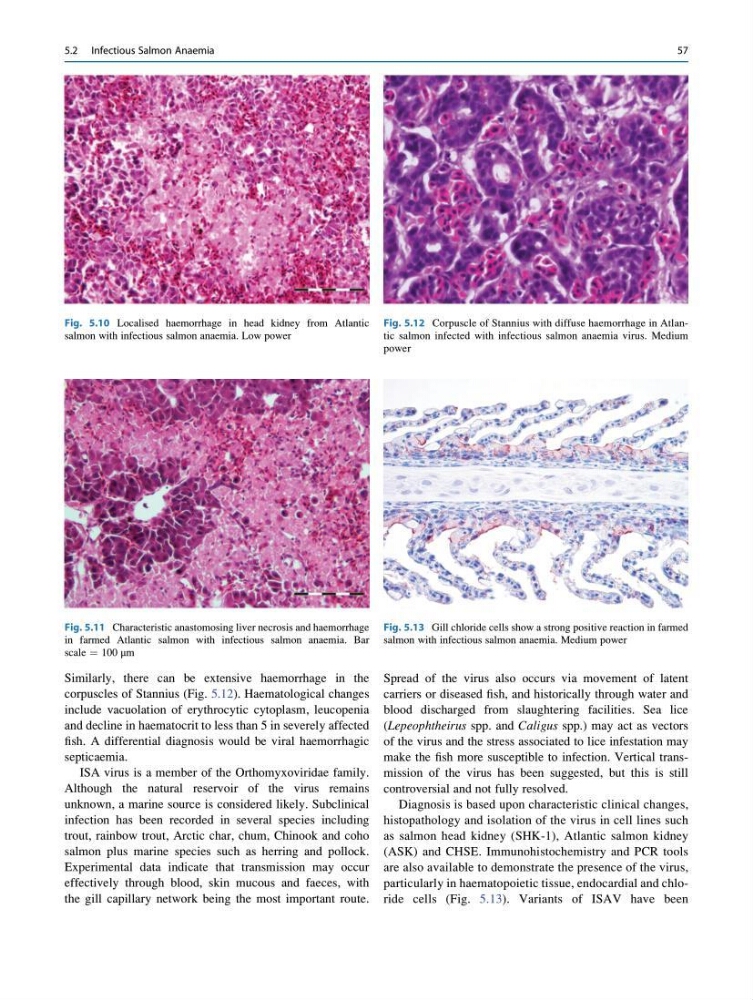
Fig. 5.10 Localised haemorrhage in head kidney from Atlantic
salmon with infectious salmon anaemia. Low power
Fig. 5.11 Characteristic anastomosing liver necrosis and haemorrhage
in farmed Atlantic salmon with infectious salmon anaemia. Bar
scale ¼ 100 μm
Fig. 5.12 Corpuscle of Stannius with diffuse haemorrhage in Atlantic salmon infected with infectious salmon anaemia virus. Medium
power
Fig. 5.13 Gill chloride cells show a strong positive reaction in farmed
salmon with infectious salmon anaemia. Medium power
5.2 Infectious Salmon Anaemia
57
corpuscles of Stannius (Fig. 5.12). Haematological changes
include vacuolation of erythrocytic cytoplasm, leucopenia
and decline in haematocrit to less than 5 in severely affected
fish. A differential diagnosis would be viral haemorrhagic
septicaemia.
ISA virus is a member of the Orthomyxoviridae family.
Although the natural reservoir of the virus remains
unknown, a marine source is considered likely. Subclinical
infection has been recorded in several species including
trout, rainbow trout, Arctic char, chum, Chinook and coho
salmon plus marine species such as herring and pollock.
Experimental data indicate that transmission may occur
effectively through blood, skin mucous and faeces, with
the gill capillary network being the most important route.
Spread of the virus also occurs via movement of latent
carriers or diseased fish, and historically through water and
blood discharged from slaughtering facilities. Sea lice
(Lepeophtheirus spp. and Caligus spp.) may act as vectors
of the virus and the stress associated to lice infestation may
make the fish more susceptible to infection. Vertical transmission of the virus has been suggested, but this is still
controversial and not fully resolved.
Diagnosis is based upon characteristic clinical changes,
histopathology and isolation of the virus in cell lines such
as salmon head kidney (SHK-1), Atlantic salmon kidney
(ASK) and CHSE. Immunohistochemistry and PCR tools
are also available to demonstrate the presence of the virus,
particularly in haematopoietic tissue, endocardial and chloride cells (Fig. 5.13). Variants of ISAV have been
Fig. 5.10 Localised haemorrhage in head kidney from Atlantic
salmon with infectious salmon anaemia. Low power
Fig. 5.11 Characteristic anastomosing liver necrosis and haemorrhage
in farmed Atlantic salmon with infectious salmon anaemia. Bar
scale ¼ 100 μm
Fig. 5.12 Corpuscle of Stannius with diffuse haemorrhage in Atlantic salmon infected with infectious salmon anaemia virus. Medium
power
Fig. 5.13 Gill chloride cells show a strong positive reaction in farmed
salmon with infectious salmon anaemia. Medium power
5.2 Infectious Salmon Anaemia
57