

is organized as a triangular band along the flank just beneath
the lateral line and is highly vascularised, rich in myoglobin,
glycogen and lipids with numerous mitochondria (Fig. 2.20).
Red muscle is used for long-term sustained swimming and
moderate speed swimming activity. Skeletal striated muscle
differs from the heart striated muscle with a peripheral
instead of a central nucleus.
2.4.2 Fins
Salmonids have a complete set of fins. Each fin is covered by
stratified squamous epithelium continuous with the epidermis of the body. The dermis has a reduced stratum
compactum and a thicker hypodermis compared to that of
the main body. Median fins of include the dorsal, adipose,
caudal and anal, and the paired sets are the pectoral and
pelvic fins supported by bony girdles, which are embedded
in the ventral body musculature as floating structures.
Unpaired fins are generally supported on small bones within
the musculature septa. The caudal fin is supported by a
greatly modified, posterior most caudal vertebrae, flattened
into an almost symmetrical plate against which the flexible
fin rays of the caudal fin articulate. The adipose fin located
between the dorsal and caudal fins, despite its name, has no
adipose tissue or bony support. A clearer idea of its role has
emerged with evidence of sensory function reported,
suggesting it may act as a precaudal flow sensor, therefore
its removal can be detrimental to swimming efficiency.
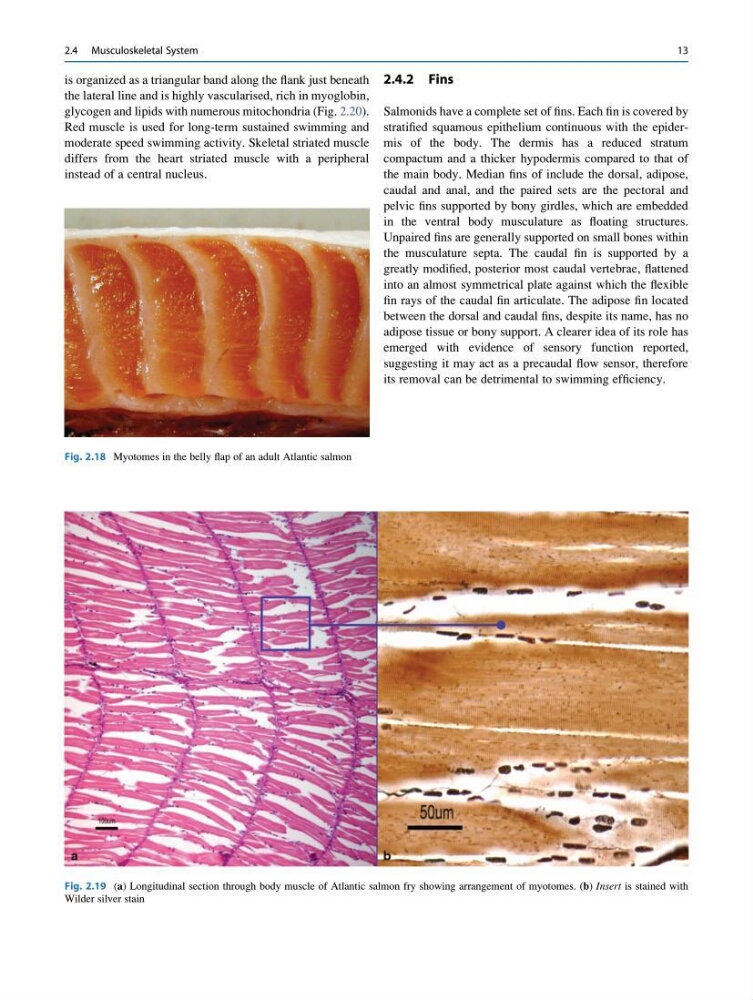
Fig. 2.18 Myotomes in the belly flap of an adult Atlantic salmon
Fig. 2.19 (a) Longitudinal section through body muscle of Atlantic salmon fry showing arrangement of myotomes. (b) Insert is stained with
Wilder silver stain
2.4 Musculoskeletal System
13
the lateral line and is highly vascularised, rich in myoglobin,
glycogen and lipids with numerous mitochondria (Fig. 2.20).
Red muscle is used for long-term sustained swimming and
moderate speed swimming activity. Skeletal striated muscle
differs from the heart striated muscle with a peripheral
instead of a central nucleus.
2.4.2 Fins
Salmonids have a complete set of fins. Each fin is covered by
stratified squamous epithelium continuous with the epidermis of the body. The dermis has a reduced stratum
compactum and a thicker hypodermis compared to that of
the main body. Median fins of include the dorsal, adipose,
caudal and anal, and the paired sets are the pectoral and
pelvic fins supported by bony girdles, which are embedded
in the ventral body musculature as floating structures.
Unpaired fins are generally supported on small bones within
the musculature septa. The caudal fin is supported by a
greatly modified, posterior most caudal vertebrae, flattened
into an almost symmetrical plate against which the flexible
fin rays of the caudal fin articulate. The adipose fin located
between the dorsal and caudal fins, despite its name, has no
adipose tissue or bony support. A clearer idea of its role has
emerged with evidence of sensory function reported,
suggesting it may act as a precaudal flow sensor, therefore
its removal can be detrimental to swimming efficiency.
Fig. 2.18 Myotomes in the belly flap of an adult Atlantic salmon
Fig. 2.19 (a) Longitudinal section through body muscle of Atlantic salmon fry showing arrangement of myotomes. (b) Insert is stained with
Wilder silver stain
2.4 Musculoskeletal System
13