

11.5 Haemorrhagic Smolt Syndrome
Farmed pre-smolt Atlantic salmon with clinical signs of
haemorrhagic smolt syndrome (HSS) have been reported in
Norway and Scotland. The seasonal condition is characterised by anaemia and extensive haemorrhage in most
internal organs. Affected fish are lethargic and have pale
gills, with extensive visceral and muscle petechiae and
ecchymosis, but no major weight loss. Petechiae also occur
on the gastrointestinal tract, swim bladder and peritoneum,
heart and somatic musculature (Figs. 11.13 and 11.14). The
liver can be bright yellow and mottled with petechiae. Ascites is reported in the visceral cavity.
Histological examination shows haemorrhage in most
organs including pancreas, kidney and gut (Figs. 11.15,
11.16 and 11.17). The glomeruli appear degenerated and
the renal tubules are full with erythrocytes. The condition
is considered non-infectious as current evidence indicates
there is no agent involved, however the aetiology requires
further study.
11.6 Swim Bladder Stress Syndrome
Swim bladder stress syndrome may occur in several farmed
species, but primarily, reported in rainbow trout (Fig. 11.18).
The main feature is an over-inflation of the swim bladder and
Fig. 11.12 Body muscles and intestine of farmed Atlantic salmon parr with white eye syndrome. Patchy calcium deposits are visible in white
muscle and stomach wall
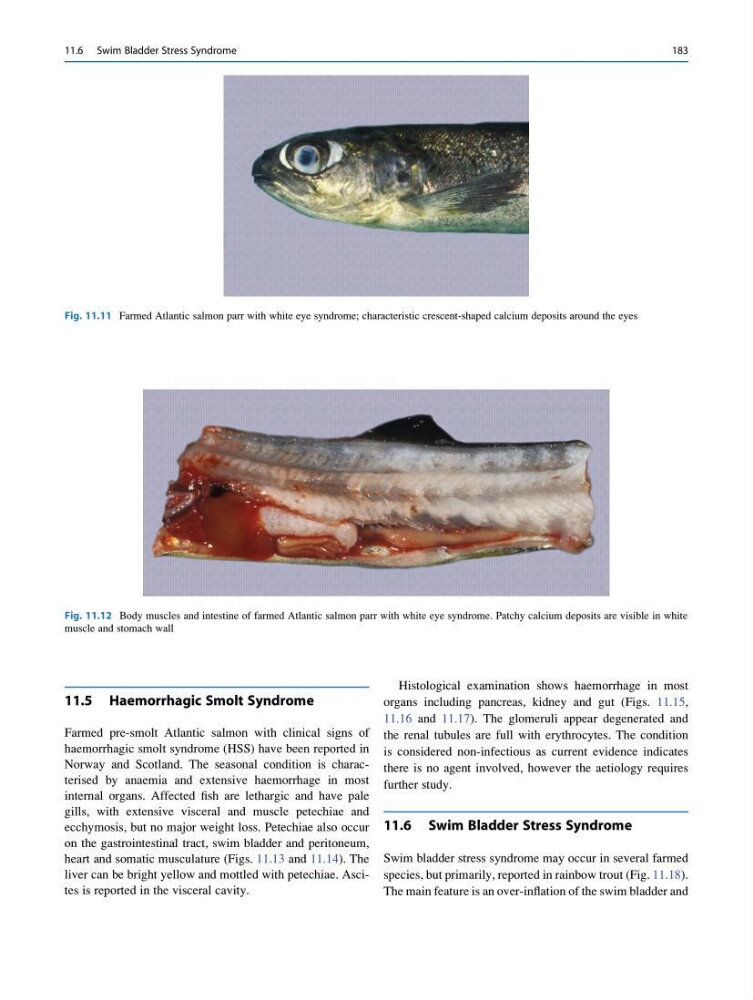
Fig. 11.11 Farmed Atlantic salmon parr with white eye syndrome; characteristic crescent-shaped calcium deposits around the eyes
11.6 Swim Bladder Stress Syndrome
183
Farmed pre-smolt Atlantic salmon with clinical signs of
haemorrhagic smolt syndrome (HSS) have been reported in
Norway and Scotland. The seasonal condition is characterised by anaemia and extensive haemorrhage in most
internal organs. Affected fish are lethargic and have pale
gills, with extensive visceral and muscle petechiae and
ecchymosis, but no major weight loss. Petechiae also occur
on the gastrointestinal tract, swim bladder and peritoneum,
heart and somatic musculature (Figs. 11.13 and 11.14). The
liver can be bright yellow and mottled with petechiae. Ascites is reported in the visceral cavity.
Histological examination shows haemorrhage in most
organs including pancreas, kidney and gut (Figs. 11.15,
11.16 and 11.17). The glomeruli appear degenerated and
the renal tubules are full with erythrocytes. The condition
is considered non-infectious as current evidence indicates
there is no agent involved, however the aetiology requires
further study.
11.6 Swim Bladder Stress Syndrome
Swim bladder stress syndrome may occur in several farmed
species, but primarily, reported in rainbow trout (Fig. 11.18).
The main feature is an over-inflation of the swim bladder and
Fig. 11.12 Body muscles and intestine of farmed Atlantic salmon parr with white eye syndrome. Patchy calcium deposits are visible in white
muscle and stomach wall
Fig. 11.11 Farmed Atlantic salmon parr with white eye syndrome; characteristic crescent-shaped calcium deposits around the eyes
11.6 Swim Bladder Stress Syndrome
183