

heavy metals, fluctuating pH, ammonia, low temperature,
chemical treatments and rough handling during critical
phases of egg development, are likely causes.
10.6 Abnormalities of the Opercula
Shortened or frayed opercula with scars and indentations
result in direct physical irritation and damage to the gill
epithelium and are common in intensively farmed
salmonids. The condition may be uni- or bilateral, although
difficult to record until larvae reach a certain size (~>12 mm
in length). In severe cases, most of the gill tissue is visible
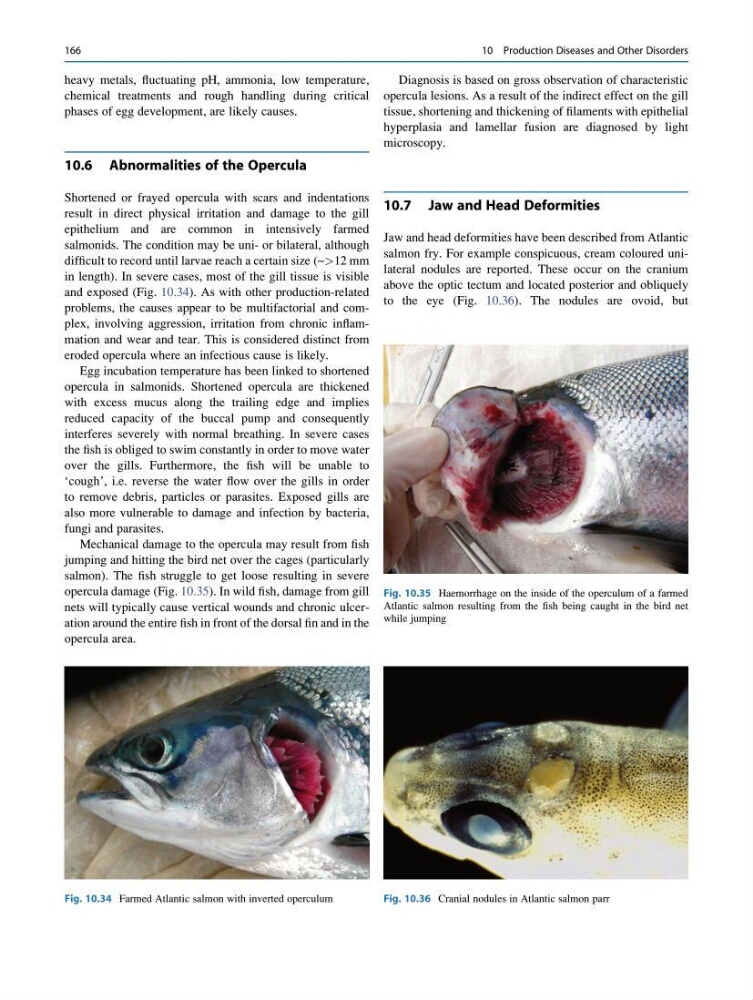
and exposed (Fig. 10.34). As with other production-related
problems, the causes appear to be multifactorial and complex, involving aggression, irritation from chronic inflammation and wear and tear. This is considered distinct from
eroded opercula where an infectious cause is likely.
Egg incubation temperature has been linked to shortened
opercula in salmonids. Shortened opercula are thickened
with excess mucus along the trailing edge and implies
reduced capacity of the buccal pump and consequently
interferes severely with normal breathing. In severe cases
the fish is obliged to swim constantly in order to move water
over the gills. Furthermore, the fish will be unable to
‘cough’, i.e. reverse the water flow over the gills in order
to remove debris, particles or parasites. Exposed gills are
also more vulnerable to damage and infection by bacteria,
fungi and parasites.
Mechanical damage to the opercula may result from fish
jumping and hitting the bird net over the cages (particularly
salmon). The fish struggle to get loose resulting in severe
opercula damage (Fig. 10.35). In wild fish, damage from gill
nets will typically cause vertical wounds and chronic ulceration around the entire fish in front of the dorsal fin and in the
opercula area.
Diagnosis is based on gross observation of characteristic
opercula lesions. As a result of the indirect effect on the gill
tissue, shortening and thickening of filaments with epithelial
hyperplasia and lamellar fusion are diagnosed by light
microscopy.
10.7 Jaw and Head Deformities
Jaw and head deformities have been described from Atlantic
salmon fry. For example conspicuous, cream coloured unilateral nodules are reported. These occur on the cranium
above the optic tectum and located posterior and obliquely
to the eye (Fig. 10.36). The nodules are ovoid, but
Fig. 10.34 Farmed Atlantic salmon with inverted operculum
Fig. 10.35 Haemorrhage on the inside of the operculum of a farmed
Atlantic salmon resulting from the fish being caught in the bird net
while jumping
Fig. 10.36 Cranial nodules in Atlantic salmon parr
166
10 Production Diseases and Other Disorders
chemical treatments and rough handling during critical
phases of egg development, are likely causes.
10.6 Abnormalities of the Opercula
Shortened or frayed opercula with scars and indentations
result in direct physical irritation and damage to the gill
epithelium and are common in intensively farmed
salmonids. The condition may be uni- or bilateral, although
difficult to record until larvae reach a certain size (~>12 mm
in length). In severe cases, most of the gill tissue is visible
and exposed (Fig. 10.34). As with other production-related
problems, the causes appear to be multifactorial and complex, involving aggression, irritation from chronic inflammation and wear and tear. This is considered distinct from
eroded opercula where an infectious cause is likely.
Egg incubation temperature has been linked to shortened
opercula in salmonids. Shortened opercula are thickened
with excess mucus along the trailing edge and implies
reduced capacity of the buccal pump and consequently
interferes severely with normal breathing. In severe cases
the fish is obliged to swim constantly in order to move water
over the gills. Furthermore, the fish will be unable to
‘cough’, i.e. reverse the water flow over the gills in order
to remove debris, particles or parasites. Exposed gills are
also more vulnerable to damage and infection by bacteria,
fungi and parasites.
Mechanical damage to the opercula may result from fish
jumping and hitting the bird net over the cages (particularly
salmon). The fish struggle to get loose resulting in severe
opercula damage (Fig. 10.35). In wild fish, damage from gill
nets will typically cause vertical wounds and chronic ulceration around the entire fish in front of the dorsal fin and in the
opercula area.
Diagnosis is based on gross observation of characteristic
opercula lesions. As a result of the indirect effect on the gill
tissue, shortening and thickening of filaments with epithelial
hyperplasia and lamellar fusion are diagnosed by light
microscopy.
10.7 Jaw and Head Deformities
Jaw and head deformities have been described from Atlantic
salmon fry. For example conspicuous, cream coloured unilateral nodules are reported. These occur on the cranium
above the optic tectum and located posterior and obliquely
to the eye (Fig. 10.36). The nodules are ovoid, but
Fig. 10.34 Farmed Atlantic salmon with inverted operculum
Fig. 10.35 Haemorrhage on the inside of the operculum of a farmed
Atlantic salmon resulting from the fish being caught in the bird net
while jumping
Fig. 10.36 Cranial nodules in Atlantic salmon parr
166
10 Production Diseases and Other Disorders