

10.3.3 Steatitis
Steatitis or pansteatitis is an inflammation of the visceral
adipose tissue that is normally abundant around the pyloric
caeca in salmonids. The inflamed tissue is firm, yellowish or
greyish and the swim bladder may be opaque with streaks of
greyish yellow. Histological findings include thickening of
the fat cell walls, infiltration, aggregation of ceroidcontaining macrophages and pigment deposit (Fig. 10.12).
A granulomatous response centred on multinucleate giant
cells and eosinophilic inclusions may also be seen. Steatitis
may occur as a sequel to pancreatitis, but also as an idiopathic disease where vitamin E deficiency and/or rancid fat
in the diet are possible causes.
10.3.4 Heart Fat Infiltration
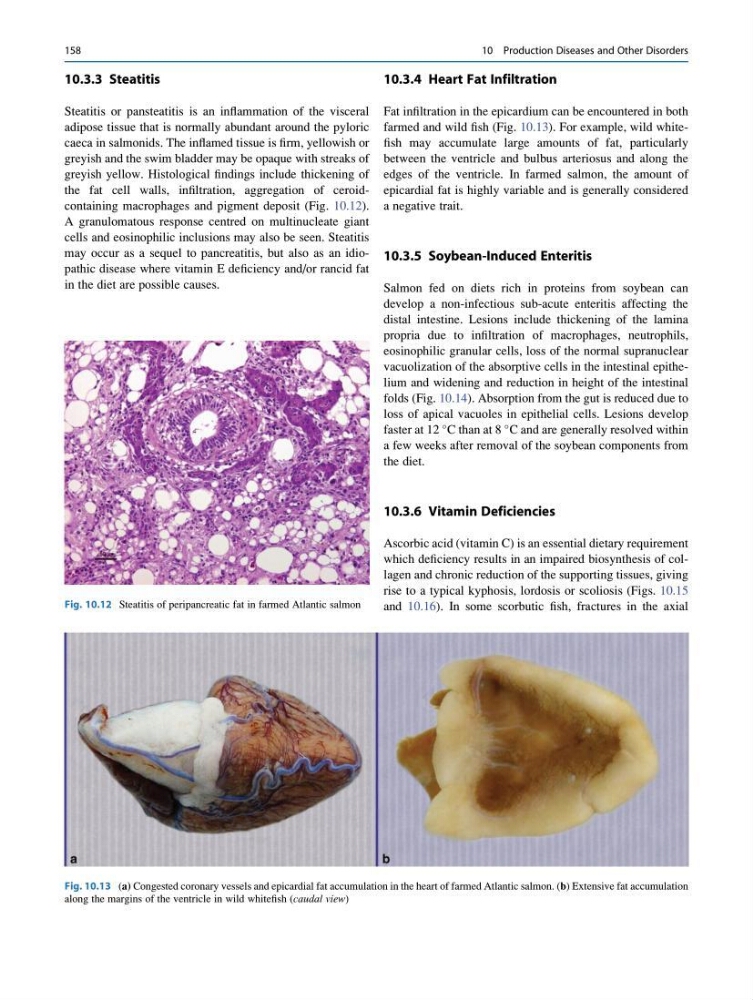
Fat infiltration in the epicardium can be encountered in both
farmed and wild fish (Fig. 10.13). For example, wild whitefish may accumulate large amounts of fat, particularly
between the ventricle and bulbus arteriosus and along the
edges of the ventricle. In farmed salmon, the amount of
epicardial fat is highly variable and is generally considered
a negative trait.
10.3.5 Soybean-Induced Enteritis
Salmon fed on diets rich in proteins from soybean can
develop a non-infectious sub-acute enteritis affecting the
distal intestine. Lesions include thickening of the lamina
propria due to infiltration of macrophages, neutrophils,
eosinophilic granular cells, loss of the normal supranuclear
vacuolization of the absorptive cells in the intestinal epithelium and widening and reduction in height of the intestinal
folds (Fig. 10.14). Absorption from the gut is reduced due to
loss of apical vacuoles in epithelial cells. Lesions develop
faster at 12
C than at 8
C and are generally resolved within
a few weeks after removal of the soybean components from
the diet.
10.3.6 Vitamin Deficiencies
Ascorbic acid (vitamin C) is an essential dietary requirement
which deficiency results in an impaired biosynthesis of collagen and chronic reduction of the supporting tissues, giving
rise to a typical kyphosis, lordosis or scoliosis (Figs. 10.15
and 10.16). In some scorbutic fish, fractures in the axial
Fig. 10.12 Steatitis of peripancreatic fat in farmed Atlantic salmon
Fig. 10.13 (a) Congested coronary vessels and epicardial fat accumulation in the heart of farmed Atlantic salmon. (b) Extensive fat accumulation
along the margins of the ventricle in wild whitefish (caudal view)
158
10 Production Diseases and Other Disorders
Steatitis or pansteatitis is an inflammation of the visceral
adipose tissue that is normally abundant around the pyloric
caeca in salmonids. The inflamed tissue is firm, yellowish or
greyish and the swim bladder may be opaque with streaks of
greyish yellow. Histological findings include thickening of
the fat cell walls, infiltration, aggregation of ceroidcontaining macrophages and pigment deposit (Fig. 10.12).
A granulomatous response centred on multinucleate giant
cells and eosinophilic inclusions may also be seen. Steatitis
may occur as a sequel to pancreatitis, but also as an idiopathic disease where vitamin E deficiency and/or rancid fat
in the diet are possible causes.
10.3.4 Heart Fat Infiltration
Fat infiltration in the epicardium can be encountered in both
farmed and wild fish (Fig. 10.13). For example, wild whitefish may accumulate large amounts of fat, particularly
between the ventricle and bulbus arteriosus and along the
edges of the ventricle. In farmed salmon, the amount of
epicardial fat is highly variable and is generally considered
a negative trait.
10.3.5 Soybean-Induced Enteritis
Salmon fed on diets rich in proteins from soybean can
develop a non-infectious sub-acute enteritis affecting the
distal intestine. Lesions include thickening of the lamina
propria due to infiltration of macrophages, neutrophils,
eosinophilic granular cells, loss of the normal supranuclear
vacuolization of the absorptive cells in the intestinal epithelium and widening and reduction in height of the intestinal
folds (Fig. 10.14). Absorption from the gut is reduced due to
loss of apical vacuoles in epithelial cells. Lesions develop
faster at 12
C than at 8
C and are generally resolved within
a few weeks after removal of the soybean components from
the diet.
10.3.6 Vitamin Deficiencies
Ascorbic acid (vitamin C) is an essential dietary requirement
which deficiency results in an impaired biosynthesis of collagen and chronic reduction of the supporting tissues, giving
rise to a typical kyphosis, lordosis or scoliosis (Figs. 10.15
and 10.16). In some scorbutic fish, fractures in the axial
Fig. 10.12 Steatitis of peripancreatic fat in farmed Atlantic salmon
Fig. 10.13 (a) Congested coronary vessels and epicardial fat accumulation in the heart of farmed Atlantic salmon. (b) Extensive fat accumulation
along the margins of the ventricle in wild whitefish (caudal view)
158
10 Production Diseases and Other Disorders