

and hypertrophy of sinusoidal endothelial cells also take
place. Considerable changes occur in the structure of the
parenchyma, with large areas showing a marked decrease in
cellular density.
Saprolegnia spp. can be isolated on a variety of media
and the identification of non-septate hyphae from culture or
suspected lesions is used to support a diagnosis. PCR
methods are also available.
7.2
Isaria farinosa (formally Paecilomyces
farinosus)
Isaria farinosa (Paecilomyces farinosus) is a soil associated
fungus that has been recorded as the cause of sporadic
mortality among Atlantic salmon parr. Affected fish are
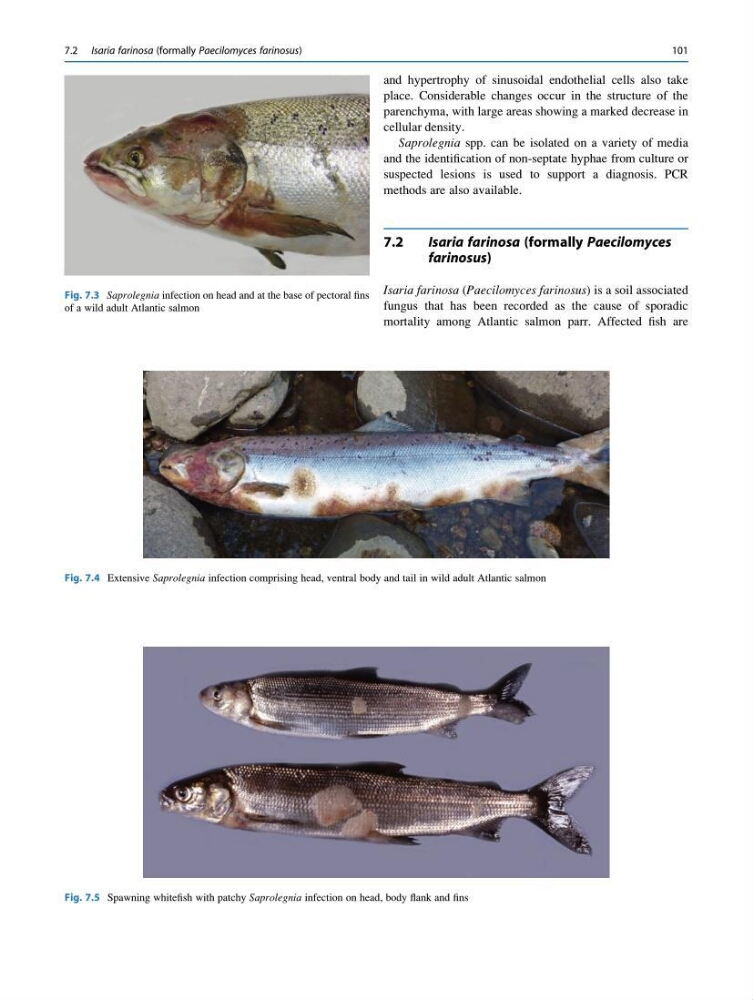
Fig. 7.3 Saprolegnia infection on head and at the base of pectoral fins
of a wild adult Atlantic salmon
Fig. 7.4 Extensive Saprolegnia infection comprising head, ventral body and tail in wild adult Atlantic salmon
Fig. 7.5 Spawning whitefish with patchy Saprolegnia infection on head, body flank and fins
7.2 Isaria farinosa (formally Paecilomyces farinosus)
101
place. Considerable changes occur in the structure of the
parenchyma, with large areas showing a marked decrease in
cellular density.
Saprolegnia spp. can be isolated on a variety of media
and the identification of non-septate hyphae from culture or
suspected lesions is used to support a diagnosis. PCR
methods are also available.
7.2
Isaria farinosa (formally Paecilomyces
farinosus)
Isaria farinosa (Paecilomyces farinosus) is a soil associated
fungus that has been recorded as the cause of sporadic
mortality among Atlantic salmon parr. Affected fish are
Fig. 7.3 Saprolegnia infection on head and at the base of pectoral fins
of a wild adult Atlantic salmon
Fig. 7.4 Extensive Saprolegnia infection comprising head, ventral body and tail in wild adult Atlantic salmon
Fig. 7.5 Spawning whitefish with patchy Saprolegnia infection on head, body flank and fins
7.2 Isaria farinosa (formally Paecilomyces farinosus)
101