

.A T
o
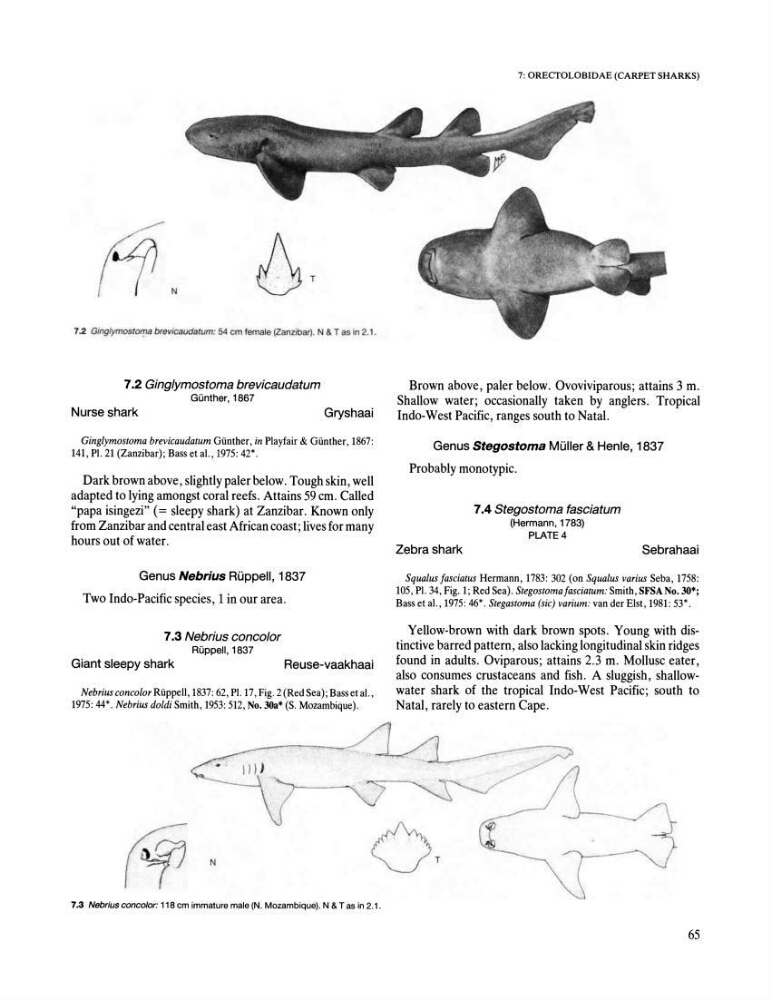
7.2 Ginglymostoma brev;caudalum: 54 em female (Zanzibar). N & T as in 2 .1.
7.2 Ging/ymostoma brevicaudatum
Gunther, 1867
Nurse shark
Gryshaai
Ginglymostoma brevicaudatum Giinther, in Playfair & Giinther, 1867:
141, PI. 21 (Zanzibar); Bass et aI., 1975: 42*.
Dark brown above, slightly paler below. Tough skin, well
adapted to lying amongst coral reefs. Attains 59 cm. Called
"papa isingezi" (= sleepy shark) at Zanzibar. Known only
from Zanzibar and central east African coast; lives for many
hours out of water.
Genus Nebrius Ruppell, 1837
Two Indo-Pacific species, 1 in our area.
7.3 Nebrius conca/or
Ruppell, 1837
Giant sleepy shark
Reuse-vaakhaai
Nebriusconcolor Riippell, 1837: 62, PI. 17, Fig. 2 (Red Sea); Basset aI.,
1975: 44*. Nebrius doldi Smith, 1953: 512, No. 303* (S. Mozambique).
7.3 Nebrius conc%r: 118 em immature male (N. Mozambique). N & T as in 2.1.
7: ORECTOLOBIDAE (CARPET SHARKS)
Brown above, paler below. Ovoviviparous; attains 3 m.
Shallow water; occasionally taken by anglers. Tropical
Indo-West Pacific, ranges south to Natal.
Genus Stegostoma Muller & Henle, 1837
Probably monotypic.
7.4 Stegostoma fasciatum
(Hermann, 1783)
PLATE 4
Zebra shark
Sebrahaai
Squalus fasciatus Hermann, 1783: 302 (on Squalus varius Seba, 1758:
105, PI. 34, Fig. 1; Red Sea) . Stegostomafasciatum: Smith, SFSA No. 30*;
Bass et aI., 1975: 46*. Stegastoma (sic) varium: van der Elst, 1981: 53*.
Yellow-brown with dark brown spots. Young with distinctive barred pattern, also lacking longitudinal skin ridges
found in adults. Oviparous; attains 2.3 m. Mollusc eater,
also consumes crustaceans and fish. A sluggish, shallowwater shark of the tropical Indo-West Pacific; south to
Natal, rarely to eastern Cape.
65
o
7.2 Ginglymostoma brev;caudalum: 54 em female (Zanzibar). N & T as in 2 .1.
7.2 Ging/ymostoma brevicaudatum
Gunther, 1867
Nurse shark
Gryshaai
Ginglymostoma brevicaudatum Giinther, in Playfair & Giinther, 1867:
141, PI. 21 (Zanzibar); Bass et aI., 1975: 42*.
Dark brown above, slightly paler below. Tough skin, well
adapted to lying amongst coral reefs. Attains 59 cm. Called
"papa isingezi" (= sleepy shark) at Zanzibar. Known only
from Zanzibar and central east African coast; lives for many
hours out of water.
Genus Nebrius Ruppell, 1837
Two Indo-Pacific species, 1 in our area.
7.3 Nebrius conca/or
Ruppell, 1837
Giant sleepy shark
Reuse-vaakhaai
Nebriusconcolor Riippell, 1837: 62, PI. 17, Fig. 2 (Red Sea); Basset aI.,
1975: 44*. Nebrius doldi Smith, 1953: 512, No. 303* (S. Mozambique).
7.3 Nebrius conc%r: 118 em immature male (N. Mozambique). N & T as in 2.1.
7: ORECTOLOBIDAE (CARPET SHARKS)
Brown above, paler below. Ovoviviparous; attains 3 m.
Shallow water; occasionally taken by anglers. Tropical
Indo-West Pacific, ranges south to Natal.
Genus Stegostoma Muller & Henle, 1837
Probably monotypic.
7.4 Stegostoma fasciatum
(Hermann, 1783)
PLATE 4
Zebra shark
Sebrahaai
Squalus fasciatus Hermann, 1783: 302 (on Squalus varius Seba, 1758:
105, PI. 34, Fig. 1; Red Sea) . Stegostomafasciatum: Smith, SFSA No. 30*;
Bass et aI., 1975: 46*. Stegastoma (sic) varium: van der Elst, 1981: 53*.
Yellow-brown with dark brown spots. Young with distinctive barred pattern, also lacking longitudinal skin ridges
found in adults. Oviparous; attains 2.3 m. Mollusc eater,
also consumes crustaceans and fish. A sluggish, shallowwater shark of the tropical Indo-West Pacific; south to
Natal, rarely to eastern Cape.
65