

OCEANOGRAPHY OF THE SOUTHERN AFRICAN REGION
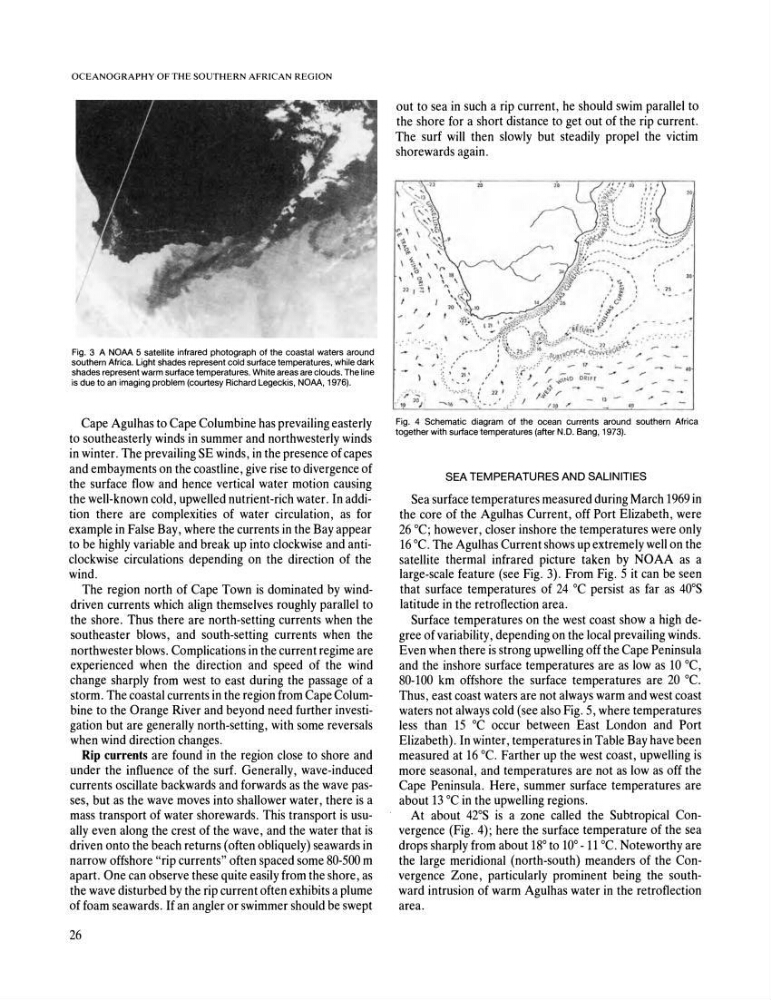
Fig. 3 A NOAA 5 satellite infrared photograph of the coastal waters around
southern Africa. Light shades represent cold surface temperatures, while dark
shades represent warm surface temperatures. White areas are clouds. The line
is due to an imaging problem (courtesy Richard Legeckis, NOAA, 1976).
Cape Agulhas to Cape Columbine has prevailing easterly
to southeasterly winds in summer and northwesterly winds
in winter. The prevailing SE winds, in the presence of capes
and embayments on the coastline, give rise to divergence of
the surface flow and hence vertical water motion causing
the well-known cold, upwelled nutrient-rich water. In addition there are complexities of water circulation, as for
example in False Bay, where the currents in the Bay appear
to be highly variable and break up into clockwise and anticlockwise circulations depending on the direction of the
wind.
The region north of Cape Town is dominated by winddriven currents which align themselves roughly parallel to
the shore. Thus there are north-setting currents when the
southeaster blows, and south-setting currents when the
northwester blows. Complications in the current regime are
experienced when the direction and speed of the wind
change sharply from west to east during the passage of a
storm. The coastal currents in the region from Cape Columbine to the Orange River and beyond need further investigation but are generally north-setting, with some reversals
when wind direction changes.
Rip currents are found in the region close to shore and
under the influence of the surf. Generally, wave-induced
currents oscillate backwards and forwards as the wave passes, but as the wave moves into shallower water, there is a
mass transport of water shorewards. This transport is usually even along the crest of the wave, and the water that is
driven onto the beach returns (often obliquely) seawards in
narrow offshore "rip currents" often spaced some 80-500 m
apart. One can observe these quite easily from the shore, as
the wave disturbed by the rip current often exhibits a plume
of foam seawards. If an angler or swimmer should be swept
26
out to sea in such a rip current, he should swim parallel to
the shore for a short distance to get out of the rip current.
The surf will then slowly but steadily propel the victim
shorewards again.
/
I
1
/
. ' ,'
, .'
::. , :' . .
~ ',;. ~ ~ r '
,
.. ;'" ~ "
• .• . -: ." "
;r2 I
: :' 1D to) '
-'160 ~ .~~ :.
; •
-
1 3
-
"
Fig. 4 Schematic diagram of the ocean currents around southern Africa
together with surface temperatures (after N.D. Bang, 1973).
SEA TEMPERATURES AND SALINITIES
Sea surface temperatures measured during March 1969 in
the core of the Agulhas Current, off Port Elizabeth, were
26°C; however, closer inshore the temperatures were only
16°C. The Agulhas Current shows up extremely well on the
satellite thermal infrared picture taken by NOAA as a
large-scale feature (see Fig. 3). From Fig. 5 it can be seen
that surface temperatures of 24°C persist as far as 40
0
S
latitude in the retroflection area.
Surface temperatures on the west coast show a high degree of variability, depending on the local prevailing winds.
Even when there is strong upwelling off the Cape Peninsula
and the inshore surface temperatures are as low as 10 °C,
80-100 km offshore the surface temperatures are 20°C.
Thus, east coast waters are not always warm and west coast
waters not always cold (see also Fig. 5, where temperatures
less than 15°C occur between East London and Port
Elizabeth). In winter, temperatures in Table Bay have been
measured at 16°C. Farther up the west coast, upwelling is
more seasonal, and temperatures are not as low as off the
Cape Peninsula. Here, summer surface temperatures are
about 13 °C in the upwelling regions.
At about 42°S is a zone called the Subtropical Convergence (Fig. 4); here the surface temperature of the sea
drops sharply from about 18° to 10° - 11°C. Noteworthy are
the large meridional (north-south) meanders of the Convergence Zone, particularly prominent being the southward intrusion of warm Agulhas water in the retroflection
area.
Fig. 3 A NOAA 5 satellite infrared photograph of the coastal waters around
southern Africa. Light shades represent cold surface temperatures, while dark
shades represent warm surface temperatures. White areas are clouds. The line
is due to an imaging problem (courtesy Richard Legeckis, NOAA, 1976).
Cape Agulhas to Cape Columbine has prevailing easterly
to southeasterly winds in summer and northwesterly winds
in winter. The prevailing SE winds, in the presence of capes
and embayments on the coastline, give rise to divergence of
the surface flow and hence vertical water motion causing
the well-known cold, upwelled nutrient-rich water. In addition there are complexities of water circulation, as for
example in False Bay, where the currents in the Bay appear
to be highly variable and break up into clockwise and anticlockwise circulations depending on the direction of the
wind.
The region north of Cape Town is dominated by winddriven currents which align themselves roughly parallel to
the shore. Thus there are north-setting currents when the
southeaster blows, and south-setting currents when the
northwester blows. Complications in the current regime are
experienced when the direction and speed of the wind
change sharply from west to east during the passage of a
storm. The coastal currents in the region from Cape Columbine to the Orange River and beyond need further investigation but are generally north-setting, with some reversals
when wind direction changes.
Rip currents are found in the region close to shore and
under the influence of the surf. Generally, wave-induced
currents oscillate backwards and forwards as the wave passes, but as the wave moves into shallower water, there is a
mass transport of water shorewards. This transport is usually even along the crest of the wave, and the water that is
driven onto the beach returns (often obliquely) seawards in
narrow offshore "rip currents" often spaced some 80-500 m
apart. One can observe these quite easily from the shore, as
the wave disturbed by the rip current often exhibits a plume
of foam seawards. If an angler or swimmer should be swept
26
out to sea in such a rip current, he should swim parallel to
the shore for a short distance to get out of the rip current.
The surf will then slowly but steadily propel the victim
shorewards again.
/
I
1
/
. ' ,'
, .'
::. , :' . .
~ ',;. ~ ~ r '
,
.. ;'" ~ "
• .• . -: ." "
;r2 I
: :' 1D to) '
-'160 ~ .~~ :.
; •
-
1 3
-
"
Fig. 4 Schematic diagram of the ocean currents around southern Africa
together with surface temperatures (after N.D. Bang, 1973).
SEA TEMPERATURES AND SALINITIES
Sea surface temperatures measured during March 1969 in
the core of the Agulhas Current, off Port Elizabeth, were
26°C; however, closer inshore the temperatures were only
16°C. The Agulhas Current shows up extremely well on the
satellite thermal infrared picture taken by NOAA as a
large-scale feature (see Fig. 3). From Fig. 5 it can be seen
that surface temperatures of 24°C persist as far as 40
0
S
latitude in the retroflection area.
Surface temperatures on the west coast show a high degree of variability, depending on the local prevailing winds.
Even when there is strong upwelling off the Cape Peninsula
and the inshore surface temperatures are as low as 10 °C,
80-100 km offshore the surface temperatures are 20°C.
Thus, east coast waters are not always warm and west coast
waters not always cold (see also Fig. 5, where temperatures
less than 15°C occur between East London and Port
Elizabeth). In winter, temperatures in Table Bay have been
measured at 16°C. Farther up the west coast, upwelling is
more seasonal, and temperatures are not as low as off the
Cape Peninsula. Here, summer surface temperatures are
about 13 °C in the upwelling regions.
At about 42°S is a zone called the Subtropical Convergence (Fig. 4); here the surface temperature of the sea
drops sharply from about 18° to 10° - 11°C. Noteworthy are
the large meridional (north-south) meanders of the Convergence Zone, particularly prominent being the southward intrusion of warm Agulhas water in the retroflection
area.