

81: PARALEPIDIDAE (BARRACUDINAS)
D 9; A 40-43; P 11; LL 69-77, extending to above middle of A. Gillplates with 1-3 teeth. Ventral adipose fin present between anus and A.
Body pale, with dark dorsal band consisting of stellate
melanophores, ending well above LL. Attains about 25 cm.
Epipelagic (young) to bathypelagic; strictly tropical in all
oceans; off South Africa only in Agulhas Current.
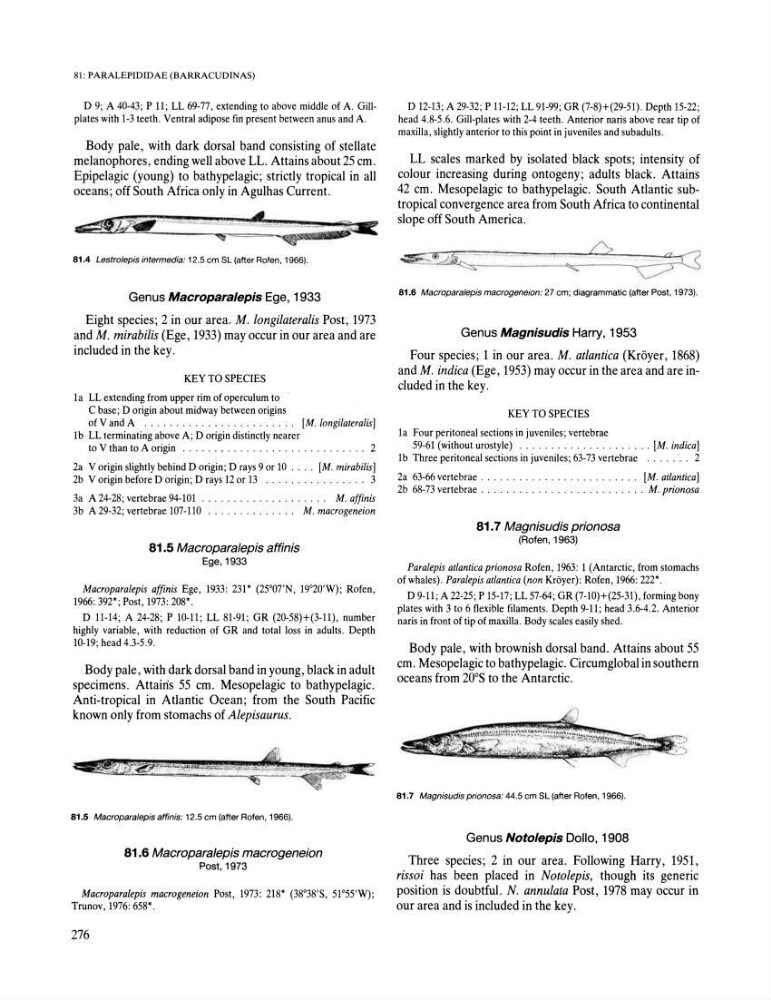
81.4 Lestrolepis intermedia: 12.5 em SL (after Roten, 1966).
Genus Macroparalepis Ege, 1933
Eight species; 2 in our area. M. longilateralis Post, 1973
and M. mirabilis (Ege, 1933) may occur in our area and are
included in the key.
KEY TO SPECIES
la LL extending from upper rim of operculum to
C base; D origin about midway between origins
of V and A ........................ [M. longilateralis]
Ib LL terminating above A; D origin distinctly nearer
to V than to A origin ......, . . . . . . . . . . . . . . . . . . . . . . 2
2a V origin slightly behind D origin; Drays 9 or 10 .... [M. mirabilis]
2b V origin before D origin; Drays 12 or13 ................ 3
3a A 24-28; vertebrae 94-101 . . . . . . . . . . . . . . . . . . .. M. affinis
3b A 29-32; vertebrae 107-110 ............ " M. macrogeneion
81.5 Macroparalepis affinis
Ege, 1933
Macroparalepis affinis Ege, 1933: 231* (25°07'N, 19°20'W); Rofen,
1966: 392*; Post, 1973: 208*.
D 11-14; A 24-28; P 10-11; LL 81-91; GR (20-58)+(3-11), number
highly variable, with reduction of GR and total loss in adults. Depth
10-19; head 4.3-5.9.
Body pale, with dark dorsal band in young, black in adult
specimens. Attains 55 cm. Mesopelagic to bathypelagic.
Anti-tropical in Atlantic Ocean; from the South Pacific
known only from stomachs of Alepisaurus.
81.5 Macroparalepis affinis: 12.5 em (after Roten, 1966).
81.6 Macroparalepis macrogeneion
Post, 1973
Macroparalepis macrogeneion Post, 1973: 218* (38°38'S, 51°55'W);
Trunov, 1976: 658*.
276
D 12-13; A 29-32; P 11-12; LL 91-99; GR (7-8)+(29-51). Depth 15-22;
head 4.8-5.6. Gill-plates with 2-4 teeth. Anterior naris above rear tip of
maxilla, slightly anterior to this point in juveniles and subadults.
LL scales marked by isolated black spots; intensity of
colour increasing during ontogeny; adults black. Attains
42 cm. Mesopelagic to bathypelagic. South Atlantic subtropical convergence area from South Africa to continental
slope off South America.
81.6 Macroparalepis macrogeneion: 27 em; diagrammatic (after Post, 1973).
Genus Magnisudis Harry, 1953
Four species; 1 in our area. M. atlantica (Kroyer, 1868)
and M. indica (Ege, 1953) may occur in the area and are included in the key.
KEY TO SPECIES
la Four peritoneal sections in juveniles; vertebrae
59-61 (without urostyle) " ................... [M. indica]
Ib Three peritoneal sections in juveniles; 63-73 vertebrae ....... 2
2a 63-66 vertebrae ....................... " [M. atlantica]
2b 68-73 vertebrae .. . .. . .................... M. prionosa
81.7 Magnisudis prionosa
(Rofen, 1963)
Paralepis atlantica prionosa Rofen, 1963: 1 (Antarctic, from stomachs
of whales). Paralepis atlantica (non Kroyer): Rofen, 1966: 222*.
D 9-11; A 22-25; P 15-17; LL 57-64; GR (7-10)+(25-31), forming bony
plates with 3 to 6 flexible filaments. Depth 9-11; head 3.6-4.2. Anterior
naris in front of tip of maxilla. Body scales easily shed.
Body pale, with brownish dorsal band. Attains about 55
cm. Mesopelagic to bathypelagic. Circumglobal in southern
oceans from 20 0 S to the Antarctic.
81.7 Magnisudis prionosa: 44.5 em SL (after Roten, 1966).
Genus Notolepis 00110, 1908
Three species; 2 in our area. Following Harry, 1951,
rissoi has been placed in Notolepis, though its generic
position is doubtful. N. annulata Post, 1978 may occur in
our area and is included in the key.
D 9; A 40-43; P 11; LL 69-77, extending to above middle of A. Gillplates with 1-3 teeth. Ventral adipose fin present between anus and A.
Body pale, with dark dorsal band consisting of stellate
melanophores, ending well above LL. Attains about 25 cm.
Epipelagic (young) to bathypelagic; strictly tropical in all
oceans; off South Africa only in Agulhas Current.
81.4 Lestrolepis intermedia: 12.5 em SL (after Roten, 1966).
Genus Macroparalepis Ege, 1933
Eight species; 2 in our area. M. longilateralis Post, 1973
and M. mirabilis (Ege, 1933) may occur in our area and are
included in the key.
KEY TO SPECIES
la LL extending from upper rim of operculum to
C base; D origin about midway between origins
of V and A ........................ [M. longilateralis]
Ib LL terminating above A; D origin distinctly nearer
to V than to A origin ......, . . . . . . . . . . . . . . . . . . . . . . 2
2a V origin slightly behind D origin; Drays 9 or 10 .... [M. mirabilis]
2b V origin before D origin; Drays 12 or13 ................ 3
3a A 24-28; vertebrae 94-101 . . . . . . . . . . . . . . . . . . .. M. affinis
3b A 29-32; vertebrae 107-110 ............ " M. macrogeneion
81.5 Macroparalepis affinis
Ege, 1933
Macroparalepis affinis Ege, 1933: 231* (25°07'N, 19°20'W); Rofen,
1966: 392*; Post, 1973: 208*.
D 11-14; A 24-28; P 10-11; LL 81-91; GR (20-58)+(3-11), number
highly variable, with reduction of GR and total loss in adults. Depth
10-19; head 4.3-5.9.
Body pale, with dark dorsal band in young, black in adult
specimens. Attains 55 cm. Mesopelagic to bathypelagic.
Anti-tropical in Atlantic Ocean; from the South Pacific
known only from stomachs of Alepisaurus.
81.5 Macroparalepis affinis: 12.5 em (after Roten, 1966).
81.6 Macroparalepis macrogeneion
Post, 1973
Macroparalepis macrogeneion Post, 1973: 218* (38°38'S, 51°55'W);
Trunov, 1976: 658*.
276
D 12-13; A 29-32; P 11-12; LL 91-99; GR (7-8)+(29-51). Depth 15-22;
head 4.8-5.6. Gill-plates with 2-4 teeth. Anterior naris above rear tip of
maxilla, slightly anterior to this point in juveniles and subadults.
LL scales marked by isolated black spots; intensity of
colour increasing during ontogeny; adults black. Attains
42 cm. Mesopelagic to bathypelagic. South Atlantic subtropical convergence area from South Africa to continental
slope off South America.
81.6 Macroparalepis macrogeneion: 27 em; diagrammatic (after Post, 1973).
Genus Magnisudis Harry, 1953
Four species; 1 in our area. M. atlantica (Kroyer, 1868)
and M. indica (Ege, 1953) may occur in the area and are included in the key.
KEY TO SPECIES
la Four peritoneal sections in juveniles; vertebrae
59-61 (without urostyle) " ................... [M. indica]
Ib Three peritoneal sections in juveniles; 63-73 vertebrae ....... 2
2a 63-66 vertebrae ....................... " [M. atlantica]
2b 68-73 vertebrae .. . .. . .................... M. prionosa
81.7 Magnisudis prionosa
(Rofen, 1963)
Paralepis atlantica prionosa Rofen, 1963: 1 (Antarctic, from stomachs
of whales). Paralepis atlantica (non Kroyer): Rofen, 1966: 222*.
D 9-11; A 22-25; P 15-17; LL 57-64; GR (7-10)+(25-31), forming bony
plates with 3 to 6 flexible filaments. Depth 9-11; head 3.6-4.2. Anterior
naris in front of tip of maxilla. Body scales easily shed.
Body pale, with brownish dorsal band. Attains about 55
cm. Mesopelagic to bathypelagic. Circumglobal in southern
oceans from 20 0 S to the Antarctic.
81.7 Magnisudis prionosa: 44.5 em SL (after Roten, 1966).
Genus Notolepis 00110, 1908
Three species; 2 in our area. Following Harry, 1951,
rissoi has been placed in Notolepis, though its generic
position is doubtful. N. annulata Post, 1978 may occur in
our area and is included in the key.