

30 Microdissection of Chromosomes and Reverse FISH
405
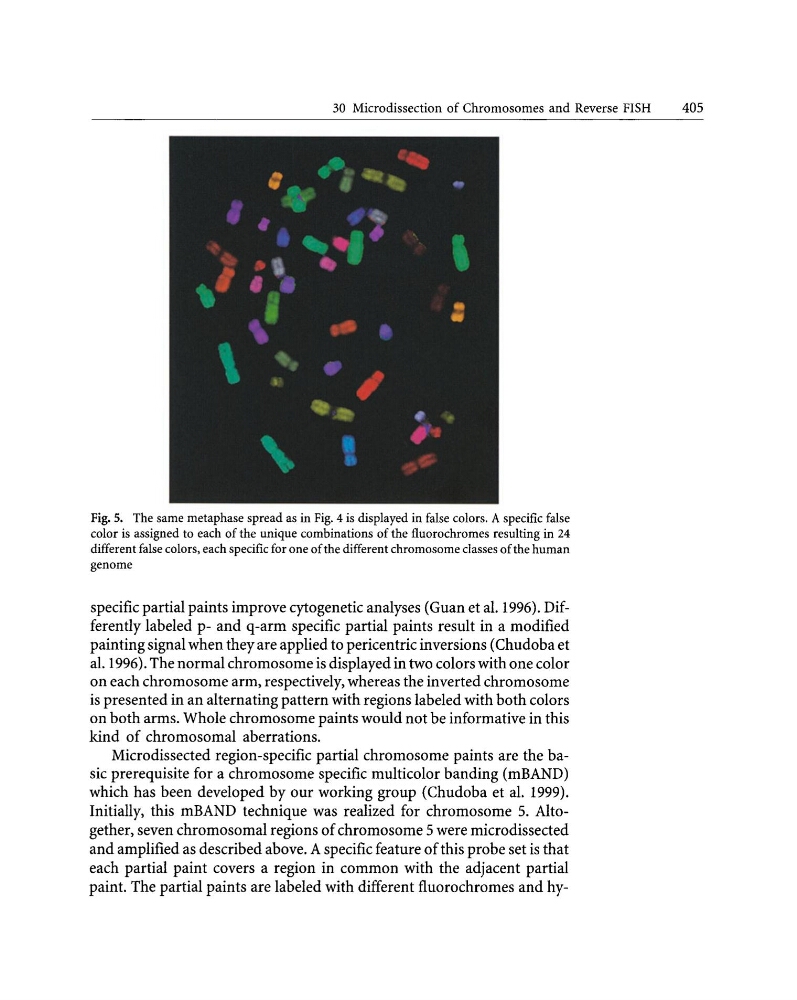
Fig. 5. The same metaphase spread as in Fig. 4 is displayed in false colors. A specific false
color is assigned to each of the unique combinations of the fluorochromes resulting in 24
different false colors, each specific for one ofthe different chromosome classes ofthe human
genome
specific partial paints improve cytogenetic analyses (Guan et al. 1996). Differently labeled p- and q-arm specific partial paints result in a modified
painting signal when they are applied to pericentric inversions (Chudoba et
al. 1996). The normal chromosome is displayed in two colors with one color
on each chromosome arm, respectively, whereas the inverted chromosome
is presented in an alternating pattern with regions labeled with both colors
on both arms. Whole chromosome paints would not be informative in this
kind of chromosomal aberrations.
Microdissected region-specific partial chromosome paints are the basic prerequisite for a chromosome specific multicolor banding (mBAND)
which has been developed by our working group (Chudoba et al. 1999).
Initially, this mBAND technique was realized for chromosome 5. Altogether, seven chromosomal regions of chromosome 5 were microdissected
and amplified as described above. A specific feature of this probe set is that
each partial paint covers a region in common with the adjacent partial
paint. The partial paints are labeled with different fluorochromes and hy-
405
Fig. 5. The same metaphase spread as in Fig. 4 is displayed in false colors. A specific false
color is assigned to each of the unique combinations of the fluorochromes resulting in 24
different false colors, each specific for one ofthe different chromosome classes ofthe human
genome
specific partial paints improve cytogenetic analyses (Guan et al. 1996). Differently labeled p- and q-arm specific partial paints result in a modified
painting signal when they are applied to pericentric inversions (Chudoba et
al. 1996). The normal chromosome is displayed in two colors with one color
on each chromosome arm, respectively, whereas the inverted chromosome
is presented in an alternating pattern with regions labeled with both colors
on both arms. Whole chromosome paints would not be informative in this
kind of chromosomal aberrations.
Microdissected region-specific partial chromosome paints are the basic prerequisite for a chromosome specific multicolor banding (mBAND)
which has been developed by our working group (Chudoba et al. 1999).
Initially, this mBAND technique was realized for chromosome 5. Altogether, seven chromosomal regions of chromosome 5 were microdissected
and amplified as described above. A specific feature of this probe set is that
each partial paint covers a region in common with the adjacent partial
paint. The partial paints are labeled with different fluorochromes and hy-