

90
K. Zdzitowiecki
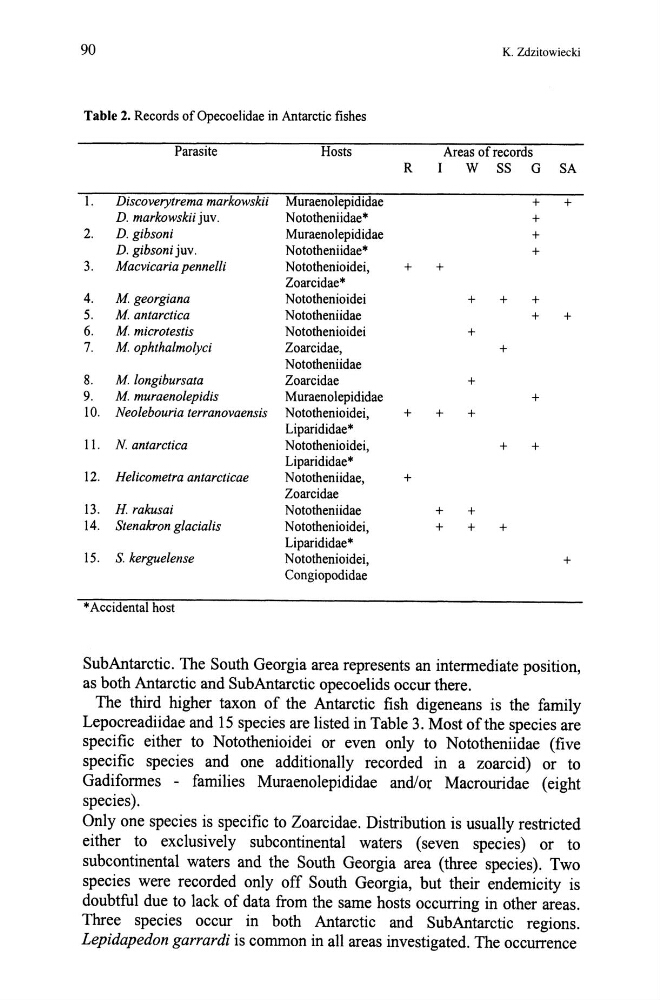
Table 2. Records of OpecoeJidae in Antarctic fishes
Parasite
Hosts
Areas of records
R
I
W SS G SA
1.
Discoverytrema markowskii Muraenolepididae
+
+
D. markowskii juv.
N ototheniidae*
+
2.
D. gibsoni
Muraenolepididae
+
D. gibsonijuv.
N ototheniidae*
+
3.
Macvicaria pennelli
N otothenioidei,
+
+
Zoarcidae*
4.
M. georgiana
Notothenioidei
+
+
+
5.
M. antarctica
N ototheniidae
+
+
6.
M. micratestis
N otothenioidei
+
7.
M. ophthalmolyci
Zoarcidae,
+
Nototheniidae
8.
M. longibursata
Zoarcidae
+
9.
M. muraenolepidis
Muraenolepididae
+
10. Neolebouria terranovaensis Notothenioidei,
+
+
+
Liparididae*
11. N antarctica
N otothenioidei,
+
+
Liparididae*
12. Helicometra antarcticae
N ototheniidae,
+
Zoarcidae
13. H. rakusai
Nototheniidae
+
+
14. Stenakron glacialis
Notothenioidei,
+
+
+
Liparididae*
15. S. kerguelense
N otothenioidei,
+
Congiopodidae
* Accidental host
SubAntarctic. The South Georgia area represents an intermediate position,
as both Antarctic and SubAntarctic opecoelids occur there.
The third higher taxon of the Antarctic fish digeneans is the family
Lepocreadiidae and 15 species are listed in Table 3. Most ofthe species are
specific either to Notothenioidei or even only to Nototheniidae (five
specific species and one additionally recorded in a zoarcid) or to
Gadiformes - families Muraenolepididae and/or Macrouridae (eight
species).
Only one species is specific to Zoarcidae. Distribution is usually restricted
either to exclusively subcontinental waters (seven species) or to
subcontinental waters and the South Georgia area (three species). Two
species were recorded only off South Georgia, but their endemicity is
doubtful due to lack of data from the same hosts occurring in other areas.
Three species occur in both Antarctic and SubAntarctic regions.
Lepidapedon garrardi is common in all areas investigated. The occurrence
K. Zdzitowiecki
Table 2. Records of OpecoeJidae in Antarctic fishes
Parasite
Hosts
Areas of records
R
I
W SS G SA
1.
Discoverytrema markowskii Muraenolepididae
+
+
D. markowskii juv.
N ototheniidae*
+
2.
D. gibsoni
Muraenolepididae
+
D. gibsonijuv.
N ototheniidae*
+
3.
Macvicaria pennelli
N otothenioidei,
+
+
Zoarcidae*
4.
M. georgiana
Notothenioidei
+
+
+
5.
M. antarctica
N ototheniidae
+
+
6.
M. micratestis
N otothenioidei
+
7.
M. ophthalmolyci
Zoarcidae,
+
Nototheniidae
8.
M. longibursata
Zoarcidae
+
9.
M. muraenolepidis
Muraenolepididae
+
10. Neolebouria terranovaensis Notothenioidei,
+
+
+
Liparididae*
11. N antarctica
N otothenioidei,
+
+
Liparididae*
12. Helicometra antarcticae
N ototheniidae,
+
Zoarcidae
13. H. rakusai
Nototheniidae
+
+
14. Stenakron glacialis
Notothenioidei,
+
+
+
Liparididae*
15. S. kerguelense
N otothenioidei,
+
Congiopodidae
* Accidental host
SubAntarctic. The South Georgia area represents an intermediate position,
as both Antarctic and SubAntarctic opecoelids occur there.
The third higher taxon of the Antarctic fish digeneans is the family
Lepocreadiidae and 15 species are listed in Table 3. Most ofthe species are
specific either to Notothenioidei or even only to Nototheniidae (five
specific species and one additionally recorded in a zoarcid) or to
Gadiformes - families Muraenolepididae and/or Macrouridae (eight
species).
Only one species is specific to Zoarcidae. Distribution is usually restricted
either to exclusively subcontinental waters (seven species) or to
subcontinental waters and the South Georgia area (three species). Two
species were recorded only off South Georgia, but their endemicity is
doubtful due to lack of data from the same hosts occurring in other areas.
Three species occur in both Antarctic and SubAntarctic regions.
Lepidapedon garrardi is common in all areas investigated. The occurrence