

Evolution of Sensory Systems: A Comparison of Antarctic and Deep-Sea Ichthyofauna
333
Antarctic Notothenioids
Wk,-----------------------------~--•
NOT
50%
" 0,
~ 40%
"
· ·
~ 30%
~ E
.!!! 20%
Cl
·
~
w
10%
"
. "
O%+-~~~~~~~--~~~~~~~
ART
HAR
o
BAT
x
CHA
L - -
1
10
100
Median Oepth (m)
1000
1(]()(]()
New Zealand Shelf & Slope Teleosts
50%.,-----------------------------,
50%
" g, 40%
~
"
· ·
:: 30%
· E
6 20%
·
~
w
10%
i&
&
i
•
t
...
&
&&
!
&
t
*
* &
.. .
&& &
O%+-~~~~~~~--~~~~-&~&~~
1
10
100
Median Depth (m)
1000
10000
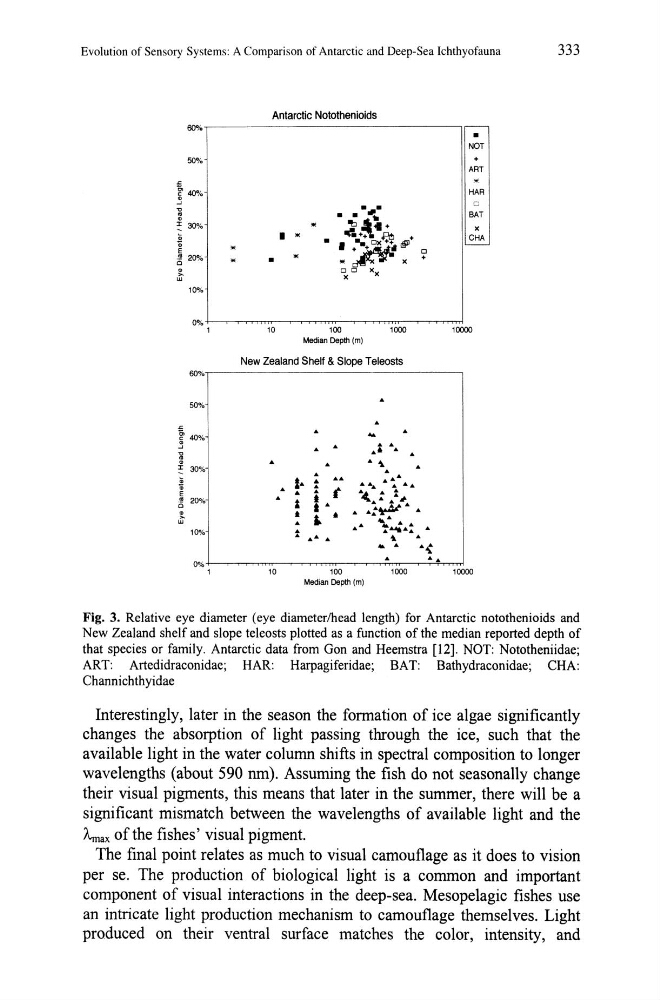
Fig. 3. Relative eye diameter (eye diameterlhead length) for Antarctic notothenioids and
New Zealand shelf and slope teleosts plotted as a function of the median reported depth of
that species or family. Antarctic data from Gon and Heemstra [12]. NOT: Nototheniidae;
ART: Artedidraconidae; HAR: Harpagiferidae; BAT: Bathydraconidae; eHA:
Channichthyidae
Interestingly, later in the season the formation of ice algae significantly
changes the absorption of light passing through the ice, such that the
available light in the water column shifts in spectral composition to longer
wavelengths (about 590 nm). Assuming the fish do not seasonally change
their visual pigments, this means that later in the summer, there will be a
significant mismatch between the wavelengths of available light and the
"-max of the fishes' visual pigment.
The final point relates as much to visual camouflage as it does to vision
per se. The production of biological light is a common and important
component of visual interactions in the deep-sea. Mesopelagic fishes use
an intricate light production mechanism to camouflage themselves. Light
produced on their ventral surface matches the color, intensity, and
333
Antarctic Notothenioids
Wk,-----------------------------~--•
NOT
50%
" 0,
~ 40%
"
· ·
~ 30%
~ E
.!!! 20%
Cl
·
~
w
10%
"
. "
O%+-~~~~~~~--~~~~~~~
ART
HAR
o
BAT
x
CHA
L - -
1
10
100
Median Oepth (m)
1000
1(]()(]()
New Zealand Shelf & Slope Teleosts
50%.,-----------------------------,
50%
" g, 40%
~
"
· ·
:: 30%
· E
6 20%
·
~
w
10%
i&
&
i
•
t
...
&
&&
!
&
t
*
* &
.. .
&& &
O%+-~~~~~~~--~~~~-&~&~~
1
10
100
Median Depth (m)
1000
10000
Fig. 3. Relative eye diameter (eye diameterlhead length) for Antarctic notothenioids and
New Zealand shelf and slope teleosts plotted as a function of the median reported depth of
that species or family. Antarctic data from Gon and Heemstra [12]. NOT: Nototheniidae;
ART: Artedidraconidae; HAR: Harpagiferidae; BAT: Bathydraconidae; eHA:
Channichthyidae
Interestingly, later in the season the formation of ice algae significantly
changes the absorption of light passing through the ice, such that the
available light in the water column shifts in spectral composition to longer
wavelengths (about 590 nm). Assuming the fish do not seasonally change
their visual pigments, this means that later in the summer, there will be a
significant mismatch between the wavelengths of available light and the
"-max of the fishes' visual pigment.
The final point relates as much to visual camouflage as it does to vision
per se. The production of biological light is a common and important
component of visual interactions in the deep-sea. Mesopelagic fishes use
an intricate light production mechanism to camouflage themselves. Light
produced on their ventral surface matches the color, intensity, and